A failed, painful or worn knee implant needs specialist revision, not repeated conservative management. A revision knee replacement surgeon focuses on identifying the exact cause of failure and planning the right corrective procedure. Revision knee replacement is a complex and technically demanding surgery that requires the experience and implant systems needed to manage what a primary replacement could not resolve.
Our specialist will call you within 2 hours
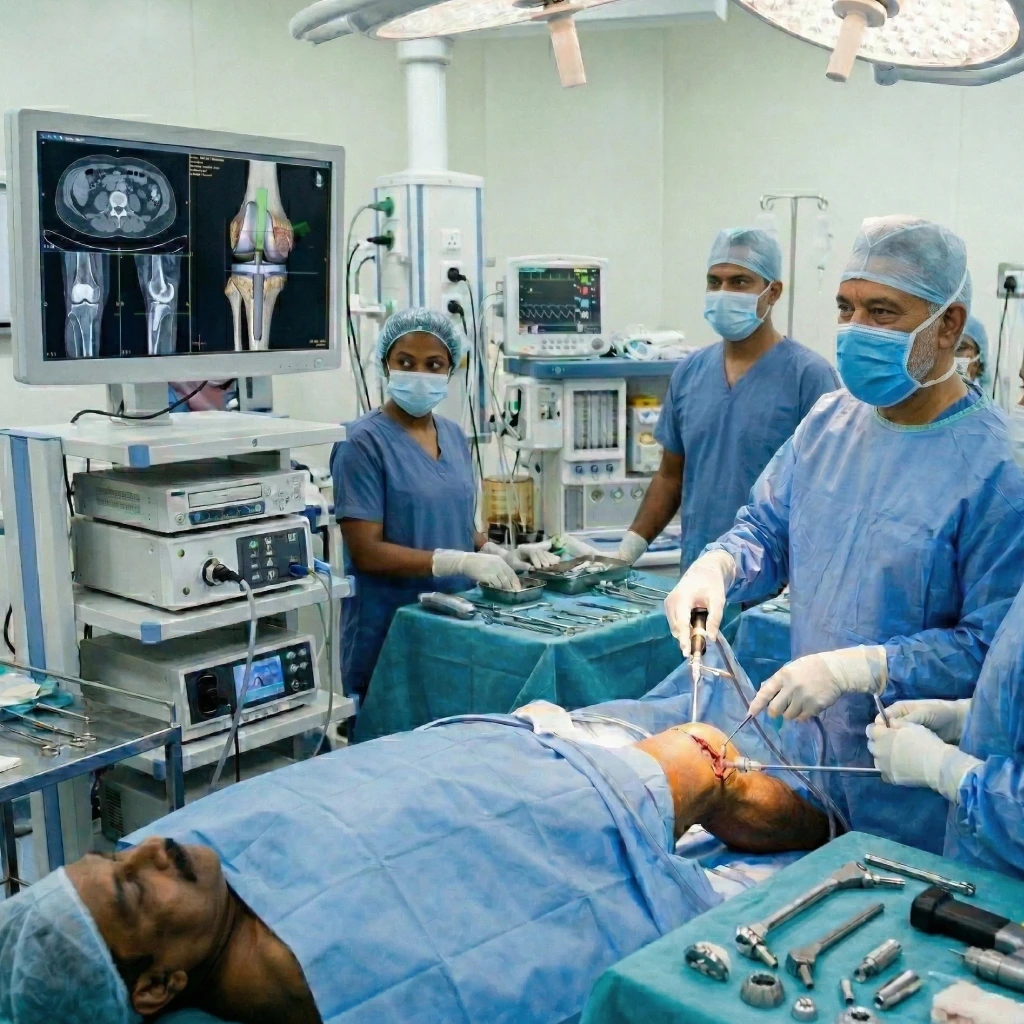
Revision knee replacement is a surgical procedure to remove and replace a failed, worn, loose or infected knee implant. This form of knee revision surgery in Ahmedabad is more complex than a primary knee replacement, as the surgeon must work around scar tissue from the previous operation, manage bone loss and use specialised implant systems designed for revision cases. Not every orthopaedic surgeon has the case volume, specific training or implant inventory to perform revision knee surgery safely. It requires a centre with dedicated expertise.
The causes of knee replacement failure vary. Aseptic loosening, where the implant becomes loose without infection, is the most common. Other causes include infection, instability, stiffness, implant wear and fractures around the implant. A revision knee replacement surgeon carefully evaluates each of these factors before deciding the correct surgical plan. Each cause requires a different approach to revision surgery. The pre-operative assessment, including X-rays, CT scan, blood markers for infection and joint aspiration, is as important as the surgery itself. At Trayam Hospital, every revision case is assessed by our joint replacement team with a full investigation protocol before surgical planning begins.
If you have had a previous knee replacement and are experiencing these symptoms, specialist review is recommended
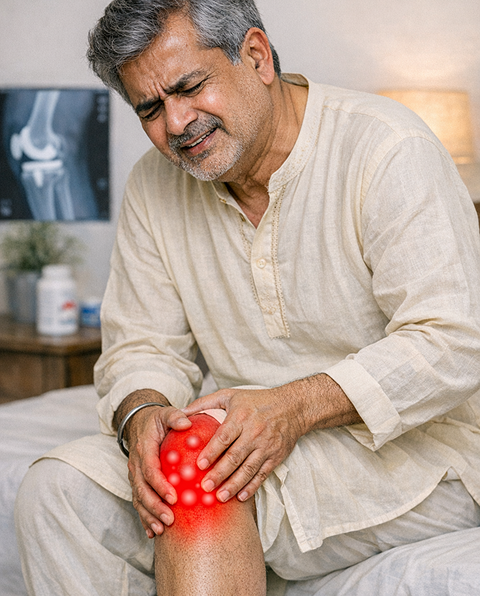
Pain that never fully resolved after knee replacement, or pain that was well-controlled and has returned months or years after surgery — the most common symptom of implant failure. Pain with any knee replacement that has not improved by 3–6 months post-operation warrants specialist review.
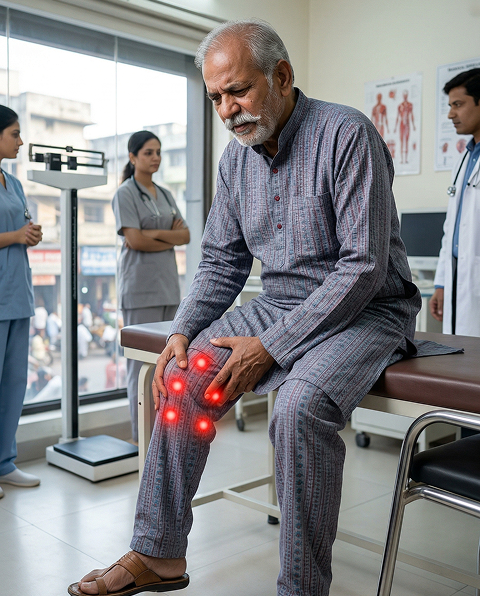
A sense of the knee giving way, wobbling or lacking the stability you had after initial recovery — indicates ligament imbalance, implant loosening or tibial component subsidence. Instability after knee replacement is one of the leading indications for revision surgery.
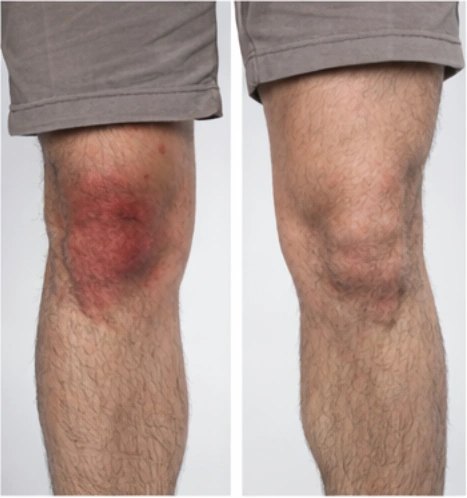
Persistent or recurrent swelling, heat and redness around a knee replacement — especially with fever or raised inflammatory markers — strongly suggests periprosthetic joint infection (PJI). Infected knee replacements require urgent specialist assessment. This is a surgical emergency if fever and systemic illness are present.

Inability to bend the knee beyond 90 degrees or fully straighten it after knee replacement — despite physiotherapy. Arthrofibrosis (excessive scar tissue formation) is a recognised complication of knee replacement that may require arthroscopic release or revision surgery in severe cases.
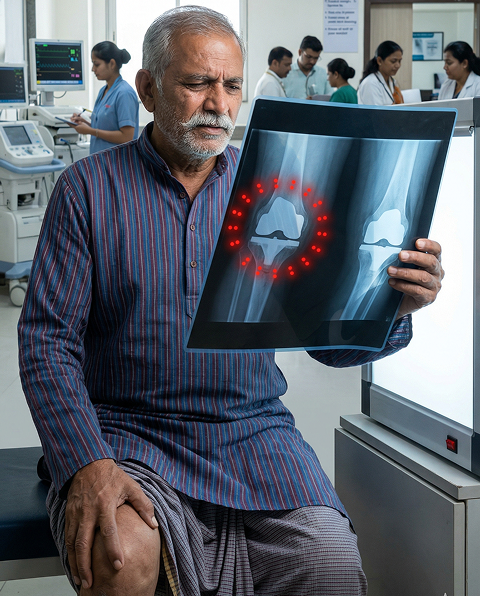
Your follow-up X-ray shows the implant has changed position, subsided into the bone or developed a radiolucent line around the cement — indicating aseptic loosening. Even in the absence of severe pain, implant loosening is a clear indication for revision before bone loss progresses further.
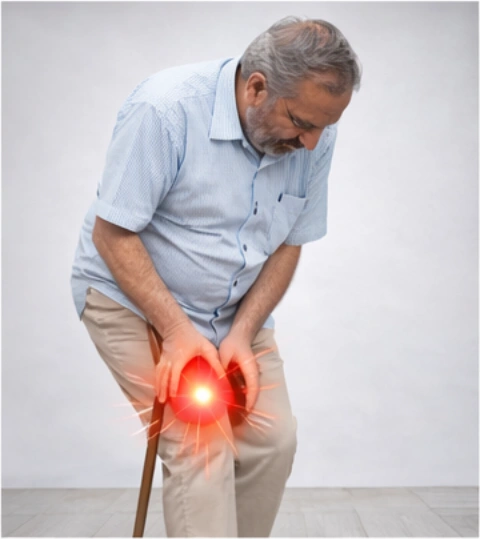
Knee implants have a typical lifespan of 15–20 years. Increasing pain, new stiffness or functional decline in a patient with an implant that is 10 years or older warrants assessment for wear-related revision — before catastrophic implant failure occurs.
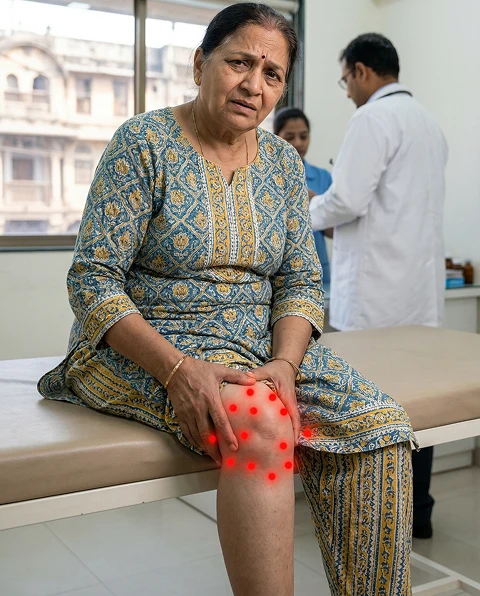
A periprosthetic fracture — a fracture of the bone immediately around the knee implant — from a fall or trauma. Requires urgent orthopaedic assessment and in many cases revision surgery to address both the fracture and implant stability simultaneously.

A small number of patients develop hypersensitivity reactions to implant materials — particularly nickel, cobalt or chromium alloys. Symptoms include persistent pain, swelling and skin changes without evidence of infection or loosening. Assessment includes metal sensitivity testing and, where confirmed, revision to an alternative implant material.
Revision knee replacement requires a higher level of surgical expertise, detailed planning and access to specialised implant systems. Choosing the right centre for knee revision surgery is essential for achieving a safe and long-lasting outcome.

Senior Consultant — Joint Replacement & Revision Orthopaedic Surgery, Trayam Hospital
Dr. Parth Patel has performed over 500 revision knee replacement procedures — from straightforward single-component revisions to complex two-stage infected implant revisions with significant bone loss reconstruction. Revision surgery demands a surgeon who has seen the full spectrum of implant failure modes, has access to the right implant systems and approaches each case with a detailed pre-operative plan rather than improvising intraoperatively. Every revision patient at Trayam receives a personal consultation with a full review of their imaging and investigations before any surgical decision is made.
The revision approach is determined by the cause of failure, and each case requires a different surgical strategy. Knee revision surgery involves careful planning based on implant condition, bone quality and the presence of infection or instability.
A step-by-step guide to your recovery after Total Knee Replacement at Trayam Hospital.
Surgery completed. Physiotherapy begins — first assisted standing and walking with a walking frame. Close monitoring of wound, blood count and inflammatory markers. Pain managed with multimodal analgesia.
Hospital discharge for straightforward aseptic revisions. Two-stage septic revision patients remain for IV antibiotics — discharged when oral transition is confirmed. Walking with walker. Wound check at day 5–7.
Wound review and suture removal. Home physiotherapy programme established. Swelling gradually reducing. Walking aids progressively reduced as strength returns.
Outpatient review with X-ray confirming implant position. Most patients walking with a stick or unaided. Range of motion progressing. Driving discussed based on which leg and rate of recovery.
Significant improvement in pain and function compared to pre-revision. Most daily activities resumed. Physiotherapy continuing — strength and stability focus.
Full functional recovery for most patients. Return to light recreational activity. Long-term annual follow-up with X-ray to monitor implant stability — essential for revision patients throughout life.
The most consistently under-investigated problem in joint replacement in India is the patient with a painful knee replacement who is repeatedly reassured that their X-ray looks fine. Pain after knee replacement is not always visible on a plain X-ray — loosening may only appear on CT, infection is diagnosed on blood markers and joint aspiration, and instability may only be apparent under clinical stress testing. If your replaced knee is still causing significant pain after 6 months and you are being managed with injections and physiotherapy without a systematic investigation into why, you deserve a specialist second opinion.
A fully itemised estimate covering surgery, implants (specified by system and component), stay, physiotherapy and follow-up — before you commit. Revision surgery pricing varies with complexity; we tell you exactly what is planned and why.
We will tell you if your knee replacement pain can be managed without further surgery. We do not recommend revision surgery unless investigation confirms a clear, treatable cause of failure. An honest second opinion is always welcome — even if the answer is that revision is not yet needed.
Revision knee replacement is covered under most major health insurance policies. We manage the pre-authorisation process, ensuring that the complexity of revision surgery is correctly documented and claimed. No inflated billing — your coverage is respected.
Speak to our team today. Get a clear second opinion on your surgery from a revision knee replacement surgeon.
Confidential · No Obligation · Reply in 2 Hours
Revision knee replacement is a procedure to remove and replace a failed, worn, loose or infected knee implant. It is significantly more complex than primary knee replacement and requires specialised implant systems, specific surgical training and thorough pre-operative investigation to determine the cause of failure before planning surgery.
Signs include pain that never fully resolves or has returned after a period of being well, knee instability or a feeling of giving way, swelling and warmth that may indicate infection, or difficulty in bending the knee properly. In some cases, X-rays may show implant movement or radiolucent lines around the cement. If you notice any of these symptoms, it is important to consult a revision knee replacement surgeon in Ahmedabad for a detailed evaluation.
Revision surgery typically takes 2–3 hours depending on complexity — longer than primary replacement because of scar tissue, bone loss management and the use of larger revision implant systems.
Stage 1 removes the infected implant, debriding all infected tissue, and places an antibiotic cement spacer. 6–8 weeks of targeted antibiotics follows. Stage 2 re-implants a new prosthesis once blood markers confirm infection is fully cleared. Two-stage revision achieves infection eradication in over 85% of cases — the highest of any approach.
Typically 5–7 days for aseptic revision. Septic revision patients stay longer for IV antibiotic management before transitioning to oral therapy. Two-stage revision: stage 1 approximately 7–10 days; stage 2 approximately 5–7 days.
Recovery is longer than primary knee replacement. Most patients reach functional recovery by 3–6 months. Complex revisions with significant bone loss reconstruction may take 9–12 months for full recovery. Annual lifelong follow-up with X-ray is recommended for all revision patients.
Yes — in some cases. Manipulation under anaesthesia (MUA) is performed at 6–12 weeks for early stiffness with good results. Arthroscopic scar tissue release is used for moderate fibrosis. Revision surgery is reserved for severe, long-standing stiffness that has failed these approaches. The earlier stiffness is treated, the better the outcome.
Yes — revision knee replacement is covered by most major health insurance policies and PMJAY. The complexity of the procedure and implant requirements are documented in the pre-authorisation request. Our insurance desk manages this process in full.
Bring your X-rays, any existing reports and your surgical history. Our revision specialist will give you an independent, honest assessment of your options.