Slip Disc & Sciatica Specialists

Slip Disc Treatment — Right Care for Every Grade, Least Invasive First

From Grade 1 disc bulge to complete fragment extrusion — Trayam Hospital matches your disc grade to the right treatment with endoscopic spine surgery in Ahmedabad. Physiotherapy first. Injections when needed. Surgery only when it will make a definitive difference. Most patients go home the same day.

90%
Avoid Surgery
100%
Sciatica Relief
8mm
If Surgery Needed
3–7
Days to Work
Conservative Care First
Insurance Cashless
Same-Day Walking
24/7 Emergency

Book a Spine Consultation

Tell us your symptoms — we'll respond within 2 hours

    100% confidential & no obligation
    Slip Disc Treatment
    What Is a Slip Disc?

    Understanding Disc Herniation & Sciatica

    A “slip disc” — medically known as a lumbar disc herniation — occurs when the soft inner core (nucleus pulposus) of a spinal disc pushes through a tear in its tough outer ring (annulus fibrosus). When this herniated material presses on a nearby nerve root, it causes the shooting leg pain known as sciatica, along with numbness, tingling and sometimes weakness.

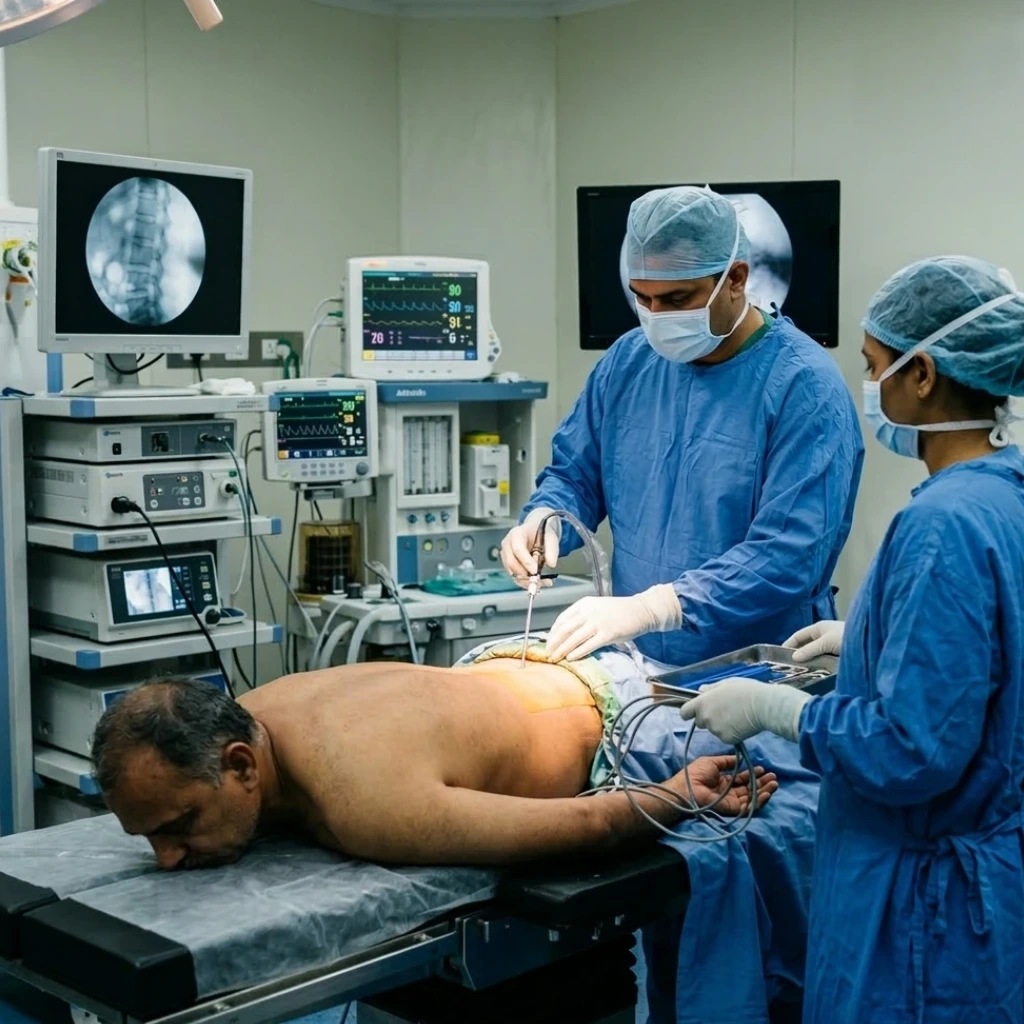
    The good news: most slipped discs do not need surgery before considering endoscopic spine surgery. With a properly structured physiotherapy programme, 80–90% of patients achieve excellent relief within 6–12 weeks. When surgery is needed, our approach is always the least invasive option — in most cases, an 8mm needle-access PELD procedure with same-day discharge and return to work in 3–7 days.

    Graded treatment — every patient receives a plan matched precisely to their disc grade
    Conservative care always attempted first — physio, medication, nerve root injections
    Surgery only when genuinely needed — and always the least invasive technique that works
    PELD endoscopic surgery — 8mm needle access, local anaesthesia, same-day home
    Immediate results — sciatica typically begins to lift within hours of successful decompression
    Where Can a Disc Herniate?

    Types of Slip Disc by Location

    L4–L5
    Most Common Level

    Lumbar Disc — L4-L5

    The most common disc herniation level. Presses on the L5 nerve root causing pain and numbness into the outer leg, top of the foot or big toe. Weakness of big toe extension (foot drop risk).

    Most Common
    L5–S1
    Second Most Common

    Lumbar Disc — L5-S1

    The second most frequent herniation site. Presses on the S1 nerve root causing classic sciatic pain down the back of the thigh and calf to the heel and outer foot. Often causes ankle reflex loss.

    Classic Sciatica
    CERV
    Neck Disc

    Cervical Disc Herniation

    Cervical disc herniation at C5-C6 or C6-C7 causes neck pain radiating into the arm, hand numbness and sometimes grip weakness. Treated with physiotherapy, injections or endoscopic cervical discectomy (PECD).

    Neck & Arm Pain
    CENT
    Cauda Equina Risk

    Central / Large Herniation

    A large central disc herniation compresses the cauda equina — the bundle of nerves controlling the bladder and bowel. Bladder or bowel dysfunction with bilateral leg symptoms is a surgical emergency requiring same-day decompression.

    Emergency If Bilateral
    Understanding Your Diagnosis

    Disc Herniation Grades — What Grade Is Your Slip Disc?

    Disc herniation is classified into 4 grades based on how far the disc material has pushed through. Your grade determines whether you need physiotherapy, injections, or surgery — and which surgical approach is most appropriate.

    Grade 1 Disc Bulge

    Disc Bulge

    The disc bulges symmetrically outward — the outer ring (annulus) is intact. May cause mild local back pain or be asymptomatic. The most common incidental MRI finding.

    Physio & Posture
    Grade 2 Disc Protrusion

    Disc Protrusion

    The inner nucleus pushes through partial tears in the annulus. The disc base is still wider than the herniation. Causes nerve-root pressure with radiating leg or arm pain (sciatica).

    Physio + Injections
    Grade 3 Disc Extrusion

    Disc Extrusion

    The nucleus breaks fully through the annulus — the herniation is wider than its base. Significant nerve root compression. Surgery considered if conservative care fails at 6 weeks or if neurological signs develop.

    Consider Surgery
    Grade 4 Sequestered Fragment

    Sequestration

    A disc fragment breaks completely free and migrates up or down in the spinal canal. Causes severe nerve compression — usually requires PELD surgical removal for reliable, lasting relief.

    PELD Surgery

    Don't know your disc grade? WhatsApp your MRI report to us — our spine surgeon will grade it and tell you exactly which treatment path is right for you. No obligation, reply within 2 hours.

    Recognise Your Symptoms

    Slip Disc Symptoms — From Mild to Emergency

    Disc herniation symptoms range from manageable back pain to neurological emergencies. Knowing which category you are in determines the urgency of care you need.
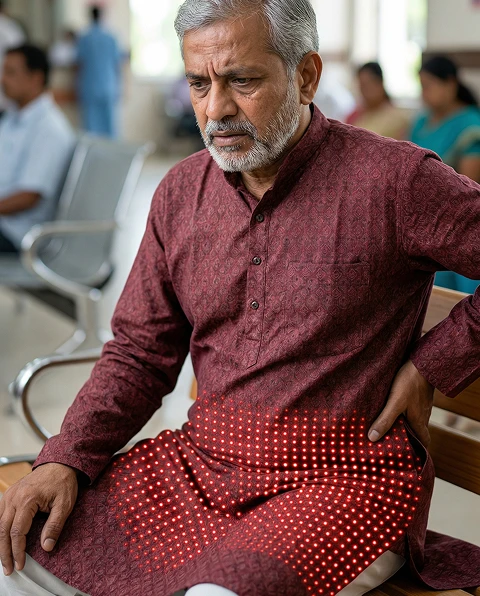
    Bladder / Bowel Loss

    Bladder / Bowel Loss

    Inability to control bladder or bowel, or sudden urinary retention with bilateral leg numbness — cauda equina emergency requiring same-day surgery
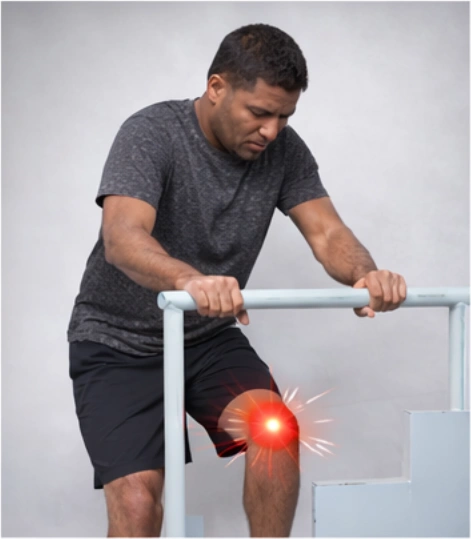
    Sciatica — Shooting Leg Pain

    Sciatica — Shooting Leg Pain

    Sharp, electric pain from the lower back through the buttock and down the leg to the foot — the most recognisable sign of lumbar disc herniation pressing on the sciatic nerve
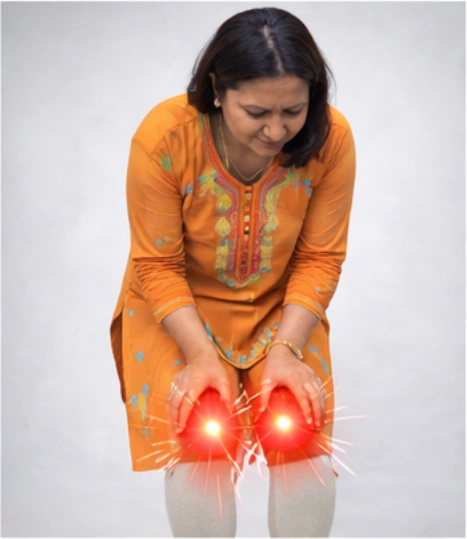
    Foot Drop / Leg Weakness

    Foot Drop / Leg Weakness

    Weakness lifting the foot (foot drop) or progressive leg muscle weakness — indicates significant nerve root compression requiring urgent assessment and likely surgery
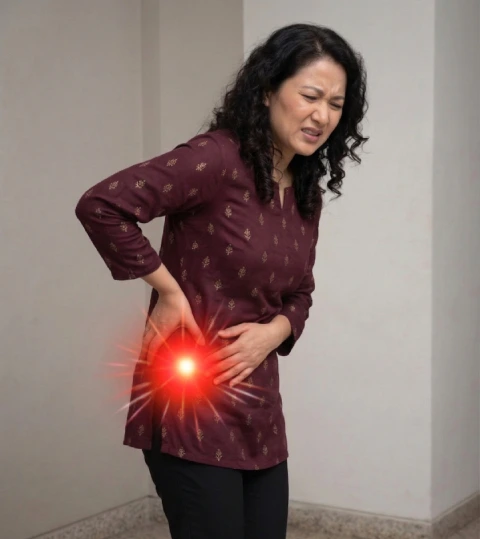
    Pain on One Side Only

    Lower Back Pain

    Persistent lower back pain that may radiate into the buttock — often the first symptom of disc herniation before nerve root pain develops. Responds well to physiotherapy for most grades
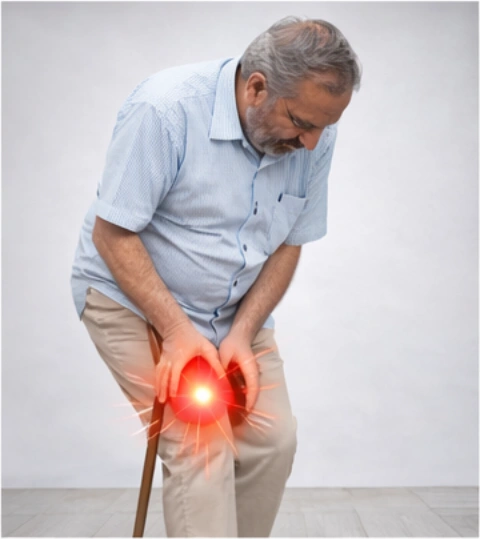
    Numbness & Tingling

    Numbness & Tingling

    Pins and needles in the leg, foot, or between the toes indicate nerve root irritation. The distribution pattern helps identify which disc level is herniated
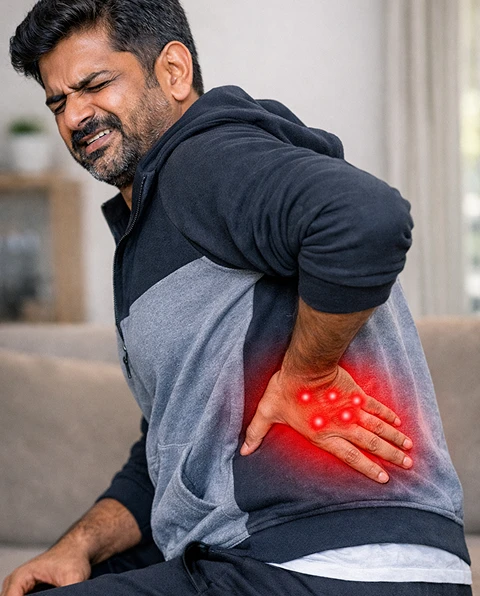
    Pain Worse on Sitting

    Pain Worse on Sitting

    Disc pressure increases significantly when sitting — pain worse on sitting, driving, or leaning forward, and relieved by walking or lying down is a classic disc herniation pattern

    Neck Pain with Arm Radiation

    Neck Pain with Arm Radiation

    Cervical disc herniation causes neck stiffness with pain or numbness shooting down the arm into the hand — treated similarly with conservative care first, then endoscopic PECD if needed
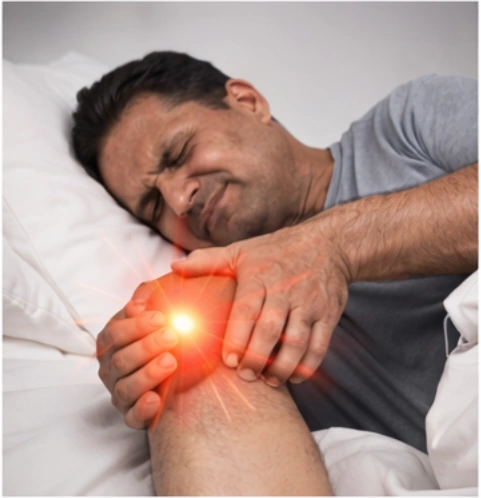
    Night Pain & Sleep Disruption

    Night Pain & Sleep Disruption

    Persistent pain that wakes you at night, makes lying flat uncomfortable, or forces you to sleep in unusual positions — indicates disc herniation affecting nerve roots even at rest

    Treatment Options

    Slip Disc Treatments — Least Invasive to Surgical

    We follow a stepwise protocol: conservative care first, then targeted interventions, then surgery only when genuinely indicated. Every step is matched to your disc grade and clinical findings.

    Structured Physiotherapy Programme

    First-line treatment for all grades

    A 6–8 week supervised programme combining core stabilisation exercises, McKenzie lumbar extension protocols, nerve mobilisation techniques and postural correction. 80–90% of disc herniation cases improve without needing injections or surgery when a properly structured programme is followed consistently.

    Grade 1 & 2 First Line Grade 3 — First 6 Weeks
    Best for: Best for: All grades initially; disc bulge and protrusion as definitive treatment

    Selective Nerve Root Block (SNRB)

    Targeted injection — fast pain relief

    A fluoroscopy-guided injection of steroid and local anaesthetic around the specific nerve root being compressed. Dramatically reduces nerve root inflammation and provides a window of pain relief that allows physiotherapy to be performed effectively. Also serves as a diagnostic test confirming which nerve level is responsible for symptoms.

    Grade 2 & 3 Adjunct X-Ray Guided Precision
    Best for: Best for: Moderate-severe sciatica unresponsive to 2–4 weeks physio; diagnostic confirmation

    PELD — Endoscopic Discectomy

    8mm needle, same-day home

    Percutaneous Endoscopic Lumbar Discectomy — the most minimally invasive surgical option. An HD endoscope is passed through an 8mm needle portal directly to the herniated disc fragment, which is removed under live camera vision. Local anaesthesia for most patients. Walk within 1 hour. Home same day. Desk work in 3–7 days.

    Grade 3 & 4 Surgery Day Care
    Best for: Best for: Grade 3 (failed conservative) and Grade 4 (sequestration); all lumbar levels; revision disc herniation

    Microscopic Microdiscectomy (Tubular)

    1.5cm incision, 24hr discharge

    A 1.5–2cm incision allows a tubular retractor and surgical microscope to approach the disc from the back. Provides excellent direct visualisation for complex disc herniations including those not accessible to single-portal endoscopy. Same-day walking. Discharge in 24–48 hours. Return to work in 2–4 weeks.

    Grade 3 & 4 Alt. Complex Anatomy
    Best for: Best for: Central herniations; complex anatomy not suitable for single-portal endoscopy; large fragment size

    Cervical Endoscopic Discectomy (PECD)

    Neck disc — motion preserving

    Endoscopic removal of a herniated cervical disc through an 8mm posterior or anterior portal — preserving the natural motion of the cervical segment without the fusion required in traditional ACDF. Recommended when cervical disc herniation fails conservative management and arm pain or neurological signs persist.

    Motion Preserving No Fusion
    Best for: Best for: C5-C6, C6-C7 disc herniation with persistent radiculopathy; avoid fusion option

    Emergency Cauda Equina Decompression

    Same-day surgical emergency

    Bladder or bowel dysfunction from a massive central disc herniation is a surgical emergency — delay beyond hours risks permanent incontinence and paralysis. Emergency decompression via endoscopic or open approach must be performed urgently. Call us immediately if you or a family member develops these symptoms.

    Emergency Only Same Day
    Best for: Best for: Cauda equina syndrome — loss of bladder/bowel control, saddle numbness, bilateral leg weakness
    Decision Guide

    Surgery vs Conservative Treatment — How to Decide

    Most slip disc patients do not need surgery. This table helps you understand exactly when surgery adds definitive value over conservative management — and when it doesn't.

    Comparison Factor Minimally Invasive Surgery
    ⭐ PELD / Microdiscectomy
    Conservative Treatment
    Speed of Relief Hours — sciatica often lifts same day 6–12 weeks for full improvement
    Disc Grade Suited For Grade 3 (failed conserv.) and Grade 4 Grade 1, 2, and Grade 3 (first)
    When Neurological Signs Present Preferred — prevents permanent nerve damage Risk of worsening deficit if delayed
    Foot Drop / Weakness Surgery recommended urgently Not appropriate — nerve at risk
    Cauda Equina Syndrome Emergency — same-day surgery Contraindicated — permanent damage risk
    Failed 6 Weeks Physio + Injections Appropriate — PELD indicated Unlikely to succeed with more of same
    Grade 1–2 (No Neurological Signs) Not indicated — conservative sufficient First-line — excellent outcomes
    Time Off Work 3–7 days (PELD) / 2–4 wks (micro) Variable — may be weeks if pain severe
    Recurrence Risk ~5–10% with physio post-op ~20–30% without core rehab
    Success Rate for Sciatica Relief 90–100% (properly selected patients) 80–90% (Grade 1–3, adequate time)

    Scroll to see full comparison

    Key principle: Surgery is not inherently better than conservative care — it is better for specific patients with specific grades, timelines and neurological findings. Our surgeon will tell you honestly which category you fall into.

    Why Trayam Spine

    Endoscopic Spine Surgery in Ahmedabad — Right Treatment, Right Time

    Our approach to slip disc is built on one principle: the right treatment for the right patient at the right time with endoscopic spine surgery — never more invasive than necessary.

    90%
    Avoid Surgery
    100%
    Sciatica Relief Rate
    3000+
    Disc Cases Treated
    24/7
    Emergency

    Conservative Care Is Our Default

    Over 90% of our slip disc patients are successfully treated without surgery. We invest as much in our physiotherapy and injection protocols as in our surgical techniques — because most patients need the former, not the latter.

    Endoscopic PELD Available — 8mm Access

    When surgery is needed, our default is PELD endoscopic discectomy — the most minimally invasive approach available. Same-day home. Walk within the hour. Back to work in 3–7 days. We do not default to open surgery when endoscopic is appropriate.

    MRI-Based Grading for Every Patient

    Every patient receives a detailed MRI interpretation with disc grade assigned before any treatment is recommended. Your treatment plan is then built from your specific grade, symptoms and neurological findings — not a one-size-fits-all protocol.

    Honest About When Not to Operate

    A Grade 1 disc bulge does not need surgery — ever. A Grade 2 protrusion without neurological signs needs physiotherapy, not a theatre. We tell patients this, even when they arrive expecting an operation. Our job is the right outcome, not a procedure.

    24/7 Emergency Cover for Cauda Equina

    Cauda equina syndrome is a time-critical surgical emergency. Loss of bladder or bowel control from a massive central disc herniation requires same-day surgical decompression. Our spine team is available 24 hours a day to assess and operate.

    Revision & Recurrent Disc Specialists

    Recurrent disc herniation after previous surgery is one of the most technically demanding spine problems. Our endoscopic approach creates a fresh corridor avoiding all previous scar tissue — making revision endoscopic discectomy safer than open re-exploration.

    Expert Care

    Meet Your Slip Disc Specialist

    MS Orthopaedics MCh Spine Surgery MISS Fellowship 14+ Yrs Exp.

    Dr. Parth Patel

    Senior Consultant Spine Surgeon — Minimally Invasive & Endoscopic Spine Surgery

    Dr. Parth Patel is a highly experienced spine surgeon specialising exclusively in minimally invasive and endoscopic techniques. With over 1,000 spine procedures performed — including MIS-TLIF, microdiscectomy, XLIF and kyphoplasty — the focus is always on achieving maximum clinical benefit with minimum surgical trauma.

    MCh / DNB Spine Surgery
    Fellowship in Minimally Invasive Spine Surgery
    Advanced Training in Endoscopic & Navigated Spine Surgery
    Published research in minimally invasive spine surgical outcomes
    Speaker at Spine Society of India & AO Spine conferences
    What Patients Often Don't Know

    Told You Need Surgery for Your Slip Disc? Read This First.

    Many patients arrive at Trayam with an advice slip recommending open laminectomy for a disc herniation that could be managed conservatively or treated with an 8mm needle PELD procedure. Here are the red flags to watch for when seeking disc treatment.

    Surgery recommended without a 6-week physio trial — unless there is an active neurological deficit (foot drop, weakness, cauda equina), a structured physiotherapy programme should always be attempted first. Most Grade 1 and 2 herniations resolve completely with proper conservative care.
    Open laminectomy recommended when PELD is appropriate — the vast majority of single-level lumbar disc herniations causing sciatica are suitable for endoscopic PELD through an 8mm needle. A large open incision for a single disc herniation is not the standard of care at experienced centres.
    No MRI-based disc grading in the consultation — every disc herniation patient should receive a clear grade (1–4) with a treatment plan directly linked to that grade. If your surgeon hasn't graded your disc and explained what that grade means for your treatment options, you haven't had a full assessment.
    Multi-level surgery for single-level symptoms — if you have sciatica down one leg correlating with one disc level on MRI, that level is the problem. Operating on additional incidentally found disc changes without clear clinical correlation risks unnecessary intervention and complications.
    The Trayam Slip Disc Promise We grade your disc, match treatment to the grade, and tell you honestly if surgery isn't needed — even when you've come expecting an operation.

    MRI Grading Before Any Recommendation

    We review your MRI in full before suggesting any treatment. We assign your disc grade (1–4), identify which nerve root is affected, assess any neurological signs, and build your plan from those findings — not from a standard protocol.

    Conservative Care Given Every Chance

    We are as committed to physiotherapy and injections as to surgical excellence. We prescribe a specific, graded physiotherapy protocol — not a generic "do some exercises" referral. Most of our patients never need an operation.

    PELD First When Surgery Is Needed

    For Grade 3 extrusions and Grade 4 sequestrations requiring surgery, PELD endoscopic discectomy is our first choice whenever anatomy permits. The same clinical outcome through an 8mm needle versus a 10cm incision is not a difficult decision.

    Get your MRI graded by a specialist who will tell you honestly whether you need surgery — WhatsApp your MRI scan and we'll review it within 2 hours.

    Confidential  ·  No Obligation  ·  2 Hour Response  · 
    After Treatment

    Recovery After Slip Disc Treatment

    Whether you've had conservative treatment or PELD surgery, these guidelines maximise your recovery and dramatically reduce the risk of recurrence.

    After PELD Surgery — Walk Within 1 Hour

    Most PELD lumbar disc patients take their first walk 45–60 minutes after the procedure. Short laps of the recovery area are encouraged immediately. You'll walk to the car at discharge — same day for most lumbar disc cases.

    Walk within the hour

    First 2 Weeks — Avoid Prolonged Sitting

    Whether surgical or conservative, limit sitting to 20–30 minute intervals for the first 2 weeks. Disc pressure is highest in the sitting position. Walk every 90 minutes. Sleep on your side with a pillow between your knees if helpful.

    Sitting limit: 20–30 min

    Core Physiotherapy — The Most Important Step

    Core stabilisation exercises — specifically targeting the deep spinal muscles (multifidus and transversus abdominis) — are the most important factor in preventing disc herniation recurrence. This programme begins within 48 hours of surgery or immediately for conservative cases.

    Core exercises from day 2

    Return to Work Timeline

    PELD surgery: desk work in 3–7 days, driving at 7–10 days, physical labour at 4–8 weeks. Conservative treatment: return to desk work when pain allows, typically 1–3 weeks. Physical labour guided by physiotherapy clearance at 6–12 weeks.

    PELD desk work: 3–7 days

    Posture & Lifting Rules for Life

    Bend at the knees — never at the waist — when lifting. Avoid twisting while carrying loads. Keep your workstation ergonomic with lumbar support. These rules are not temporary; they are permanent habits that protect your discs from future herniation.

    Lift with knees, not back

    Follow-up & MRI Review

    Wound check at 5–7 days if surgical. Physiotherapy review at 4 weeks. MRI at 3 months post-surgery to confirm fragment resolution. If recurrence symptoms develop, re-assessment is urgent — do not wait weeks assuming it will pass.

    MRI at 3 months
    Patient Stories

    What Our Slip Disc Patients Say

    ★★★★★
    Grade 4 L4-L5 Sequestration — PELD, Home in 5 Hours

    "I had such bad sciatica I couldn't sit through a meal. An MRI showed a Grade 4 sequestrated fragment at L4-L5. Dr. Parth Patel performed PELD endoscopic surgery in under an hour. I walked around the ward 40 minutes later. The sciatica was gone — completely — before I even reached home. I was back at my office desk in 5 days. I still cannot believe how straightforward it was."

    R
    Rajan P.
    Grade 4 L4-L5 Sequestration, PELD • Age 42 • Ahmedabad
    ★★★★★
    Grade 2 Protrusion — Resolved with Physio, No Surgery

    "Two hospitals told me I needed surgery for my L5-S1 disc. Dr. Parth Patel graded it as Grade 2 protrusion and said I didn't need an operation — I needed a proper physio programme. I followed the 8-week plan exactly. I have been completely pain-free for 9 months. I am so glad I got a second opinion before agreeing to surgery I apparently never needed."

    A
    Anita S.
    Grade 2 L5-S1 Protrusion, Conservative Cure • Age 36 • Surat
    ★★★★★
    Foot Drop — Urgent PELD, Full Recovery in 8 Weeks

    "I woke up one morning and couldn't lift my left foot. My GP said it was 'probably nothing urgent'. Dr. Parth Patel team saw me the same afternoon, identified acute L4-L5 extrusion with foot drop, and performed PELD surgery the next morning. Four weeks later I was walking normally. Eight weeks later I was back at my construction site. If I had waited, I could have had permanent weakness."

    D
    Dinesh K.
    Foot Drop — L4-L5 Extrusion, Urgent PELD • Age 48 • Vadodara
    Common Questions

    Frequently Asked Questions

    A slip disc (disc herniation) occurs when the soft gel-like centre of a spinal disc pushes through a tear in its tough outer ring. When this herniated material presses against a nearby nerve root, it causes the characteristic radiating leg pain called sciatica — often described as sharp, burning or electric pain shooting from the back through the buttock and down the leg to the foot. The disc does not “slip out” of place — it herniates through a weakness in its wall.

    Yes — in the majority of cases. Approximately 80–90% of disc herniations (Grades 1, 2 and many Grade 3) improve significantly or completely with structured conservative treatment over 6–12 weeks. The body’s natural healing process can reabsorb disc material over time, and physiotherapy reduces the muscle spasm and nerve irritation driving the pain. Surgery is only indicated when conservative care has been properly tried and failed, or when neurological signs (weakness, foot drop, bladder/bowel symptoms) are present.

    Disc herniation grade is assessed from your MRI scan. Grade 1 (bulge) means the disc outer wall is intact but deformed. Grade 2 (protrusion) means the nucleus has pushed into partial tears but not fully through. Grade 3 (extrusion) means the nucleus has fully broken through the outer wall. Grade 4 (sequestration) means a fragment has broken free. Send us your MRI on WhatsApp and our surgeon will grade it and explain what your grade means for treatment — within 2 hours.

    PELD (Percutaneous Endoscopic Lumbar Discectomy) achieves the same result as open discectomy — removal of the herniated fragment pressing on your nerve — through a completely different access route. Open discectomy uses a 5–10cm incision with muscle stripping; PELD uses an 8mm needle-sized portal with a HD camera. Open surgery requires general anaesthesia and 3–5 days in hospital; PELD uses local anaesthesia and patients go home the same day. Return to work is 3–7 days with PELD versus 4–8 weeks with open surgery. Both achieve equivalent clinical results.

    Yes — physiotherapy after PELD is not optional; it is essential for preventing recurrence. A structured core stabilisation programme begins within 48 hours of surgery. The deep spinal stabiliser muscles (multifidus and transversus abdominis) are the primary protectors against disc herniation recurrence. Without rehabilitation, the recurrence rate after discectomy is approximately 10–15%; with a dedicated core programme, it drops to 3–5%.

    Cauda equina syndrome occurs when a massive central disc herniation compresses the bundle of nerve roots (cauda equina) at the base of the spinal canal that control the bladder, bowel and lower limbs. Symptoms include difficulty or inability to urinate, loss of bowel control, numbness in the saddle area (between the legs), and bilateral leg weakness. This is a surgical emergency — delay in decompression can result in permanent bladder and bowel paralysis. If you or a family member develops these symptoms, call immediately and go to the nearest emergency facility.

    Leg pain and sciatica typically begin to lift immediately or within a few hours of successful PELD disc decompression. Many patients notice the change in the recovery room. Back pain takes a few more weeks to fully settle. Residual numbness may take several weeks to months to completely resolve depending on how long the nerve was compressed before surgery — nerves recover slowly. Full functional recovery is typically complete by 6–8 weeks for PELD patients.

    Recurrence after disc surgery occurs in approximately 5–10% of cases. Prevention requires: consistent core stabilisation exercises (started within 48 hours of surgery and continued for life); bending at the knees for all lifting; maintaining a healthy weight; avoiding prolonged sitting and using ergonomic workstations; and not returning to heavy manual work before physiotherapy clearance. If recurrence occurs, endoscopic revision via a virgin tissue corridor is safer than open re-exploration.

    Yes — slip disc treatment including physiotherapy, nerve root injections and PELD/microdiscectomy surgery is covered by most Indian health insurance policies. Trayam Hospital is empanelled with all major insurers including cashless facility. Our insurance team manages pre-authorisation and the entire claims process from your first consultation.

    Sciatica or Slip Disc? Get Your MRI Graded and Know Exactly What You Need.

    WhatsApp your MRI or call us — our surgeon will grade your disc and tell you honestly whether physio, injections, or PELD surgery is the right next step for you.
    Chat on WhatsApp