Severe loin-to-groin pain with fever? An infected blocked ureter is a urological emergency — requires immediate drainage to protect your kidney.
A stone stuck in the ureter causes some of the most severe pain imaginable. Ureteroscopy (URS) with Holmium laser fragmentation removes the stone in a day-care endoscopic procedure — no skin incision, go home the same day, with a 95% stone-free rate for patients seeking ureteric stone treatment in Ahmedabad.
Tell us your symptoms — we respond within 2 hours
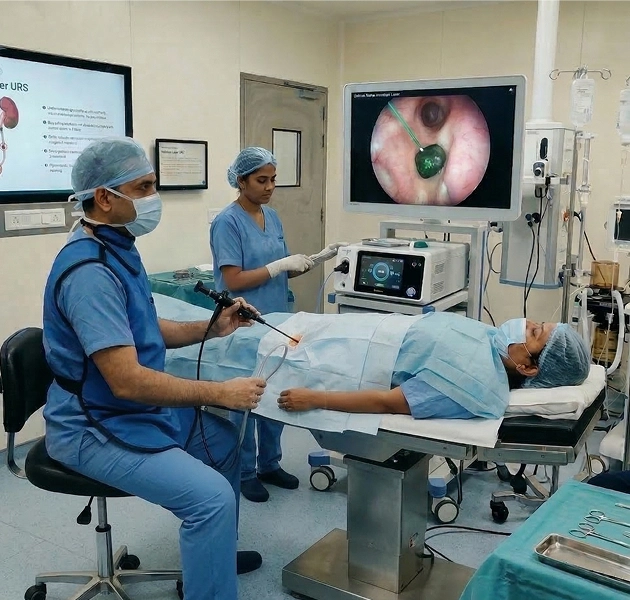
A ureteric stone is a kidney stone that has passed out of the kidney and become lodged in the ureter — the narrow muscular tube connecting the kidney to the bladder. Because the ureter is only 3–4mm wide at its narrowest points, even small stones can cause complete obstruction and severe pain.
The ureter contracts powerfully to try to push the stone downward, causing the characteristic severe loin-to-groin pain of renal colic — often described as the worst pain a person can experience, and one of the most common reasons patients seek ureteric stone treatment in Ahmedabad. Treatment options depend on stone size, location in the ureter, and whether there is associated infection or obstruction. Ureteroscopy (URS) with Holmium laser is the most effective single procedure, clearing 95% of ureteric stones in a single day-care session.
The location of the stone in the ureter, its size and whether there is associated obstruction or infection determines which treatment is most appropriate for you.
Stone lodged in the upper third of the ureter close to the kidney. ESWL (shockwave lithotripsy) is effective for smaller stones here. URS flexible ureteroscopy used for larger stones or ESWL failures. Can cause significant flank pain and hydronephrosis.
ESWL / Flex URSStone in the middle third of the ureter — most challenging location. URS with semi-rigid or flexible ureteroscope and Holmium laser is the treatment of choice. ESWL less effective here due to overlying bowel. High stone-free rate with URS in a single
Semi-rigid URSStone in the lower third of the ureter close to the bladder. Small stones under 5mm here have 70–80% spontaneous passage rate with tamsulosin. ESWL effective for stones up to 10mm. URS used for larger stones or failed medical expulsion. Least likely to cause hydronephrosis.
Medical Expulsion FirstStone blocking the ureter with superimposed kidney infection (pyonephrosis) — a urological emergency. Fever, rigors and loin pain with a stone on scan. Requires emergency drainage (JJ stent or nephrostomy tube) followed by elective URS once infection is controlled.
Urological EmergencyUreteric stone symptoms range from excruciating renal colic to subtle blood in urine. Know which symptoms need emergency care and which allow time for planned treatment.
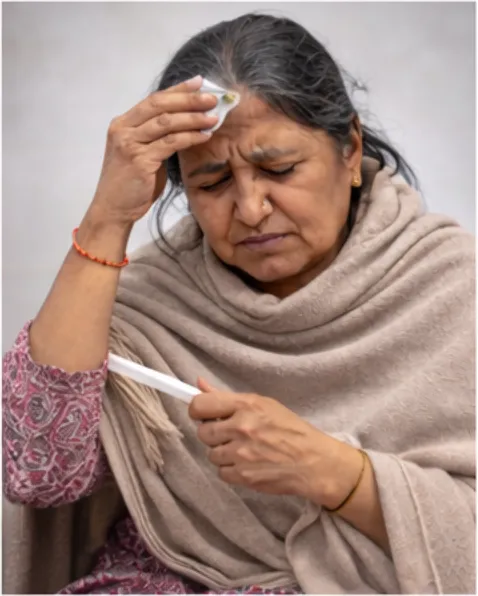
Stone + fever = infected obstructed kidney. Urological emergency — call immediately, do not wait for morning.
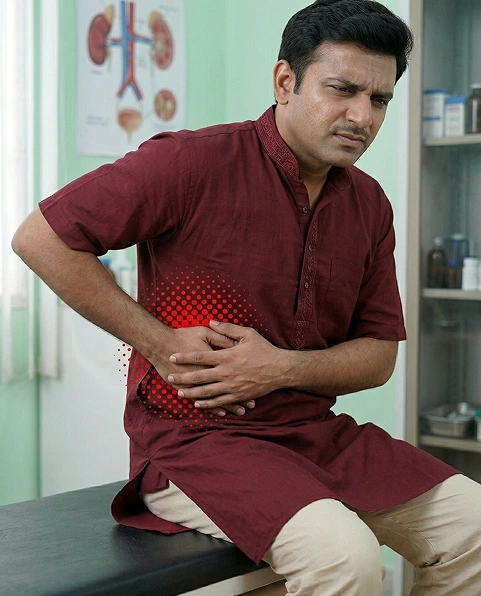
Sudden, severe loin-to-groin pain in waves — often described as the worst pain imaginable. Cannot find a comfortable position.
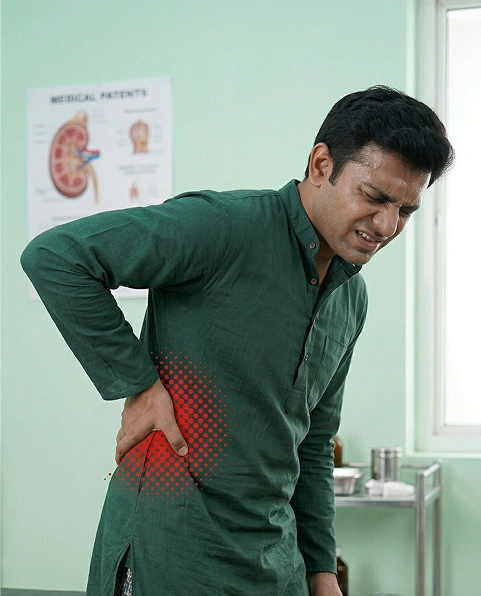
Constant or intermittent pain in the side or back below the ribs — from the kidney being obstructed and distending with urine.
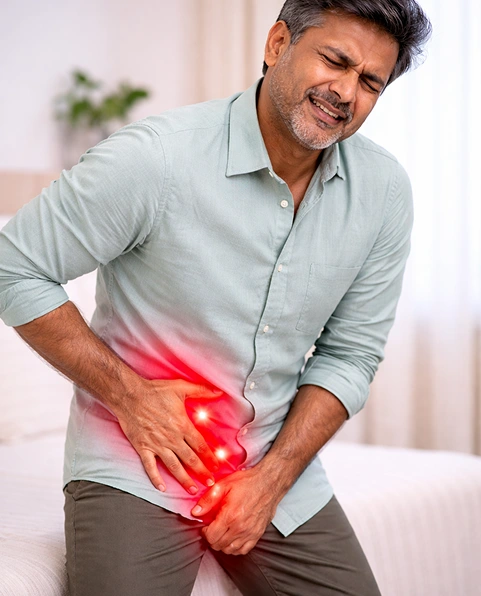
Pain moving from loin down to the groin, inner thigh or genitals as the stone descends the ureter — classic ureteric colic pattern.
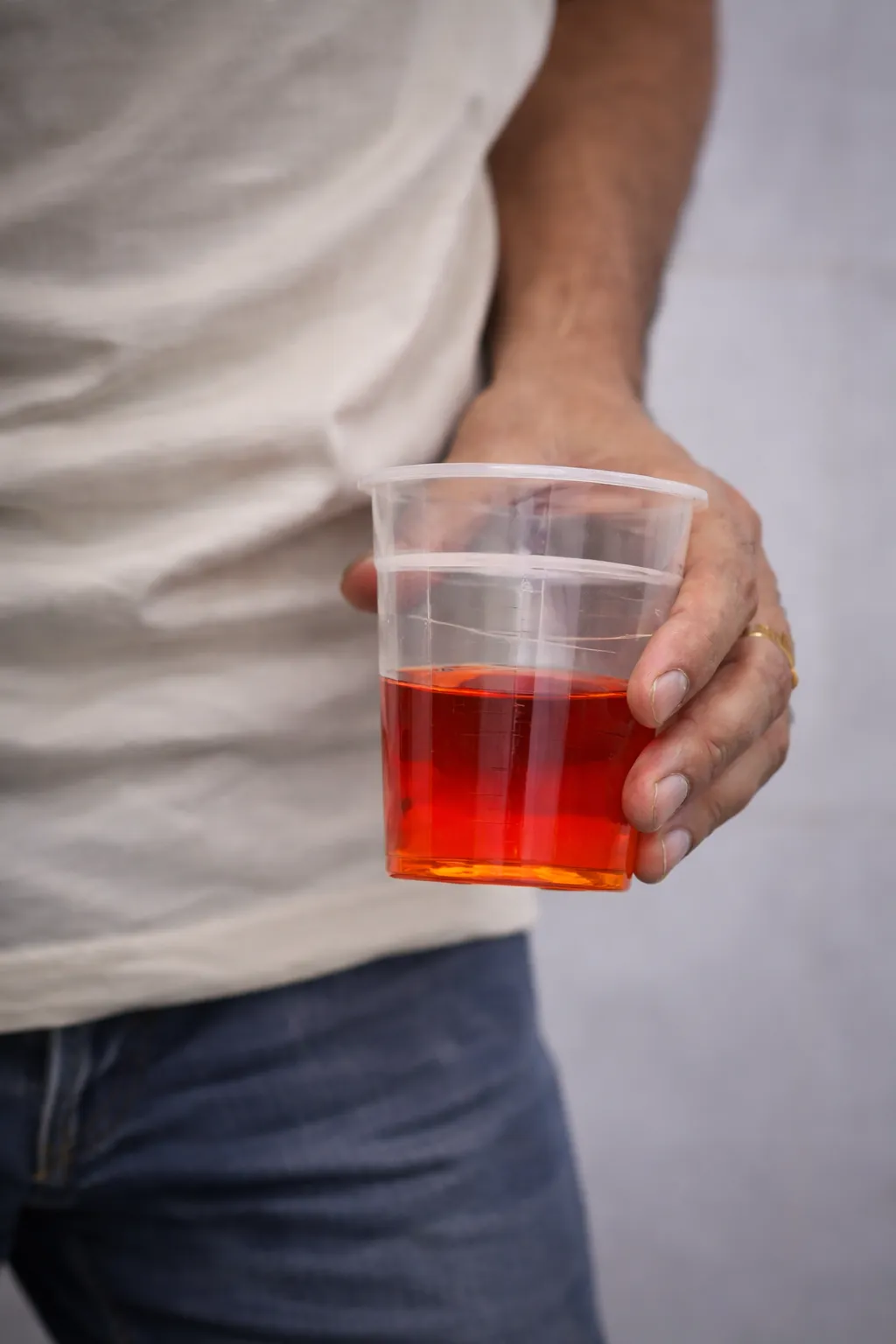
Pink, red or brown urine — the stone scrapes the ureter wall as it moves. Present in 90% of ureteric stone cases.
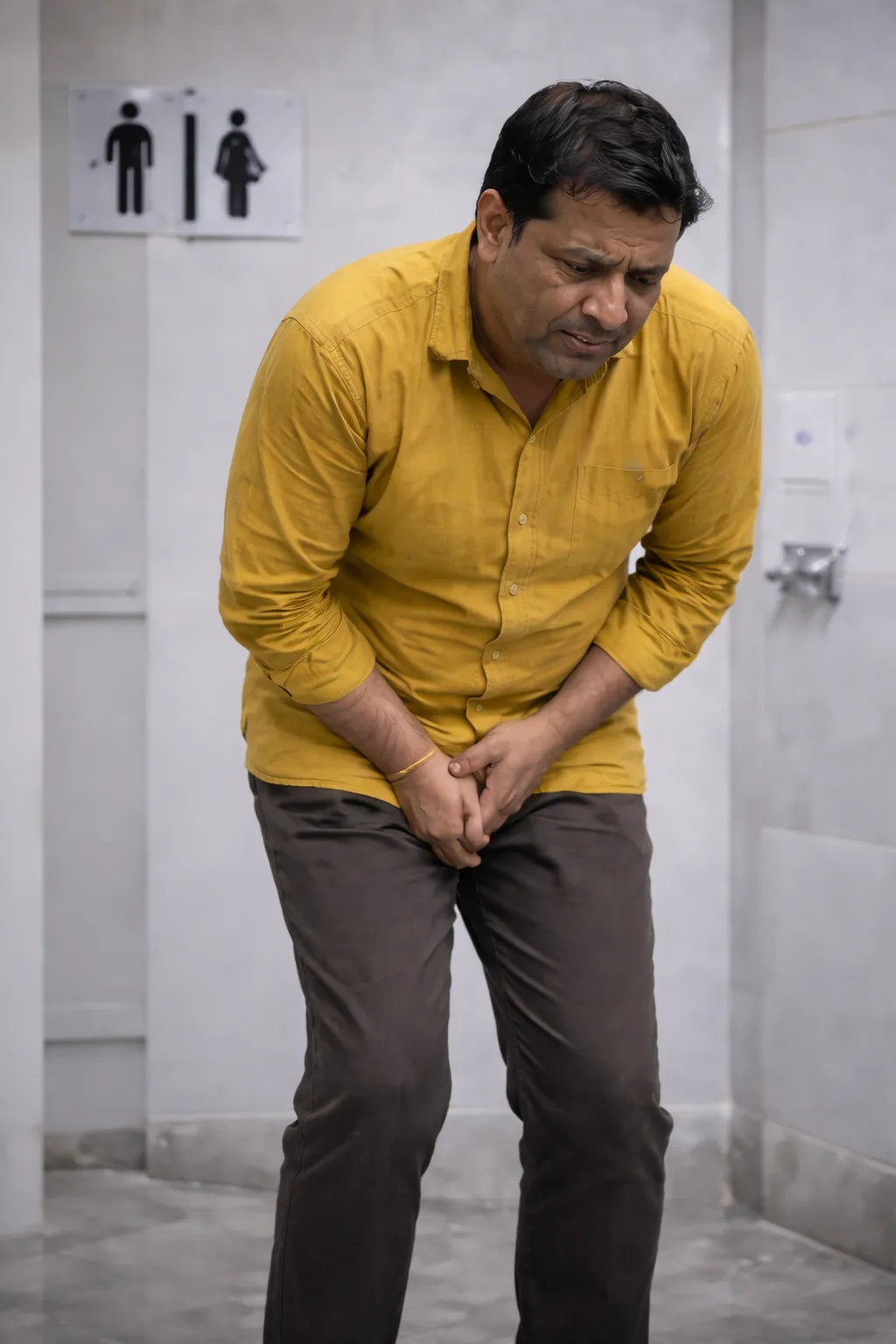
Frequent urge to urinate and urgency — especially when the stone is near the bladder in the lower ureter, irritating the bladder.
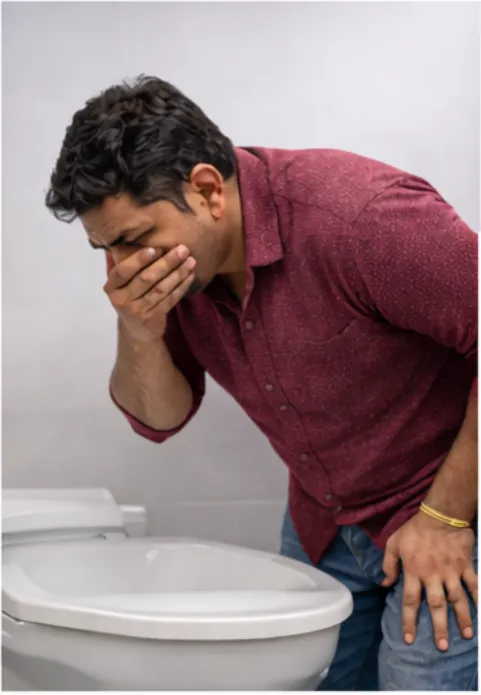
Severe pain of renal colic triggers nausea and vomiting — often preventing oral pain medication, requiring IV or suppository analgesia.
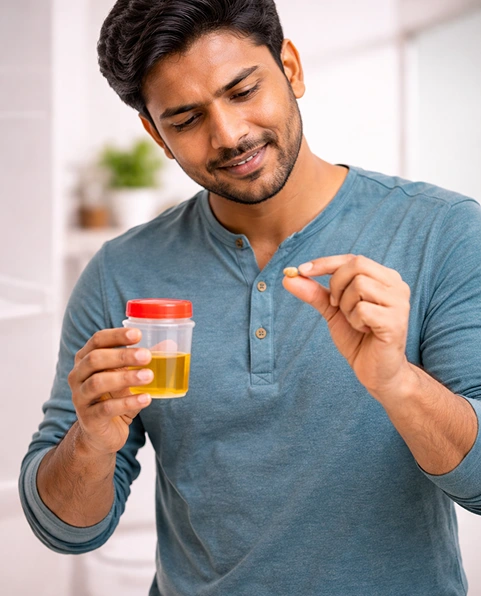
Sudden relief of colic followed by passing a small gritty stone in urine — confirmation of spontaneous passage. Strain urine to collect the stone for analysis.
Not every ureteric stone needs immediate surgery. Treatment depends on stone size, ureter location, degree of obstruction and whether there is associated infection. We always recommend the least invasive effective option first.
Our ureteric stone programme combines precise CT-based planning, Holmium laser URS technology, 24/7 emergency cover and a genuine metabolic prevention plan.

Senior Consultant Urologist — Urinary Stone Surgery & Endourology Specialist, Trayam Hospital
Dr. Renish Patel has performed over 3,000 ureteroscopy procedures — including complex impacted stones, solitary kidney cases and stones in pregnancy. The philosophy is straightforward: offer medical expulsive therapy where appropriate, use Holmium laser URS when intervention is needed, and always complete metabolic evaluation so the next stone never forms.
Ureteric stone treatment focuses too often on the acute stone and too rarely on preventing the next one. Half of stone formers will have another stone within 10 years without metabolic evaluation — yet this investigation is rarely performed after stone passage or URS.
Every patient receives a non-contrast CT KUB before treatment planning. Stone size, density, location and obstruction are mapped precisely — ensuring the right procedure first time.
When intervention is needed, we use Holmium:YAG laser ureteroscopy — the most effective technology available, achieving 95% stone-free rate in a single day-care procedure.
Every stone patient receives stone composition analysis and metabolic evaluation. A personalised prevention plan reduces recurrence from 50% to under 15%. We treat the stone and its cause.
Bring your imaging if available — or we start with a CT KUB. If you’re looking for a ureter stone surgeon in Ahmedabad, we’ll map the stone, give rapid pain relief and plan the right treatment.
Confidential · No Obligation · Reply in 2 Hours
URS recovery is straightforward — most patients are home the same day. Here is what to expect during recovery, and the evidence-based steps to prevent stones from forming again.
A bladder infection (cystitis) causes burning on urination, frequency and cloudy urine — but no fever. A kidney infection (pyelonephritis) causes high fever, rigors, loin pain and vomiting in addition to urinary symptoms. Any UTI with fever must be assessed urgently — it may be a kidney infection requiring IV antibiotics and investigation for obstruction.
Recurrent UTI (3 or more per year) almost always has an underlying cause. In women: incomplete bladder emptying, hormonal changes after menopause, anatomical factors or post-coital pattern. In men: prostate enlargement causing residual urine. In both: antibiotic resistance from incomplete previous treatment. We investigate the cause before treating — not just repeat antibiotics.
For a first-time uncomplicated UTI in a young woman, a short empirical course may be reasonable. But for any recurrent, complicated, upper tract, male or catheter-associated UTI — empirical treatment without culture risks using the wrong antibiotic, prolonging symptoms and driving antibiotic resistance. We always culture before treating these cases.
Uncomplicated lower UTI (cystitis) typically resolves within 3–7 days on the correct targeted antibiotic. Symptoms of burning and frequency usually start improving within 24–48 hours of correct therapy. Upper UTI (pyelonephritis) requires 10–14 days. If symptoms persist beyond 48–72 hours, a urine culture re-check is essential to confirm the right antibiotic is being used.
Yes — repeated upper urinary tract infections (pyelonephritis) or untreated complicated UTI can cause renal scarring and progressive kidney damage. An infected obstructed kidney that is not drained promptly is particularly dangerous. This is why prompt, culture-guided treatment of upper UTI is critical, and why recurrent UTI must be investigated for underlying causes.
Recurrent UTI evaluation includes: urine culture and sensitivity for the current episode, renal and bladder ultrasound, post-void residual measurement, uroflowmetry if obstruction is suspected, and blood tests including renal function. In postmenopausal women, hormonal assessment. In men, prostate evaluation. In children, VUR assessment.
Some evidence supports modest benefits of cranberry products and D-mannose for UTI prevention in women with recurrent uncomplicated UTI — they reduce bacterial adhesion to bladder wall cells. They are not a substitute for investigation and treatment of recurrent UTI but are safe supplements with no resistance risk. We provide evidence-based guidance on both as part of prevention planning.
UTI in men is less common than in women and is almost always considered a complicated UTI — warranting full investigation for a structural or obstructive cause such as BPH, urethral stricture or kidney stone. A UTI in a man should never be treated as a simple uncomplicated infection without proper evaluation including a prostate assessment and renal ultrasound.
UTI treatment requiring hospitalisation — such as IV antibiotic treatment for pyelonephritis or emergency drainage of an infected obstructed kidney — is covered by all Indian health insurance policies. Trayam Hospital in Ahmedabad is empanelled with all major insurers. Outpatient UTI consultation and oral antibiotics may be claimed under OPD benefit depending on your policy terms.
Effective UTI prevention: adequate hydration (2.5 litres per day), urinating promptly when the urge arises, post-coital voiding within 30 minutes for women, wiping front to back, avoiding harsh soaps near the urethra, and — for postmenopausal women — topical vaginal oestrogen if appropriate. We provide a personalised prevention plan for every recurrent UTI patient.
Bring your CT or ultrasound if you have one — or we start with a CT KUB. Rapid pain relief, day-care URS, metabolic evaluation and a prevention plan that actually works.