When only one compartment of your knee is damaged, a full replacement is not always necessary. Unilateral (partial) knee replacement preserves healthy bone and tissue, with a smaller incision, less blood loss and a faster return to normal life than total knee replacement.
Our specialist will call you within 2 hours
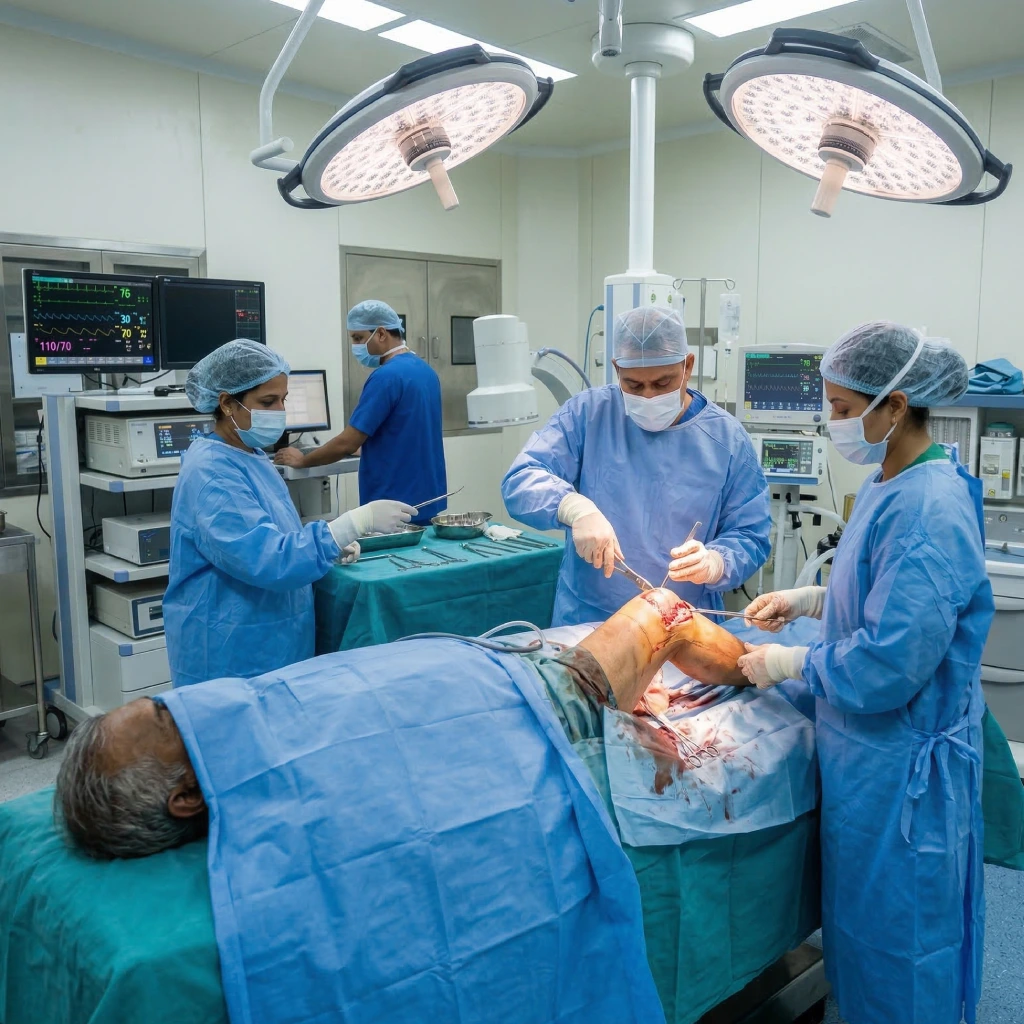
Unilateral Knee Replacement (UKR) — also called Partial or Unicompartmental Knee Replacement — is a specialised procedure performed by an experienced partial knee replacement surgeon, where only the damaged compartment of the knee joint is replaced while the healthy cartilage, bone and ligaments remain completely intact. The knee has three compartments: medial (inner), lateral (outer) and patellofemoral (kneecap). When arthritis is confined to just one of these, UKR is a more conservative and effective solution than replacing the entire joint.
At Trayam Hospital, we use minimally invasive surgical techniques for UKR — resulting in a smaller incision (8–10cm versus 20–25cm in traditional open surgery), significantly reduced blood loss and a markedly faster recovery. Most patients walk the day after surgery, are discharged in 2–3 days and return to full daily activities within 3–4 weeks — considerably faster than total knee replacement.
If you're experiencing any of these symptoms, a consultation with our specialist is recommended
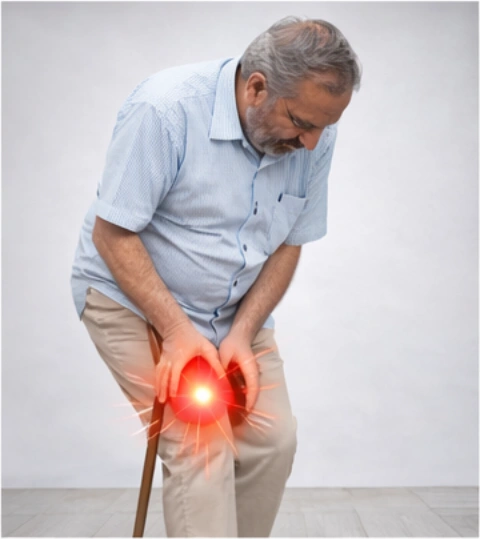
Pain concentrated on the inner side of the knee — typically worsened by walking, stair climbing or standing for extended periods. Medial compartment arthritis is the most common indication for UKR.
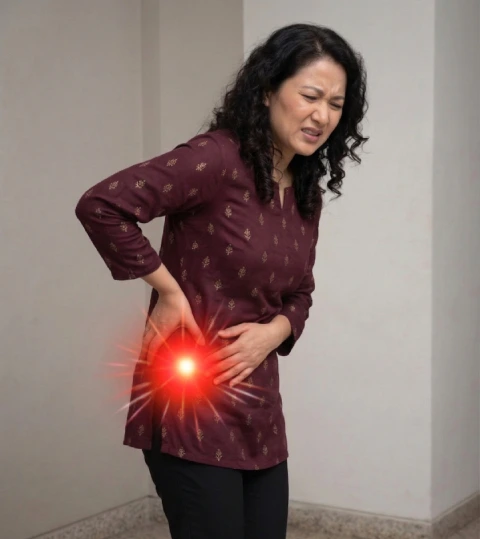
Arthritis pain localised to one side of the knee with the opposite side relatively pain-free. This asymmetric pattern strongly suggests single-compartment disease appropriate for partial replacement.
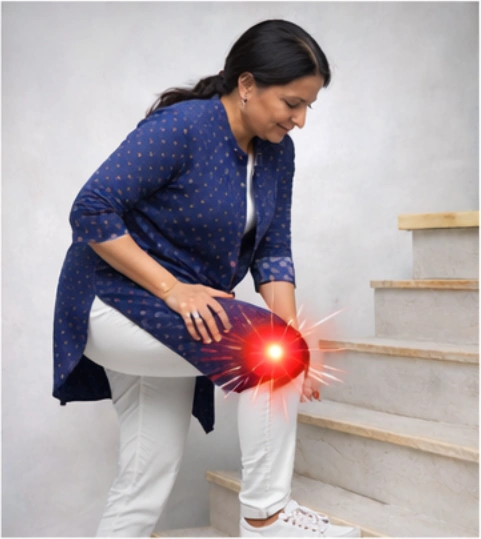
Significant pain when climbing or descending stairs, slopes or inclines — while flat walking may still be manageable. Single-compartment load increases sharply on stairs, causing localised pain.
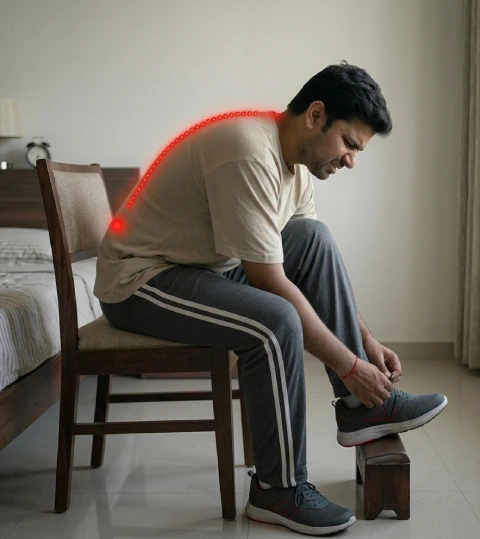
Stiffness on waking that eases within 20–30 minutes of movement. Persistent stiffness throughout the day suggests advanced single-compartment arthritis requiring surgical evaluation.
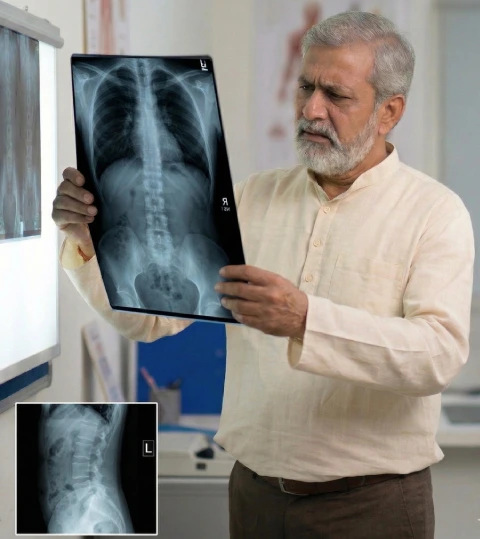
X-ray or MRI showing joint space narrowing, bone-on-bone contact or osteophytes confined to one compartment of the knee — with the other compartment largely preserved. This is the definitive imaging indication for UKR.
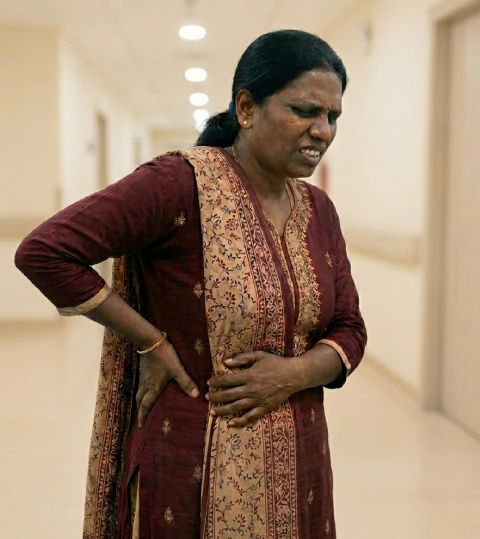
Pain and stiffness that no longer respond adequately to physiotherapy, anti-inflammatory medications, injections or activity modification — despite 3–6 months of consistent treatment.

Inability to walk comfortable distances, play recreational sports, or maintain an active lifestyle due to knee pain — in a patient who is otherwise fit and healthy. UKR restores activity with a faster recovery than TKR.
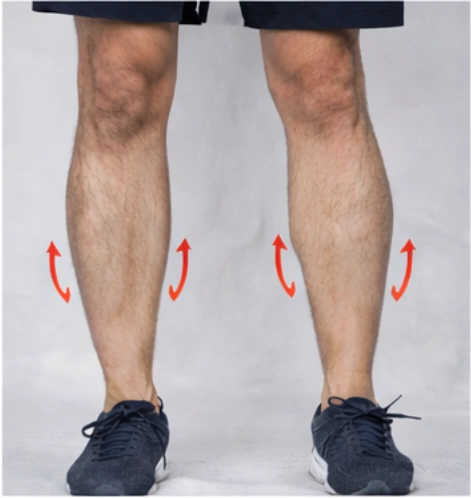
UKR is most appropriate when the knee alignment is relatively well maintained — without significant varus or valgus deformity. Your surgeon will assess alignment on standing X-rays to confirm suitability.
Hundreds of patients choose Trayam Hospital for unilateral knee replacement each year — here's why.

Senior Consultant — Joint Replacement & Orthopaedics, Trayam Hospital
Dr. Parth Patel is one of India's most experienced joint replacement surgeons, with specific expertise in unicompartmental knee replacement — a procedure requiring considerably greater precision and patient selection skill than total knee replacement. With over 10 years of experience and thousands of successful knee surgeries, Dr. Parth Patel has helped hundreds of patients avoid total knee replacement by correctly identifying and treating single-compartment disease at the right time.
Our orthopaedic team offers the full range of knee replacement and knee preservation procedures — tailored to your specific pattern of damage.
A step-by-step guide to your recovery after Total Knee Replacement at Trayam Hospital.
Surgery completed. Physiotherapy begins within hours. First assisted walk with support.
Discharged home. Walking with a walker or crutches. Pain well-controlled with oral medication.
Sutures removed at outpatient review. Home exercises continuing. Swelling reducing noticeably.
Walking without aid for most patients. Driving possible from week 3–4 (left leg) or week 4–6 (right leg). Return to desk work.
Most daily activities fully resumed. Stair climbing comfortable. Physiotherapy progressing to strength and balance work.
Return to recreational activities, light sport and travel. Full functional recovery for the majority of patients. Follow-up X-ray to confirm implant position.
One of the most common and costly errors in knee surgery in India is recommending total knee replacement when single-compartment arthritis — correctly assessed — would be better served by a partial replacement. A UKR preserves more bone, recovers faster and delivers an excellent outcome for the right patient. Many patients undergo unnecessary total replacements because the treating surgeon did not specialise in unicompartmental surgery, or because the financial incentive favoured the more expensive procedure.
We give you a fully itemised estimate covering surgery, implant, stay, physio and follow-ups — in writing, before you book. No surprises after admission.
Our surgeons recommend only the procedure your condition requires. UKR when that is right. TKR when that is right. No financial pressure on the choice.
We help you claim exactly what you are entitled to — nothing inflated, nothing hidden. Your insurer stays respected, your coverage stays intact.
Speak to our team today — get a clear, honest assessment of whether partial or total knee replacement is right for you.
Confidential · No Obligation · Reply in 2 Hours
In partial (unilateral) knee replacement, only the damaged compartment of the knee is replaced — healthy bone, cartilage and ligaments on the other side are preserved. In total knee replacement, the entire joint surface is resurfaced. Partial replacement is appropriate when arthritis is confined to one compartment, offering faster recovery and a more natural knee feel.
Ideal candidates have arthritis confirmed to a single compartment on X-ray or MRI, relatively preserved knee alignment and functioning cruciate ligaments. Your surgeon will assess standing X-rays, MRI findings and clinical examination to determine whether UKR or TKR gives you the best outcome.
The procedure takes approximately 1 to 1.5 hours under spinal or general anaesthesia. Total time in the operating theatre including preparation is approximately 2–2.5 hours.
Most patients are discharged in 2–3 days — typically a day shorter than after total knee replacement, as the procedure is less extensive and recovery begins faster.
Most patients walk with assistance within 24 hours of surgery. By discharge most walk with a walker, progressing to unaided walking by 3–4 weeks.
In correctly selected patients, UKR outcomes at 10–10 years are equivalent to TKR. The key is proper patient selection — confirmed single-compartment arthritis, preserved alignment and intact ligaments. Long-term outcomes from recent studies are comparable to total replacement.
Yes — UKR is specifically designed to be convertible. If arthritis progresses to other compartments, total knee replacement can be performed without compromising the outcome. The bone-preserving nature of UKR actually simplifies future conversion.
Yes — unicompartmental knee replacement is covered by most major health insurance policies and PMJAY (Ayushman Bharat). Our insurance desk assists with pre-authorisation and cashless hospitalisation at Trayam.
Talk to our knee specialist today — find out if partial knee replacement is the right choice for you. Free consultation, no obligation.