Sudden leg or arm weakness, numbness, or loss of bladder/bowel control? Neurological spine emergency — seek immediate care now.
The most minimally invasive spine surgery available, performed by an endoscopic spine surgeon in Ahmedabad. A needle-sized 8mm portal, a live HD camera, and pinpoint disc removal — no large incision, no muscle stripping, no general anaesthesia for most patients. Walk within the hour.
Share your MRI — we'll respond within 2 hours
100% confidential & no obligation
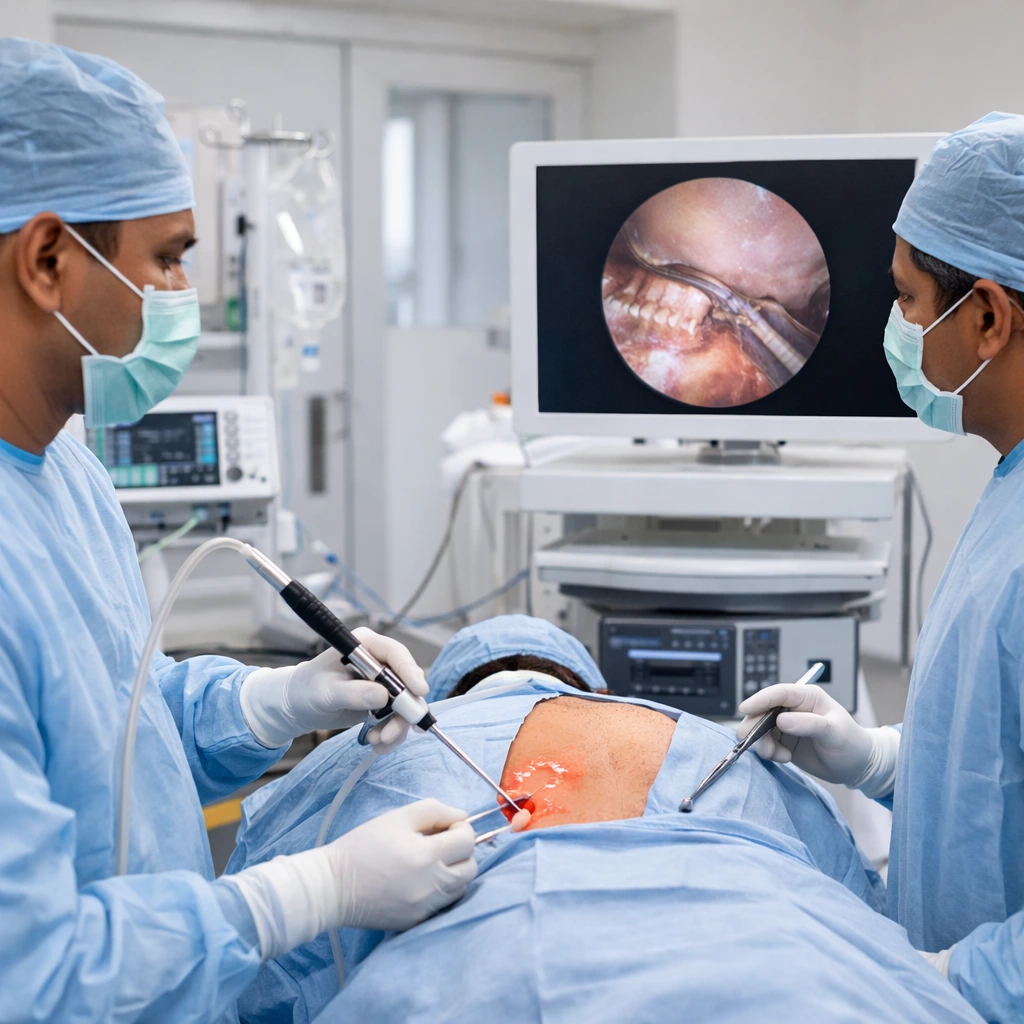
Endoscopic spine surgery represents the absolute frontier of minimally invasive spine care and is widely performed with advanced expertise. Unlike even tubular microscopic surgery, endoscopic procedures require no incision larger than 8mm — a needle-sized entry point through which a high-definition camera and working instruments are passed directly to the affected disc or nerve.
There is no muscle cutting, no muscle retraction and no significant tissue trauma. Most lumbar endoscopic disc procedures are performed under local anaesthesia with sedation — meaning no general anaesthesia, no breathing tube, and most patients are walking within an hour of finishing surgery. Same-day discharge is standard for eligible patients.

The gold-standard endoscopic procedure for lumbar disc herniation causing sciatica. An 8mm endoscope is guided to the herniated fragment via transforaminal or interlaminar approach and the fragment is removed under live HD vision.
Gold Standard
Endoscopic removal of a herniated cervical disc causing neck pain radiating into the arm. Approached anteriorly (front of neck) or posteriorly. Avoids the fusion required in traditional ACDF — motion is preserved.
Motion Preserving
The foramen — the tunnel through which nerve roots exit the spine — can be narrowed by bone spurs or a herniated disc. Endoscopic foraminotomy widens this tunnel through a single needle port, decompressing the nerve without open surgery.
Nerve Decompression
Two 8mm portals — one for the HD camera, one for instruments — giving the freedom of open surgery with the access trauma of endoscopy. UBE handles spinal stenosis, laminectomy and even fusion cases not possible with single-portal endoscopy.
Advanced / VersatileEndoscopic surgery delivers its best results for nerve-compression symptoms caused by disc herniation or foraminal stenosis. Red-flag symptoms require immediate assessment.
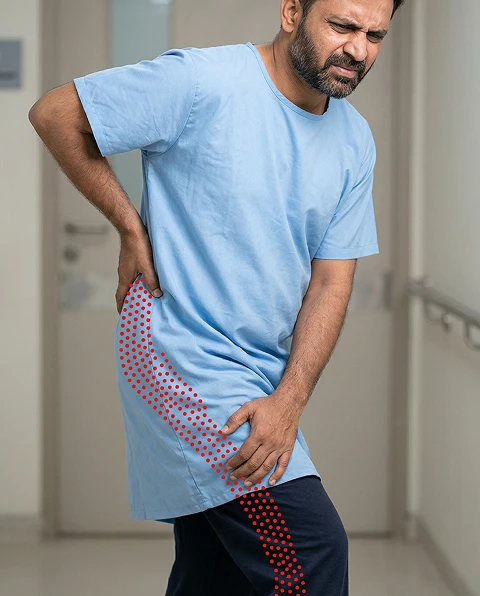
Sharp, burning pain shooting from the lower back through the buttock and into the leg — the classic disc herniation symptom that responds best to PELD endoscopic discectomy
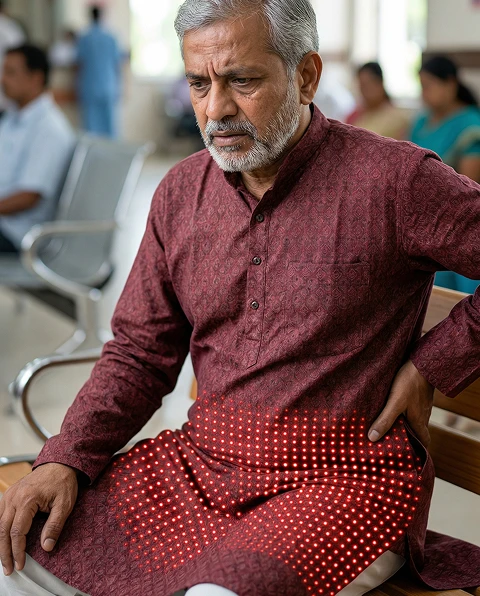
Loss of bladder or bowel control with saddle numbness — cauda equina syndrome is a surgical emergency requiring immediate open or endoscopic decompression

Pain, numbness or tingling radiating from the neck down the arm — cervical disc herniation ideally treated with PECD endoscopic discectomy preserving spinal motion
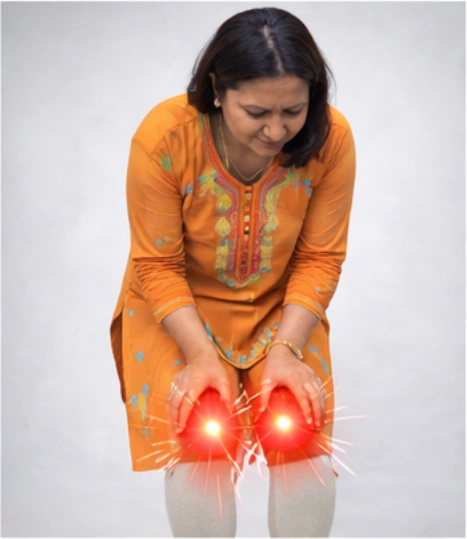
Progressive weakness in the leg or difficulty lifting the foot — indicates significant nerve compression requiring urgent endoscopic or surgical decompression
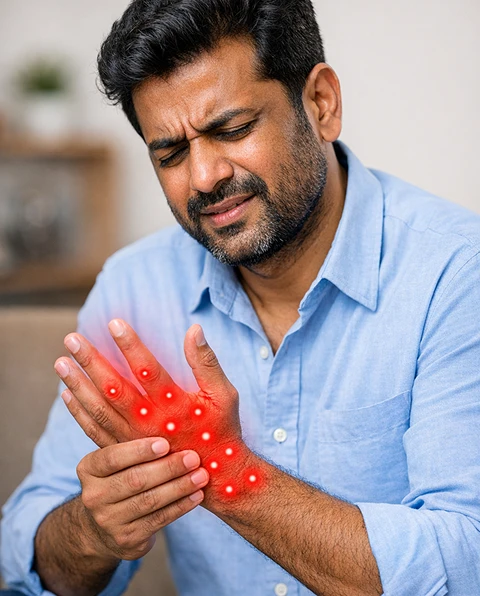
Persistent pins and needles in hands, arms, legs or feet from foraminal nerve compression — excellent candidate for endoscopic foraminotomy
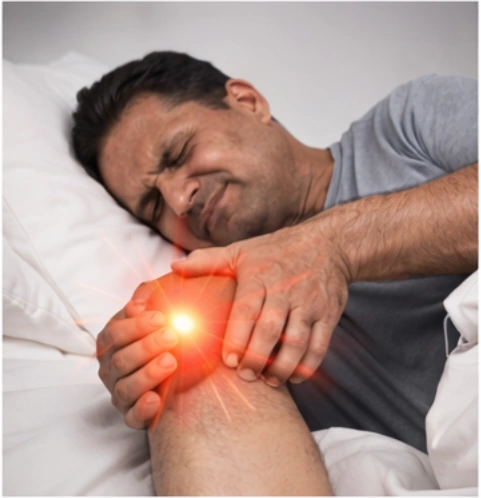
Pinching nerve pain from a narrowed neural foramen — one of the best indications for single-portal endoscopic surgery with excellent decompression through 8mm access
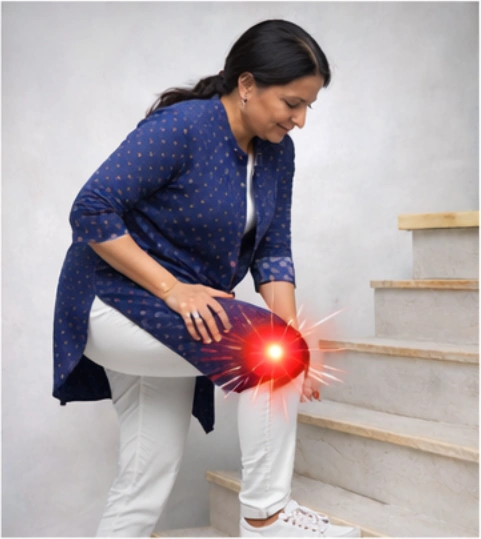
Spinal stenosis causing leg pain and cramp after short distances — treatable with UBE biportal endoscopic laminectomy or decompression without open surgery
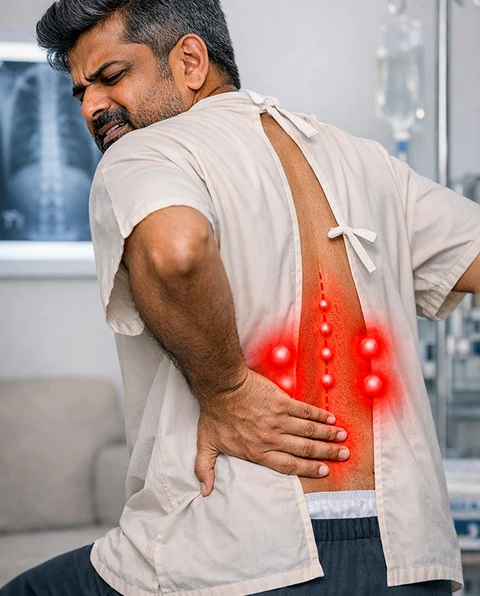
Told you need a large open spine operation? Many open surgery candidates are eligible for endoscopic alternatives — get an honest second opinion before committing
From single-level lumbar disc herniation to multi-level stenosis, endoscopic spine surgery uses the right technique for your specific anatomy and diagnosis.
All three approaches treat the same spinal conditions — but the experience, recovery and risks differ dramatically. Here is an honest comparison to help you understand your options.
| Comparison Factor |
✦ Endoscopic Surgery ⭐ Most Minimally Invasive
|
Microscopic (Tubular) MISS | Open Surgery |
|---|---|---|---|
| Incision / Access Size | ~8mm (needle stab) | 1.5–2cm incision | 8–15cm incision |
| Muscle Cutting / Retraction | None | Minimal — dilated | Extensive — stripped |
| Anaesthesia | Local + Sedation (lumbar) | General / Spinal | General Anaesthesia |
| Blood Loss | <10 ml | <50 ml | 200–500 ml |
| Hospital Stay | Same day / 24 hrs | 24–48 hrs | 3–7 days |
| Walking After Surgery | Within 1 hour | Same day | Next day or later |
| Return to Desk Work | 3–7 days | 2–4 weeks | 6–12 weeks |
| Post-op Pain Level | Minimal — oral meds | Low — oral meds | Significant — IV meds |
| Wound Infection Risk | Very Low (<0.5%) | Low (<1%) | Moderate (2–4%) |
| Revision Surgery Advantage | Excellent — avoids scar | Good | High risk — scar tissue |
| Suitable for Fusion? | UBE technique only | Yes — MIS-TLIF, PLIF | Yes — full range |
| Clinical Outcome Quality | Equivalent to open | Equivalent to open | Reference standard |
Scroll to see full comparison
Note: Endoscopic surgery delivers equivalent clinical outcomes to open surgery for appropriate cases. Suitability depends on your diagnosis, anatomy and spinal level — our surgeon will confirm at consultation whether endoscopic is the right choice for you.
Endoscopic spine surgery demands exceptional technical skill — very few surgeons in India are trained to the level required, making access to an experienced endoscopic spine surgeon in Ahmedabad important.
Senior Consultant Spine Surgeon — Minimally Invasive & Endoscopic Spine Surgery
Dr. Parth Patel is one of the few spine surgeons in India with dedicated training in the full spectrum of endoscopic spine techniques — PELD (transforaminal and interlaminar), PECD, endoscopic foraminotomy, and UBE biportal endoscopy. With over 1,500 endoscopic spine procedures performed, the focus is always on achieving the best clinical result through the least invasive access possible.
Most patients with disc herniation and sciatica are not told that endoscopic options exist — either because their surgeon doesn't offer it, or because open surgery is more familiar. Here are the red flags to watch for.
Every patient's MRI is reviewed in detail before a procedure is suggested. Endoscopic suitability depends on disc location, fragment type, level anatomy and canal dimensions — we assess all of these before advising you.
Endoscopic surgery is ideal for disc herniation and foraminal stenosis. But complex instability, severe deformity and multi-level fusion needs are better served by microscopic MISS or open surgery. We tell you which approach is genuinely best — even when it isn't our most advanced technique.
Endoscopic surgery's fast recovery still requires guided physiotherapy. A structured programme starts within 48 hours — core activation, posture training and return-to-activity plan. Surgery alone without rehab delivers incomplete results.
Get an honest assessment of whether endoscopic spine surgery is right for you — WhatsApp your MRI and our surgeon will review it and give you a clear recommendation.
Endoscopic surgery has the fastest recovery of any spinal procedure — but following these guidelines ensures you achieve and sustain the best possible result.
Endoscopic spine surgery uses a high-definition camera (endoscope) passed through an 8mm needle-sized stab — smaller than your thumbnail — to visualise and treat spinal problems in real time. It is the most minimally invasive form of spine surgery available. No incision larger than 8mm is made. No muscle is cut. Most patients have no visible scar once healed.
Both are minimally invasive, but endoscopic is the extreme end of the spectrum. Microscopic MISS uses a 1.5–2cm incision and a tubular retractor with an external surgical microscope. Endoscopic surgery uses an 8mm needle portal and an internal camera — no visible incision, no external scope. Endoscopic has less tissue trauma, faster recovery and can often be done under local anaesthesia. However, it is more technically demanding and its indications are more selective — mainly disc herniation and foraminal stenosis rather than complex fusion procedures.
Yes — many lumbar PELD procedures are performed under local anaesthesia with intravenous sedation. This means no general anaesthesia, no breathing tube, faster awakening and faster discharge. The patient is awake and can communicate with the surgeon — which is actually an important safety advantage, as any inadvertent nerve contact can be reported immediately. Cervical procedures and UBE typically require general or regional anaesthesia.
Most lumbar PELD disc patients are discharged the same day — typically 4–6 hours after the procedure, once they have eaten, mobilised comfortably and passed urine. Cervical endoscopic patients usually stay overnight. UBE biportal cases may require 24–48 hours depending on the extent of decompression performed.
PELD is the most common endoscopic spine procedure. It removes a herniated lumbar disc fragment through an 8mm endoscope guided to the exact site of the herniation under X-ray and live HD vision. The herniated fragment pressing on the nerve root is removed precisely, immediately relieving the sciatic nerve pain. PELD is suitable for both transforaminal and interlaminar approaches depending on disc location and anatomy.
UBE (Unilateral Biportal Endoscopy) uses two 8mm portals — one for the camera and one for instruments — with continuous saline irrigation. This biportal setup gives surgical freedom comparable to open microscopic surgery but through two needle entries. UBE is used for spinal canal stenosis (laminectomy/laminotomy), bilateral decompression and even selected fusion procedures — cases that single-portal endoscopy cannot handle. It is the most versatile endoscopic technique available.
Yes — and this is one of endoscopy’s greatest advantages. Recurrent disc herniation after previous open surgery is surrounded by scar tissue that makes open revision significantly more dangerous. Endoscopic revision uses a fresh, virgin tissue corridor to access the disc — completely bypassing the scarred zone of the previous operation. This makes endoscopic revision surgery substantially safer and more precise than open re-exploration.
Desk work and light activity typically resume at 3–7 days after PELD lumbar disc surgery. Driving at 7–10 days. Physical labour and sports return at 4–8 weeks depending on procedure. For UBE (stenosis/fusion cases), desk work returns at 1–2 weeks and physical labour at 8–12 weeks. These timelines are consistently faster than any other surgical approach for equivalent spinal conditions.
Yes — endoscopic spine procedures including PELD, PECD, endoscopic foraminotomy and UBE are covered by most Indian health insurance policies. Trayam Hospital in Ahmedabad is empanelled with all major insurers with cashless facility. Our insurance team handles pre-authorisation and the full claims process from your first consultation.
Ideal candidates are patients with lumbar or cervical disc herniation, foraminal stenosis, lateral recess stenosis or spinal canal stenosis (UBE) confirmed on MRI — where the pathology correlates clearly with symptoms. Contraindications include severe multi-level spinal instability requiring complex fusion, major deformity and certain anatomy configurations that prevent safe endoscopic access. Our surgeon reviews your MRI to give a precise answer — WhatsApp your report for a rapid assessment.
WhatsApp your MRI report or call now — our surgeon will review it and tell you honestly whether endoscopic surgery is right for your disc.