From long bone fractures to complex periarticular injuries, paediatric fractures and spine fractures — our trauma team provides advanced bone fracture treatment in Ahmedabad using modern implant systems and minimally invasive techniques. The right surgery, done right the first time, makes the difference between full recovery and permanent disability.
Our specialist will call you within 2 hours
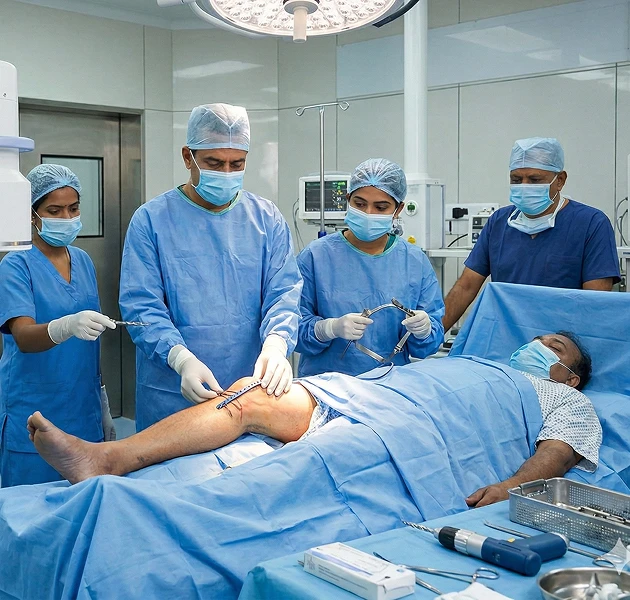
Fracture surgery — surgical fracture fixation — is the operative treatment of broken bones using implants (plates, screws, nails or external fixators) to hold bone fragments in the correct position while they heal, forming the basis of advanced bone fracture treatment in Ahmedabad. Not every fracture requires surgery — stable, well-aligned fractures in certain locations can heal with casting or splinting alone. But displaced fractures, unstable fractures, fractures in or near joints, open fractures (bone through the skin) and fractures in patients who cannot tolerate prolonged immobilisation all typically require surgical fixation to achieve reliable alignment, allow early mobilisation and prevent the complications of prolonged bed rest.
At Trayam Hospital, fracture surgery is performed using modern techniques by a leading fracture surgeon in Ahmedabad — intramedullary nailing for long bone fractures (a nail inserted inside the bone canal, minimising soft tissue disruption), minimally invasive percutaneous plating (MIPO) for periarticular fractures, and specialised paediatric implant systems for children that respect the growing skeleton. Emergency cases are managed around the clock by a dedicated trauma team. The goal is the same for every patient: anatomic or near-anatomic alignment of the fracture, stable fixation that allows early joint movement, and a rehabilitation plan that achieves the fastest possible full recovery.
Not all fractures need surgery — but these patterns almost always do. If you have sustained an injury matching any of these descriptions, urgent orthopaedic assessment is needed
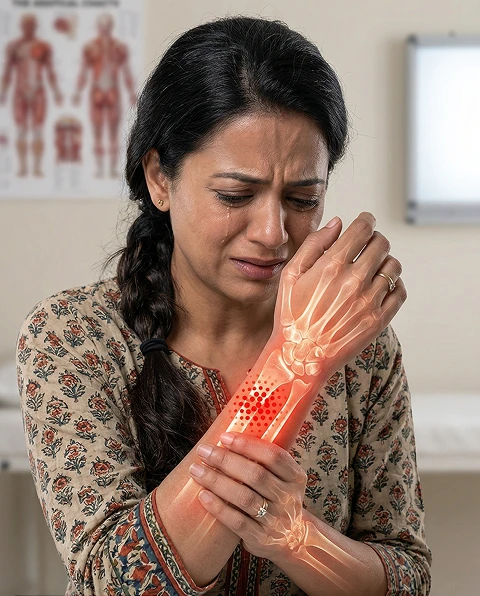
A fracture where the bone ends have moved significantly out of their normal position. Displaced fractures in most locations require surgical reduction (putting the bone back in place) and fixation to prevent malunion — healing in a crooked position that causes long-term deformity and dysfunction.
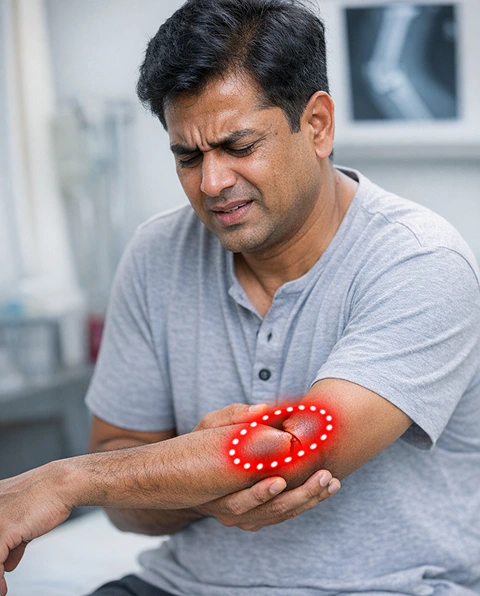
A fracture where the bone has broken through the skin — or where a wound communicates with the fracture site. Open fractures are surgical emergencies requiring urgent wound washout, debridement and fixation within hours to prevent deep bone infection (osteomyelitis) — the most serious complication of open fracture management.
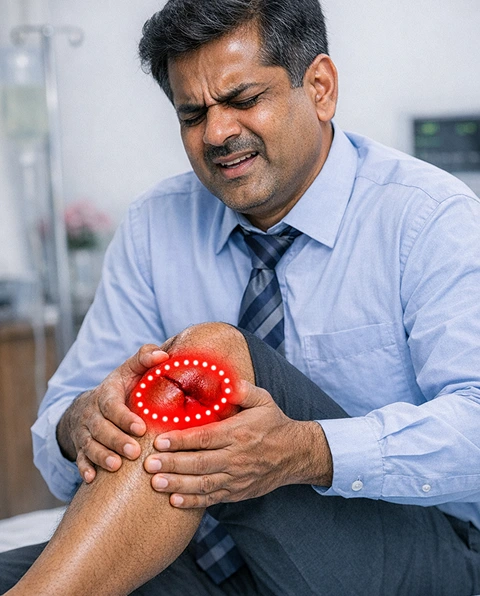
A fracture line that extends into a joint surface — ankle, knee, hip, wrist or elbow. Intra-articular fractures require precise anatomic reduction and fixation to restore the joint surface — even small steps or gaps in the articular cartilage cause post-traumatic arthritis if left untreated.
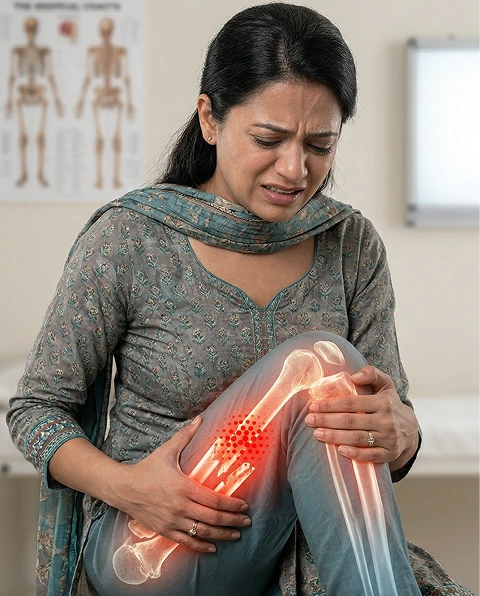
Fractures of the femur (thigh bone), tibia (shin bone) or humerus (upper arm) — particularly shaft fractures — are unstable and cannot be reliably held in a cast. Intramedullary nail fixation is the gold standard, allowing early mobilisation and weight-bearing without the prolonged immobilisation that increases DVT, muscle wasting and pneumonia risk.
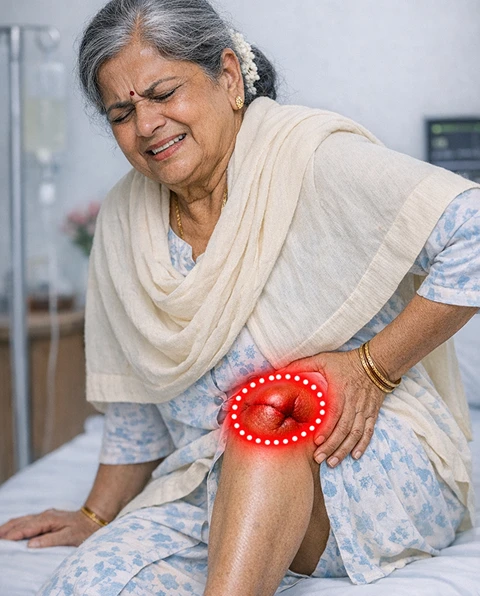
A fractured neck of femur or intertrochanteric fracture in an older patient is a surgical emergency — mortality rises significantly with each day of delay. Surgical fixation (DHS, cephalomedullary nail) or hip replacement restores mobility, prevents the life-threatening complications of immobility and enables rapid rehabilitation. Same-day or next-day surgery is the target.
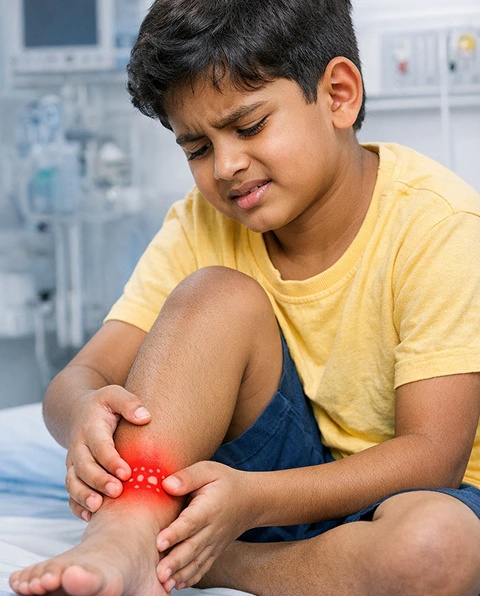
Fractures through or near the growth plate (physis) in children require careful assessment and often surgical fixation — growth plate injuries that are inadequately treated can cause growth disturbance, angular deformity or limb length discrepancy. Paediatric fracture management requires specific expertise in the growing skeleton.
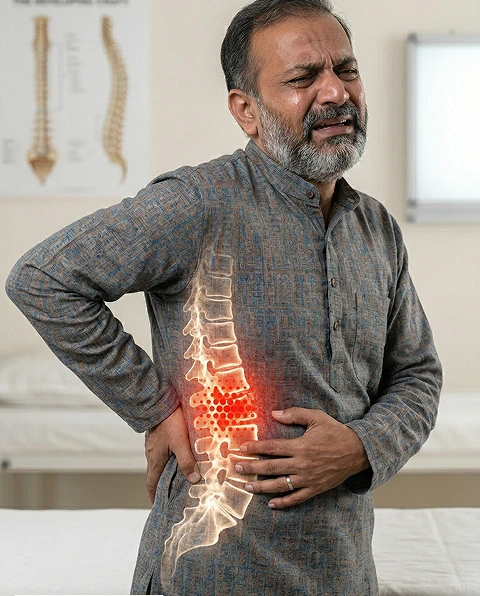
Fractures of the vertebral body — from a fall, road accident or osteoporosis — that are unstable, associated with neurological symptoms (weakness, numbness, loss of bladder or bowel control) or significantly displaced require surgical assessment. Stable compression fractures may be managed with a brace; unstable burst fractures require fixation to protect the spinal cord and nerve roots.
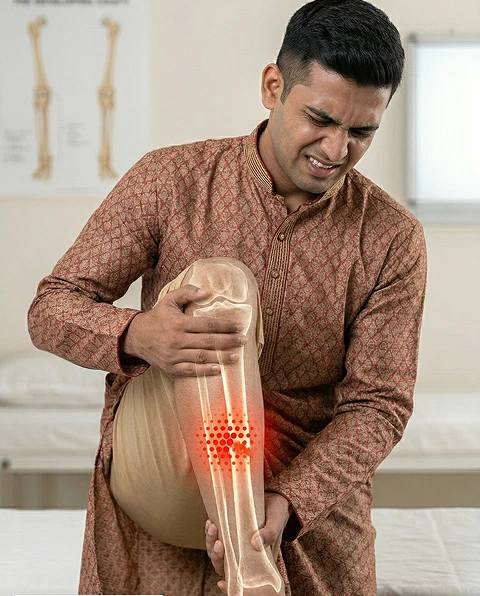
A fracture that has not shown adequate healing at the expected timeframe — delayed union (slow healing) or non-union (failure to heal). These require investigation of the cause (poor blood supply, inadequate fixation, infection, metabolic factors) and surgical intervention to stimulate healing — bone grafting, exchange nailing or revision fixation.
Fracture outcomes depend on timing, technique and implant — all three must be right

Senior Consultant — Orthopaedic Trauma & Fracture Surgery, Trayam Hospital
Dr. Parth Patel is a fellowship-trained orthopaedic trauma surgeon with AO Foundation training in fracture fixation principles and over 10 years of experience managing the full spectrum of orthopaedic trauma — from isolated long bone fractures to complex periarticular injuries, paediatric fractures and spine fixation. The approach at Trayam is evidence-based: the right fixation method for the fracture pattern, performed at the right time, with a rehabilitation plan that begins on day one of admission.
Our trauma team provides complete bone fracture treatment in Ahmedabad — from straightforward long bone fixation to complex periarticular reconstruction, paediatric injuries and spine stabilisation
Surgery completed. Pain managed with multimodal analgesia. Physiotherapy begins — gentle joint movement for adjacent joints, elevation and ice for swelling control. Weight-bearing status depends on fracture location and fixation — explained before discharge.
Wound review and suture removal. Swelling reducing. Weight-bearing progression per fracture protocol. X-ray confirming implant position. Home or physiotherapy exercises established.
Follow-up X-ray assessing early callus formation (healing bone). Gradual increase in weight-bearing for lower limb fractures. Upper limb fractures: progressive active range of motion and strengthening.
X-ray confirming callus bridging — bone healing confirmed. Full weight-bearing for most lower limb fractures. Return to light work for upper limb fractures. Physiotherapy progressing to functional strength and balance.
Most patients return to full daily activity and light work. Paediatric fractures often united earlier — children heal faster. Spine fracture patients: standing and walking well-established, brace weaned if used.
Full recovery and return to pre-injury activity level — sport, heavy work, physical activity. Implant removal discussed where indicated (paediatric cases, prominent implants causing symptoms). Annual follow-up not routinely required for healed simple fractures.
Two preventable failures occur repeatedly in fracture management in India. The first is delayed surgery for hip fractures in elderly patients — where administrative delays, insurance pre-authorisation processes or bed availability issues push surgery beyond the 24–48 hour window that evidence shows is critical for outcomes. The second is inadequate implant selection — using whatever is stocked rather than the optimal implant for the fracture pattern — because the fracture was treated at a centre without a full trauma implant inventory.
Administrative and insurance processes do not delay clinical decisions at Trayam. Hip fractures in elderly patients are prioritised for same-day or next-day surgery — because the evidence is clear that delay costs lives.
We carry the complete range of trauma implants — intramedullary nails, locking plates, cephalomedullary nails, paediatric elastic nails, cannulated screws and external fixators. The implant decision is made for your fracture pattern — not for what happens to be in stock.
All fracture surgery is covered by PMJAY and major Indian health insurance policies. Our insurance desk manages emergency pre-authorisation rapidly — so clinical decisions are never held up by financial processes.
Recent fracture? Elderly parent with a hip fracture? Do not accept unnecessary delay — call us now.
Confidential · No Obligation · Reply in 2 Hours
No — stable, undisplaced fractures in many locations heal reliably with cast immobilisation. Surgery is indicated for displaced fractures, unstable fractures, intra-articular fractures, open fractures, hip fractures in the elderly and fractures where prolonged immobilisation would be dangerous (elderly patients, patients with multiple injuries). Your orthopaedic surgeon will assess whether surgery or conservative treatment gives the better outcome for your specific fracture.
An intramedullary (IM) nail is a metal rod inserted inside the canal of a long bone (femur, tibia, humerus) through a small incision. It provides load-sharing fixation — the nail shares the forces of weight-bearing with the bone, reducing stress at the fracture site. This allows early weight-bearing and mobilisation, reducing the complications of prolonged bed rest and significantly accelerating recovery.
Minimally Invasive Percutaneous Osteosynthesis (MIPO) inserts a plate through small incisions without opening the fracture site — preserving the blood supply and healing tissue around the fracture. Conventional open plating exposes the fracture directly, disrupting the periosteum and healing envelope. MIPO gives faster healing, lower infection risk and better outcomes for most periarticular fractures.
Within 24–48 hours of admission. Evidence consistently shows that delayed hip fracture surgery beyond 48 hours increases 30-day mortality, pneumonia, pressure sore and deep vein thrombosis risk in elderly patients. Hip fracture surgery is a medical emergency — not an elective procedure.
Yes — significantly. Children have active growth plates that must be protected, and their bones have greater healing and remodelling potential than adult bones. Paediatric fracture surgery uses growth plate-respecting techniques — elastic intramedullary nailing, percutaneous K-wire fixation — and implants are routinely removed after healing to avoid long-term issues.
Healing time varies by fracture location, patient age and fixation method. General guide: paediatric fractures — 4–6 weeks. Adult upper limb fractures — 6–8 weeks. Adult lower limb fractures — 8–12 weeks. Hip fractures — 12–16 weeks for full union. Spine fractures — 12–16 weeks for bony consolidation. Regular X-ray follow-up confirms progress.
Not routinely in adults — most fracture implants (nails, plates) are left in place permanently unless causing symptoms. In children, implants are routinely removed electively after fracture healing to avoid interference with growth. Prominent or painful implants in any patient can be removed as an elective procedure once the fracture is fully healed.
Yes — fracture surgery is covered by all major Indian health insurance policies and PMJAY (Ayushman Bharat). Emergency pre-authorisation is processed rapidly for urgent cases. Our insurance desk manages the complete process from admission to discharge.
Emergency cases seen immediately. Bring your X-rays or we arrange them on arrival. Insurance and PMJAY accepted — no delay for financial processes.