Flexible & Semi-Rigid URS Specialists — Holmium Laser Lithotripsy

URS Surgery — 95% Stone-Free Rate, Day-Care Procedure, No Skin Incision

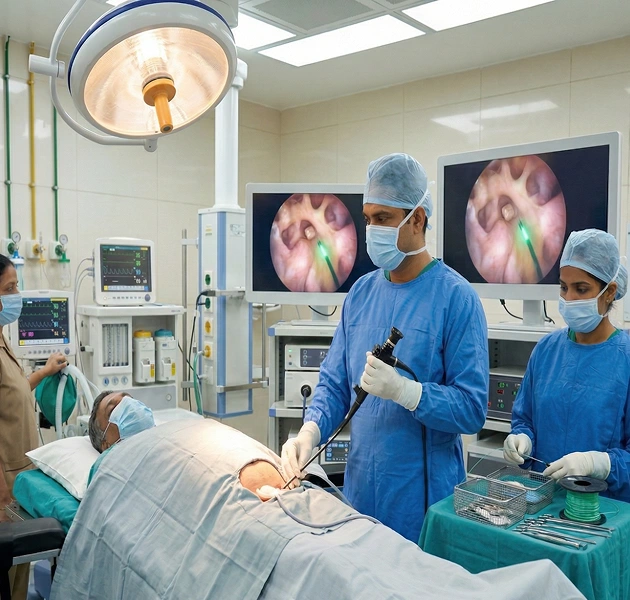
Ureteroscopy (URS) with Holmium laser is the most effective day-care procedure for ureteric and kidney stones, and URS surgery in Ahmedabad offers high stone-free rates with same-day discharge. A thin scope passed through the urethra — no incision, no puncture — fragments the stone directly. Home the same day, back to work in 2–3 days, 95% stone-free for ureteric stones.

100%
Stone-Free (Ureteric)
Day
Care Procedure
No
Skin Incision
Flexible
URS for Kidney Stones
Holmium Laser — All Stone Types
PMJAY / Insurance Accepted
Flexible & Semi-Rigid URS
Emergency Colic Cases Welcome

Get Expert Advice Now

Tell us your symptoms — we’ll guide you immediately
Colic with fever? Urological emergency — call now, do not wait

    URS Surgery at Trayam Hospital
    Understanding URS

    What Is URS and When Is It Used?

    Ureteroscopy (URS) is an endoscopic procedure in which a thin telescope — the ureteroscope — is passed through the urethra and bladder and up into the ureter or kidney to treat stones directly. Under general or spinal anaesthesia, a Holmium laser is applied to the stone — fragmenting it into tiny pieces that pass naturally or are retrieved with a small basket. No skin incision, no puncture, no external shock waves. The ureteroscope goes to where the stone is, through the body’s natural passages.

    URS surgery is the most versatile stone treatment available. Semi-rigid URS treats ureteric stones at any level with a 95% stone-free rate in a single day-care procedure. Flexible URS — with its steerable deflectable tip — accesses all calyceal groups inside the kidney, including the lower pole where semi-rigid scopes and ESWL cannot reach effectively. For kidney stones under 2cm, Flexible URS kidney stone surgery achieves 85–90% stone-free rate. The JJ stent placed at the end of the procedure is removed at 2–4 weeks as a brief outpatient procedure — completing the treatment.

    • Semi-rigid URS — for ureteric stones at any level; 95% stone-free rate; day-care under general anaesthesia
    • Flexible URS (FURS) — for kidney stones under 2cm and upper ureteric stones; deflectable tip accesses all calyces
    • Holmium laser — effective on every stone composition; dusting mode for fine powder or fragmentation for basket retrieval
    • JJ stent placed at end — keeps ureter open while healing; removed at 2–4 weeks outpatient; symptoms resolve immediately on removal
    • Metabolic evaluation after URS — stone composition analysis and prevention plan reduce recurrence from 50% to under 15%
    Which Stones Does URS Treat?

    URS Indications — Stone Location & Size

    URS surgery treatment selection depends on stone location (ureter vs kidney), stone size, prior treatment history and whether there is associated obstruction or infection. These are the situations where URS is the first-choice or preferred treatment.

    95%
    stone-free rate

    Ureteric Stones — Any Size, Any Level

    Semi-rigid URS is the gold standard for stones in the ureter — from upper ureter to just above the bladder. Stone-free rate of 95% in a single day-care procedure, regardless of stone size. Superior to ESWL for mid and lower ureteric stones. For upper ureteric stones, flexible URS or semi-rigid URS depending on stone characteristics.

    Gold Standard for Ureter
    kidney stone
    Under 2cm

    Kidney Stones Under 2cm — Flexible URS

    Flexible URS accesses all calyceal groups inside the kidney — including lower pole where ESWL is least effective. Stone-free rate 85–90% for kidney stones under 2cm. Preferred over ESWL for lower pole stones, hard stones (high Hounsfield units on CT), and stones in patients who cannot tolerate ESWL or have failed a prior session.

    Flexible URS — All Calyces
    ESWL
    failed

    ESWL Failures — Residual Stone

    Stone still present after one or two ESWL sessions — URS clears residual fragments in a single day-care procedure. Also appropriate when stone density on CT (Hounsfield units) is high, predicting poor ESWL fragmentation before the first session is attempted. After one failed ESWL — proceed to URS rather than repeat ESWL.

    After ESWL Failure
    Special
    situations

    Pregnancy, Solitary Kidney & Anticoagulated Patients

    URS is the preferred intervention for ureteric stones in pregnancy — no radiation, safe technique, fluoroscopy-free approach available. Suitable for patients on anticoagulation where PCNL bleeding risk is elevated. In a solitary kidney — URS gives definitive stone treatment without the puncture risk of PCNL. Flexible URS in these groups requires experienced hands and careful perioperative planning.

    Safest Option in Special Cases
    Recognise Your Symptoms

    Symptoms That May Need URS

    URS treats both acute stone episodes causing severe pain and elective stone disease found on scanning. Know which symptoms need emergency assessment and which allow time for planned treatment.
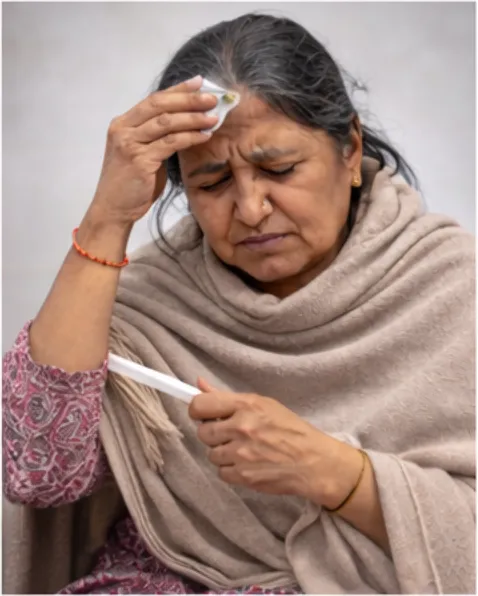
    Fever + Colic — Infected Obstruction

    Fever + Colic — Infected Obstruction

    Stone + fever = infected obstructed ureter (pyonephrosis) — a urological emergency. Requires immediate JJ stenting or nephrostomy drainage BEFORE URS. URS must not be performed on an infected system — sepsis risk is life-threatening. Call immediately.
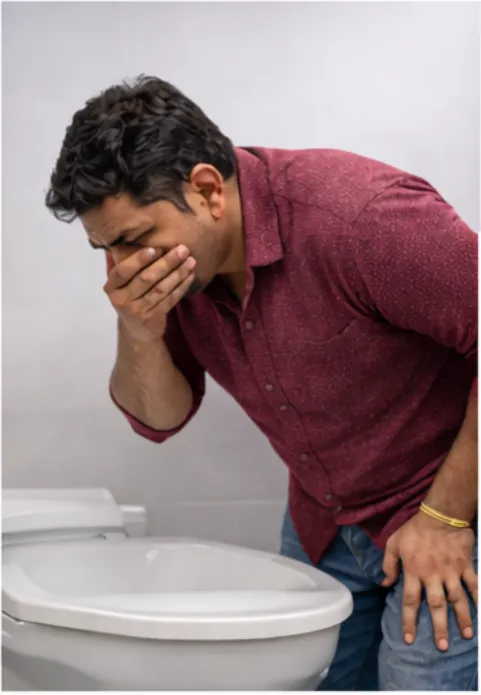
    Renal Colic — Uncontrolled Pain

    Renal Colic — Uncontrolled Pain

    Severe loin-to-groin pain in waves, unable to find a comfortable position, nausea and vomiting preventing oral analgesia — renal colic from a ureteric stone. When pain cannot be controlled with oral or IM analgesia, emergency assessment for IV analgesia and imaging is needed. URS planned within 48 hours in cases of ongoing uncontrolled colic.
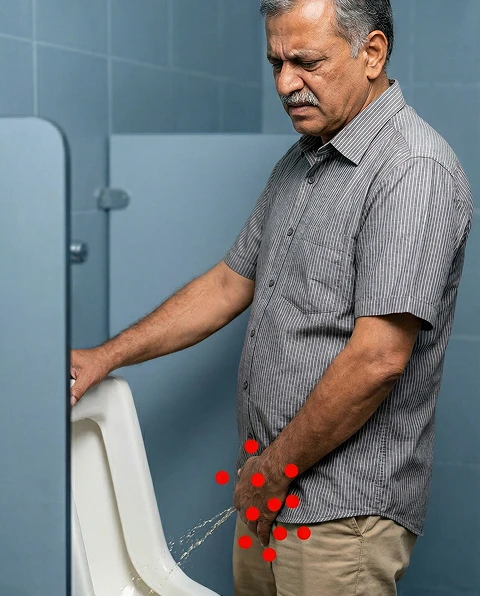
    Stone Not Passing After 4 Weeks

    Stone Not Passing After 4 Weeks

    Ureteric stone managed conservatively with tamsulosin (medical expulsive therapy) — not passed after 4 weeks. At this point, continued conservative management risks silent kidney damage from sustained obstruction. URS is planned to remove the stone definitively before renal function is affected.
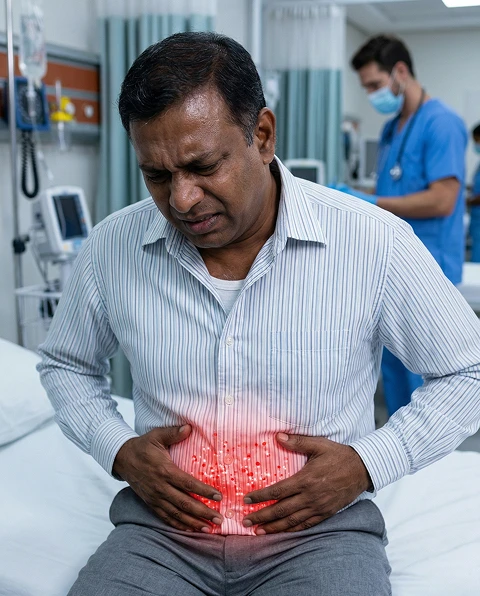
    Stent Already in Place

    Stent Already in Place

    JJ stent placed as emergency drainage — definitive stone treatment (URS) planned. The stent is bridging treatment only — the stone must still be removed by URS at the elective procedure. Do not allow stent to remain beyond 3–4 months without stone treatment being arranged.
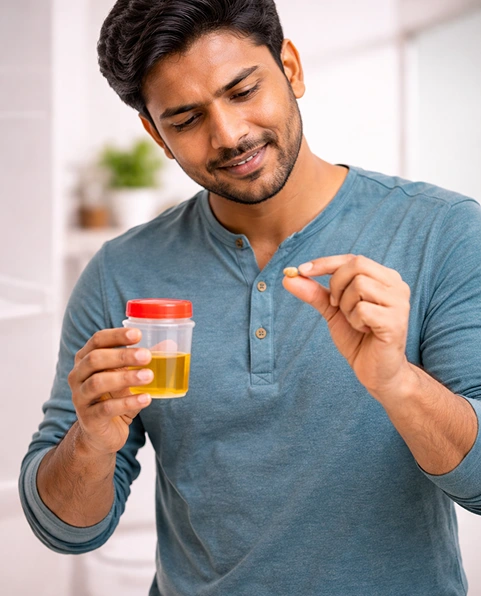
    Kidney Stone Under 2cm — Found on Scan

    Kidney Stone Under 2cm — Found on Scan

    Asymptomatic or mildly symptomatic kidney stone under 2cm found on ultrasound or CT. Flexible URS clears the stone electively before it causes acute colic, obstruction or infection. Lower pole stones and hard stones are particularly well suited to flexible URS rather than ESWL.
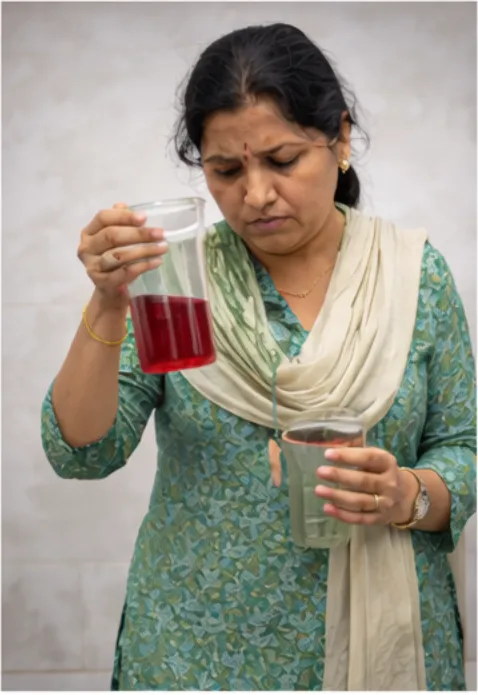
    Haematuria with Stone on Scan

    Haematuria with Stone on Scan

    Visible or microscopic blood in urine with a confirmed stone on imaging. The stone is scraping the urothelium. Haematuria always warrants urine cytology and imaging to confirm stone as the cause — and a treatment plan for the stone itself.
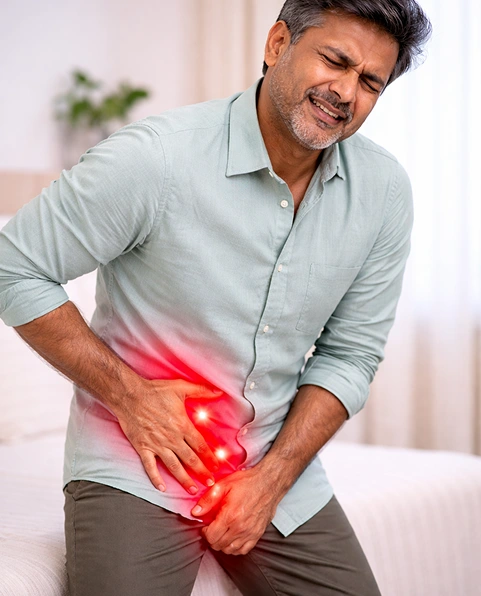
    Recurrent Stone Former

    Recurrent Stone Former

    Patient with second or subsequent stone episode — URS for the acute stone combined with stone composition analysis and metabolic evaluation. Recurrent stone formers have the most to gain from metabolic investigation — an identified cause can be specifically treated, reducing recurrence from 50% to under 15%.
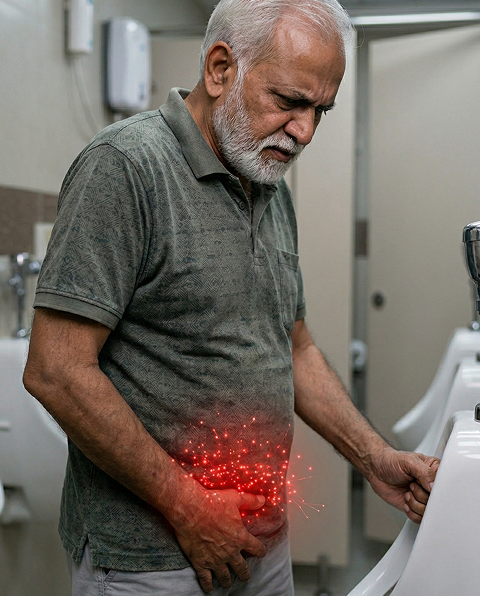
    Stent Symptoms — Frequency & Loin Ache

    Stent Symptoms — Frequency & Loin Ache

    Urinary frequency, urgency, mild loin ache and pink urine — classic JJ stent symptoms after prior emergency stenting or URS. All expected and normal. Stent should be removed at 2–4 weeks by outpatient flexible cystoscopy — symptoms resolve immediately on removal.

    URS Techniques

    URS — Right Technique for Your Stone

    Semi-rigid URS for ureteric stones, flexible URS for kidney stones — with Holmium laser for all stone types. The right technique and energy source are selected based on stone location, size and composition.

    Semi-Rigid URS — Ureteric Stones

    Gold standard for ureter — 95% stone-free, day care

    A semi-rigid ureteroscope (6–8 Fr) is passed through the urethra and bladder into the ureter under direct vision. Excellent illumination and working channel for laser and basket. Holmium laser fragments the stone; fragments retrieved with a tipless basket or pass spontaneously. Ideal for all ureteric stones — lower, mid and upper ureter. 95% stone-free rate in a single day-care session. JJ stent placed in most cases. Home the same day.

    95% Stone-Free Day Care
    Best for: All ureteric stones — any size, any level; preferred over ESWL for mid and lower ureter

    Flexible URS (FURS) — Kidney Stones

    Steerable scope — accesses all calyces including lower pole

    A single-use or reusable flexible ureteroscope with active deflection up to 270 degrees — able to reach every calyceal group inside the kidney, including the lower pole where semi-rigid scopes cannot access. Combined with Holmium laser in dusting mode — stones are reduced to fine powder that passes over 2–4 weeks without basket retrieval. Stone-free rate 85–90% for kidney stones under 2cm. A JJ stent is placed post-procedure.

    All Calyces 85–90% Stone-Free
    Best for: Kidney stones under 2cm — especially lower pole, ESWL failures, hard stones, pregnancy

    Holmium Laser Lithotripsy

    Fragmentation or dusting — all stone compositions

    The Holmium:YAG laser is the most versatile energy source in endourology. Fragmentation mode: pulses create retrievable fragments removed with a basket. Dusting mode: high-frequency low-energy pulses reduce the stone to fine powder — no retrieval needed, powder passes spontaneously over 2–4 weeks. Effective on all stone types including the hardest calcium oxalate monohydrate and cystine stones. Safe when directed precisely — no heat transfer to ureteric wall when used correctly.

    All Stone Types Dusting Available
    Best for: All URS procedures — fragmentation for ureteric stones, dusting for kidney stones

    JJ Stent Management

    Placed post-URS — removed at 2–4 weeks outpatient

    A JJ ureteric stent (4–6 Fr, 24–28cm) is placed over a guidewire under fluoroscopic guidance at the end of URS — upper curl in the renal pelvis, lower curl in the bladder, tube running through the ureter. Keeps the ureter open while post-procedure oedema settles, ensures drainage and prevents obstruction. Removed at 2–4 weeks as a brief outpatient flexible cystoscopy under local anaesthetic (2–3 minutes). Stent string may be left for patient-pull removal in selected cases.

    2–4 Weeks Outpatient Removal
    Best for: All post-URS patients — stent timing and removal planned at the time of procedure

    Medical Expulsive Therapy (MET) — Before URS

    Tamsulosin for small stones — URS if not passing

    For stones under 5–6mm in the lower ureter — tamsulosin (alpha-blocker) relaxes ureteric smooth muscle, increasing spontaneous passage rate to 70–80%. MET with adequate analgesia (diclofenac, tramadol) is the first-line approach for suitable small stones. Weekly monitoring confirms passage or identifies non-progressors who require URS. MET avoids anaesthesia and procedure for the majority of small stones that will pass independently.

    Avoid Procedure 70–80% Passage
    Best for: First-line for stones under 6mm in lower ureter — URS for any stone not passing after 4 weeks

    Metabolic Evaluation After URS

    Stone analysis + 24-hr urine — prevent recurrence

    Stone fragments or dust retrieved at URS are sent for composition analysis (calcium oxalate, uric acid, struvite, cystine, calcium phosphate). 24-hour urine collection at 6–8 weeks post-URS measures urinary calcium, oxalate, uric acid and citrate. Blood tests for calcium, uric acid and parathyroid hormone. Results guide personalised dietary modification, hydration targets and medication — reducing recurrence from 50% at 10 years to under 15%.

    Prevent Recurrence Personalised Plan
    Best for: All URS patients — especially recurrent stone formers
    Why Trayam URS

    Leading URS Surgery in Ahmedabad for Ureteric and Kidney Stones

    URS kidney stone surgery in Ahmedabad depends on experience with flexible scopes, laser technique, stent management and the completeness of metabolic follow-up.

    100%
    Ureteric Stone-Free
    Flexible
    URS Available
    Day
    Care Every Case
    Post-URS
    Metabolic Plan

    Flexible URS — Lower Pole & Kidney Stone Access

    Flexible ureteroscopy requires specific instrument handling skills and laser technique to achieve high stone-free rates inside the kidney. Our surgeons perform flexible URS regularly — with the case volumes and outcomes data that matter. Not every urological centre offers flexible URS; we do, for kidney stones under 2cm including lower pole.

    Holmium Laser — Dusting & Fragmentation Both Available

    We use both dusting and fragmentation laser technique — matched to stone location and size. Dusting for kidney stones treated with flexible URS eliminates basket retrieval steps and reduces operative time. Fragmentation for ureteric stones provides reliable clearance with visual confirmation. The right laser mode for the right stone.

    Sterile Urine Before Every URS — Non-Negotiable

    Every patient has a urine culture within 2 weeks of URS. Infection must be treated and confirmed sterile before proceeding. URS on an infected system — even with a stent in place — can cause systemic sepsis. This is the most important preventable safety step in urological stone surgery.

    CT KUB Before Every Procedure — Stone Mapped

    Every URS patient has a CT KUB before treatment — stone size, location, density (Hounsfield units), degree of obstruction and calyceal anatomy mapped. High stone density on CT predicts poor ESWL response — these patients are directed to URS first, not after ESWL failure.

    Stone Analysis & Metabolic Prevention — Always

    Stone fragments from every URS are sent for composition analysis. Metabolic evaluation at 6–8 weeks guides a personalised prevention plan. We treat the stone — and the reason it formed. This combination reduces recurrence from 50% to under 15%.

    PMJAY / Insurance Covered

    URS is covered by PMJAY and all major Indian health insurance policies. Trayam Hospital is empanelled with all major insurers. Our team manages cashless pre-authorisation, admission paperwork and complete claim support.

    Expert Care

    Meet Your URS & Endourology Specialist

    Dr. Renish Patel — Trayam Hospital
    MCh Urology Flexible URS Laser Lithotripsy Endourology 10+ Yrs Exp

    Dr. Renish Patel

    Senior Consultant Urologist — Endourology & Ureteroscopy Specialist, Trayam Hospital

    Dr. Renish Patel has performed over 3,000 ureteroscopy procedures — including complex flexible URS for kidney stones, difficult impacted ureteric stones, single-kidney cases and stone treatment in pregnancy. The approach is precise: map the stone with CT before every procedure, confirm sterile urine, choose the right scope and laser technique, and always complete metabolic evaluation so the stone that is removed is the last one the patient needs to have treated.

    • MCh Urology
    • Endourology & Flexible Ureteroscopy Fellowship
    • Advanced Holmium Laser Lithotripsy Training
    • Published outcomes in flexible URS for lower pole and complex kidney stones
    • Speaker — Urological Society of India Endourology & Stone Sessions
    Common Problems in Stone Treatment

    ESWL for a Lower Pole Stone — When URS Would Have Cleared It First Time?

    Ureteric and kidney stones are frequently treated with ESWL when URS would achieve a better result in a single session. The decision between ESWL and URS should be based on stone location, size and density on CT — not on which treatment is more convenient or requires less anaesthesia. Many patients endure two or three ESWL sessions before URS is finally offered — having accumulated radiation, delay and cost for an inferior outcome.

    • ESWL chosen for a lower pole kidney stone without discussing flexible URS — lower pole stones have the worst ESWL clearance rates of any calyceal position, due to gravity dependence and often unfavourable infundibulopelvic anatomy. Flexible URS with Holmium laser dusting achieves 85–90% stone-free rate for lower pole stones in a single session. Lower pole stone + ESWL = the wrong combination in most cases.
    • URS performed with a positive urine culture — any urological stone procedure on an infected urinary tract risks systemic sepsis. Urine culture must be sterile before URS. A JJ stent placed for drainage in a symptomatic obstructed infected ureter does not substitute for a clean culture at the time of definitive URS — the definitive procedure requires its own sterile pre-operative culture.
    • JJ stent left in place for months without definitive URS being arranged — a JJ stent is bridging drainage, not treatment. The stone is still present. Stents cause symptoms, can encrust if left too long and must not be left beyond 3–4 months without clear plans for stone removal. If a stent was placed and no URS has been arranged — ask when the stone will be treated.
    • No metabolic evaluation after URS for a second or subsequent stone — a patient presenting with their second or third stone episode has clear evidence of an active stone-forming tendency. Stone composition analysis and 24-hour urine evaluation after URS will identify a specific metabolic cause in over 60% of recurrent stone formers. Without this evaluation, recurrence continues at 50% per decade without any preventive intervention.
    The Trayam URS Promise CT KUB before every procedure — stone density assessed before recommending ESWL vs URS. Sterile urine confirmed before every URS. JJ stent followed up with a definitive URS plan. Metabolic evaluation for every recurrent stone former.

    CT KUB Before Every Decision — ESWL vs URS Chosen Rationally

    Stone density (Hounsfield units) and lower pole anatomy on CT determine whether ESWL or URS gives the better outcome. We review the CT before recommending any treatment. High-density or lower pole stones are directed to URS — not ESWL — from the start.

    Sterile Urine Before Every URS

    Urine culture checked within 2 weeks of every URS. Any infection treated and repeat culture confirmed sterile before proceeding. This is the single most important preventable safety step in stone surgery — and we never skip it.

    Metabolic Evaluation for Every Recurrent Stone Former

    Second stone? We arrange stone composition analysis and 24-hour urine metabolic evaluation after URS — every time. An identified cause prevents the third stone. Without this, recurrence continues unchecked at 50% per decade.

    Ureteric stone causing colic? Kidney stone found on scan? ESWL not working? — Bring your CT or ultrasound report if you have one. We’ll tell you whether URS or another approach gives the best result for your specific stone — and arrange it efficiently.

    Confidential  ·  No Obligation  ·  Reply in 2 Hours

    After URS — Recovery & Prevention

    Recovery After URS & Preventing the Next Stone

    URS recovery is one of the fastest in all of urology — most patients go home the same day. The prevention work that follows is what determines whether this is the last stone you ever need treated.

    Day of Procedure — Home Same Day

    URS surgery in Ahmedabad takes 30–60 minutes under general or spinal anaesthesia. Recovery room for 2–3 hours, then discharged once passing urine comfortably. If a JJ stent is in place: mild loin ache, urinary frequency and intermittent pink urine are normal and expected — tamsulosin prescribed to reduce stent symptoms.

    🏥 Home same evening in most cases

    Days 1–14 — Living with the JJ Stent

    With a stent in place: drink 2.5–3 litres of water daily, avoid heavy lifting, take tamsulosin as prescribed. Desk work resumes at 2–3 days. Pink urine and frequency are normal. Contact the team if you develop fever, severe pain unresponsive to prescribed analgesia or inability to pass urine. Stent removal is planned at the time of discharge.

    💧 2.5L daily — flush the system

    2–4 Weeks — Stent Removal

    JJ stent removed as a brief outpatient flexible cystoscopy under local anaesthetic — takes 3–5 minutes. No sedation needed. Stent symptoms (frequency, loin ache, pink urine) resolve completely within hours of removal. KUB X-ray or ultrasound at 6 weeks after removal confirms stone-free status.

    ✅ Stent removal = instant symptom relief

    6–8 Weeks — Metabolic Evaluation

    24-hour urine collection and blood tests at 6–8 weeks identify the metabolic cause of stone formation. Stone fragments from URS have already been sent for composition analysis. Together, these results guide specific dietary advice and medication. Potassium citrate for hypocitraturia, allopurinol for hyperuricosuria, thiazides for hypercalciuria.

    🔬 Book metabolic evaluation at 6 weeks

    Lifelong — 2.5 Litres of Water Daily

    The single most effective stone prevention measure regardless of stone type. Dilute urine prevents crystal nucleation and growth. Aim for pale yellow urine throughout the day — dark yellow means you are not drinking enough. 2.5 litres in temperate conditions, 3 litres in Indian summer heat. This alone reduces recurrence by 40–50%.

    💧 Pale yellow urine = low stone risk

    Diet Matched to Your Stone Type

    Calcium oxalate (most common) — reduce spinach, nuts, chocolate, excessive tea; maintain normal calcium intake. Uric acid stones — reduce red meat and organ meat, limit alcohol, alkalinise urine with potassium citrate. Struvite — infection must be eradicated permanently; stones recur with ongoing infection. Cystine — very high fluid intake (3–4L daily) and urinary alkalinisation. Stone composition analysis from your URS specimen guides the specific plan.

    🥗 Stone type determines your diet
    Patient Stories

    What Our URS Patients Say

    Stone-Free, Home Same Day
    "I had been in severe pain for three days with a ureteric stone. I came to Trayam on day three. CT confirmed a 7mm mid-ureteric stone. URS was arranged for the next morning — 45 minutes under anaesthesia, I woke up pain-free. Home by 3pm the same day. The stent was a little uncomfortable but stent removal two weeks later was 5 minutes and the discomfort disappeared immediately. From worst pain of my life to pain-free in 24 hours."
    Jaydeepbhai M.
    7mm Mid-Ureteric Stone · Semi-Rigid URS + Laser · Day Care · Ahmedabad
    Lower Pole Kidney Stone — Cleared with Flexible URS
    "I had a 1.4cm lower pole kidney stone and was offered ESWL. Before proceeding I came to Trayam for a second opinion. Dr. Renish Patel reviewed my CT, explained that lower pole stones have poor ESWL clearance and that flexible URS would clear it in one sitting. One procedure, JJ stent for 3 weeks, stone-free confirmed on CT at 6 weeks. I am very glad I got that second opinion before agreeing to repeated ESWL sessions."
    Hiraben P.
    1.4cm Lower Pole Kidney Stone · Flexible URS · Stone-Free First Session · Surat
    Recurrent Stone Former — Prevention Plan Working
    "This was my third stone in four years. After the URS at Trayam, Dr. Renish Patelarranged a 24-hour urine test and stone composition analysis. Both my previous stones had been treated and discharged with no investigation at all. The results showed high urinary uric acid — I was put on allopurinol and given specific dietary advice about red meat and alcohol. Eighteen months and no new stone on my annual scan. Finally someone looked at why I keep forming stones."
    Rajeshbhai D.
    Recurrent Uric Acid Stones · URS + Metabolic Evaluation · Allopurinol · No Recurrence · Vadodara
    Common Questions

    Frequently Asked Questions

    URS passes a scope through the urethra to the stone — Holmium laser fragments it directly. Day care, no incision, 95% stone-free for ureteric stones. ESWL uses external shockwaves — no anaesthesia but lower stone-free rates. PCNL is a back puncture for stones over 2cm. URS is the most versatile — effective for all ureteric stones and kidney stones under 2cm.

    Flexible URS has a steerable deflectable tip — accessing all calyceal groups inside the kidney including lower pole where semi-rigid scopes cannot reach. Used for kidney stones under 2cm, upper ureteric stones and lower pole stones. Stone-free rate 85–90% for kidney stones under 2cm.

    Yes — most commonly general anaesthesia, spinal in selected cases. Takes 30–60 minutes. Recovery room 2–3 hours then day-care discharge. Same-day home in the majority of cases.

    A soft tube inside the ureter from kidney to bladder — keeps the ureter open while post-procedure swelling settles. Causes urinary frequency, mild loin ache and pink urine — all normal. Removed at 2–4 weeks as a brief outpatient cystoscopy under local anaesthetic — symptoms resolve immediately.

    Ureteric stones of any size — 95% stone-free. Kidney stones under 2cm with flexible URS — 85–90% stone-free. For kidney stones over 2cm, PCNL is generally more effective.

    Yes — URS is the preferred treatment for ureteric stones in pregnancy requiring intervention. No radiation needed. ESWL is absolutely contraindicated in pregnancy. Fluoroscopy-free technique available.

    Very safe procedure. Minor: UTI (1–3%), stent symptoms (expected and temporary), pink urine for 1–2 days. Major complications rare: ureteric perforation under 1%, sepsis if performed with infected urine (preventable). Sterile pre-operative urine is the most important safety measure.

    Day-care procedure — home same day. With stent: urinary frequency and mild loin ache for 2–4 weeks. Desk work at 2–3 days. Heavy work after stent removal at 2–4 weeks. Stent removal takes 5 minutes outpatient — symptoms gone within hours.

    Without prevention — 50% recurrence at 10 years. Stone composition analysis and metabolic evaluation after URS, with a personalised prevention plan, reduces this to under 15%. Offered to every URS patient at Trayam.

    Yes — URS surgery in Ahmedabad is covered under PMJAY and all major Indian health insurance policies. Trayam is empanelled with leading insurers, and our team manages cashless pre-authorisation and complete claim support.

    Ureteric Stone Causing Colic? Kidney Stone on a Scan? URS Clears It — Day Care, No Incision, Home Same Day.

    Bring your CT or ultrasound report if you have one — or we start with a CT KUB. We'll map your stone, give you rapid pain relief and plan the right procedure to clear it first time.

    Chat on WhatsApp