Child-Specialist Urological Care

Pediatric Urology — Expert, Child-Focused Urological Care from Birth to Adolescence

From antenatal hydronephrosis detected before birth to hypospadias, undescended testis, vesicoureteric reflux and paediatric UTI — we provide specialist urological care for children using child-appropriate techniques, child-sized instruments and child-centred communication.

Birth
to Adolescence
Day
Care Most Procedures
Early
Treatment Protects
Child
Anaesthesia Protocols
Paediatric-Specific Surgical Techniques
Insurance Accepted
Child-Centred Care
Antenatal Referrals Welcome

Get Expert Advice Now

Tell us your symptoms — we’ll guide you immediately
In severe pain? Call us directly — don’t wait

    Pediatric Urology at Trayam Hospital
    Understanding Paediatric Urology

    Why Children Need Specialist Urological Care

    Urological conditions in children are fundamentally different from adult urological disease — in their anatomy, their natural history, their investigation and their treatment. A child’s urinary tract is still developing, which means many conditions detected early will resolve with growth and monitoring, while others require timely intervention to prevent permanent kidney damage, impaired fertility in adulthood or lifelong functional problems.

    Early referral to a pediatric urologist in Ahmedabad makes a significant difference in paediatric urology. Orchidopexy for an undescended testis performed before 18 months preserves testicular function and reduces malignancy risk. Febrile UTI investigated promptly prevents renal scarring. Hypospadias repaired between 6 and 18 months heals with excellent cosmetic and functional outcomes. The most important step is not to delay — and not to apply adult urological thinking to a child’s condition.

    • Undescended testis — orchidopexy between 6–18 months; never wait beyond 18 months without specialist review
    • Hypospadias repair — day-care procedure at 6–18 months; never circumcise a child with hypospadias (foreskin needed for repair)
    • Febrile UTI — urine culture before antibiotics; DMSA scan at 4–6 months to assess renal scarring
    • Hydronephrosis — most mild cases resolve; severe or bilateral cases require urological evaluation and MAG3 renogram
    • VUR — low-grade managed conservatively; high-grade with recurrent febrile UTI may need endoscopic STING or reimplantation
    Conditions We Treat

    Paediatric Urological Conditions at Trayam

    Each condition has a specific age window for optimal treatment by a child urology specialist in Ahmedabad. Early referral to a paediatric urologist — not a general surgeon — gives the best long-term outcomes for your child's urinary and reproductive health.

    1 in 300
    male births

    Hypospadias

    Urethral opening on underside of penis, often with downward curvature (chordee). Repaired at 6–18 months — before toilet training and school. Never circumcise a child with hypospadias — the foreskin skin is essential for urethroplasty reconstruction. Single-stage TIP repair for distal hypospadias. Multi-stage repair for proximal or severe variants.

    Repair 6–18 Months
    1–4%
    of male births

    Undescended Testis (Cryptorchidism)

    Testis not in the scrotum at birth. Spontaneous descent may occur in first 6 months — if not descended by 6 months, orchidopexy is recommended. Surgery before 18 months optimises fertility potential and reduces testicular cancer risk. Laparoscopy used for non-palpable intra-abdominal testis. Bilateral undescended testis requires urgent hormonal evaluation.

    Surgery Before 18 Months
    Grades
    of all stones

    Vesicoureteric Reflux (VUR)

    Abnormal backflow of urine from bladder into ureters/kidneys. Grades I–II — conservative management with antibiotic prophylaxis, most resolve with growth. Grades III–V with recurrent febrile UTI or renal scarring — endoscopic STING injection (Deflux) or ureteric reimplantation. Diagnosed on micturating cystourethrogram (MCU/VCUG).

    Grade-Dependent Treatment
    Commonest
    antenatal finding

    Hydronephrosis

    Dilation of the renal pelvis — most commonly from pelvi-ureteric junction (PUJ) obstruction or VUR. Mild antenatal hydronephrosis (SFU 1–2) resolves in over 80% without surgery. Severe hydronephrosis (SFU 3–4) or worsening function on MAG3 renogram requires pyeloplasty — laparoscopic or robot-assisted, with excellent outcomes.

    Most Resolve Spontaneously
    Recognise the Signs

    Signs That Warrant Paediatric Urological Review

    Children cannot always describe urological symptoms accurately. Many conditions are detected on routine scans or present with non-specific signs. Know what to look for — and when to consult a pediatric urologist in Ahmedabad.
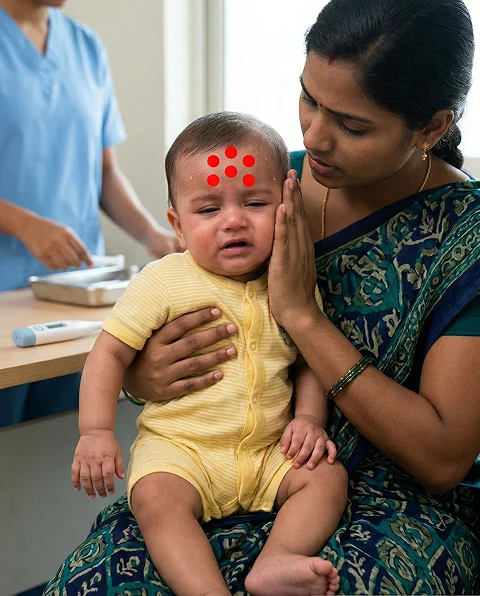
    Infant Fever — No Obvious Cause

    Infant Fever — No Obvious Cause

    Any infant under 2 with unexplained fever must have a urine specimen sent for culture before antibiotics are started. Febrile UTI in this age group causes renal scarring — missing it causes permanent kidney damage. Do not assume fever is viral without a urine culture.
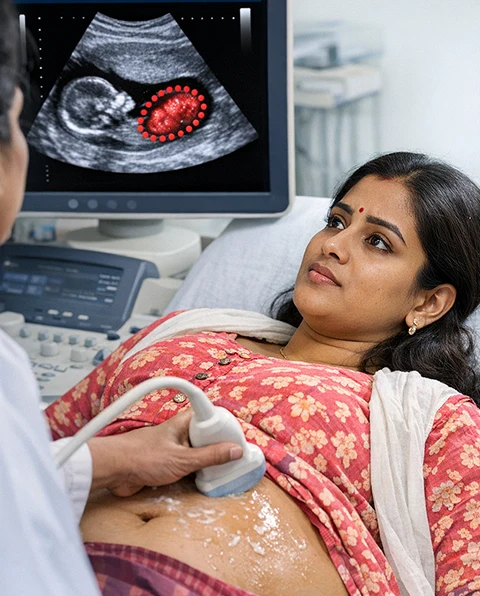
    Antenatal Hydronephrosis on Scan

    Antenatal Hydronephrosis on Scan

    Hydronephrosis detected on pregnancy scan requires postnatal follow-up ultrasound at 4–6 weeks. Do not miss this appointment — severe or worsening hydronephrosis requires prompt urological evaluation to prevent permanent kidney damage from obstruction.
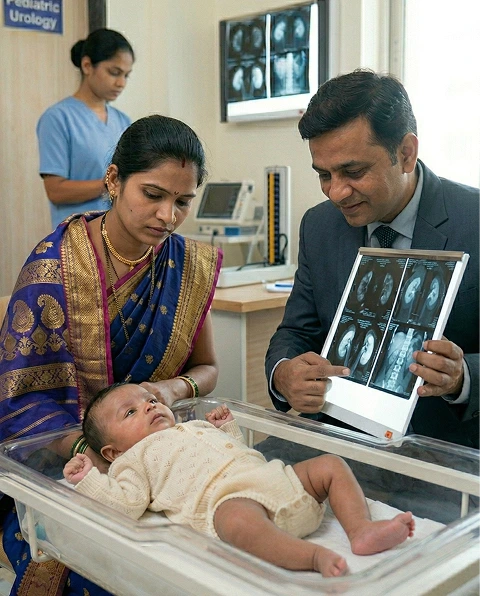
    Testis Not in Scrotum

    Testis Not in Scrotum

    If one or both testes cannot be felt in the scrotum by 6 months of age — refer to paediatric urology. Do not wait until school age. Orchidopexy before 18 months gives the best outcomes for fertility and cancer prevention.
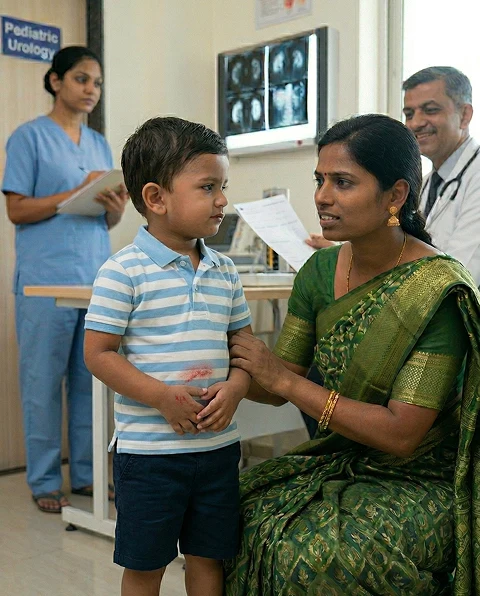
    Hypospadias — Abnormal Urethral Position

    Hypospadias — Abnormal Urethral Position

    Urethral opening visible on underside of penis at birth. Do not proceed to circumcision — refer to paediatric urology first. Foreskin tissue is essential for reconstruction. Repair planned at 6–18 months.
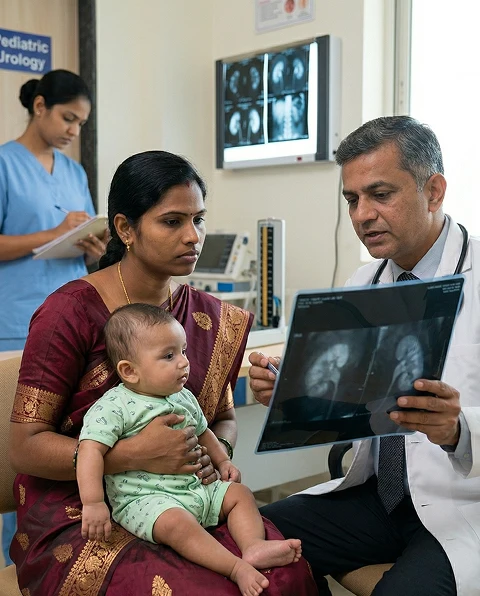
    Recurrent Febrile UTI

    Recurrent Febrile UTI

    Two or more febrile UTIs in a child require renal ultrasound and DMSA scan. Recurrent infections with fever risk progressive renal scarring. Investigation identifies VUR or structural abnormality driving recurrence.
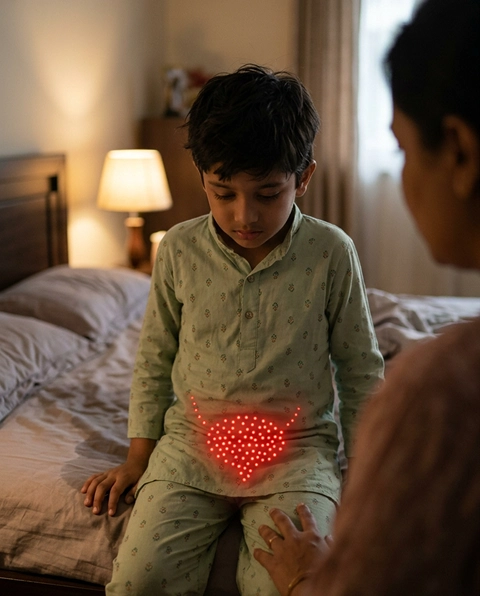
    Painful or Difficult Urination

    Painful or Difficult Urination

    Dysuria, straining, weak stream or intermittent flow in a child warrants assessment. Causes include phimosis, posterior urethral valves (boys), UTI or bladder dysfunction. Never dismiss voiding difficulty in a child as behavioural without urological assessment.
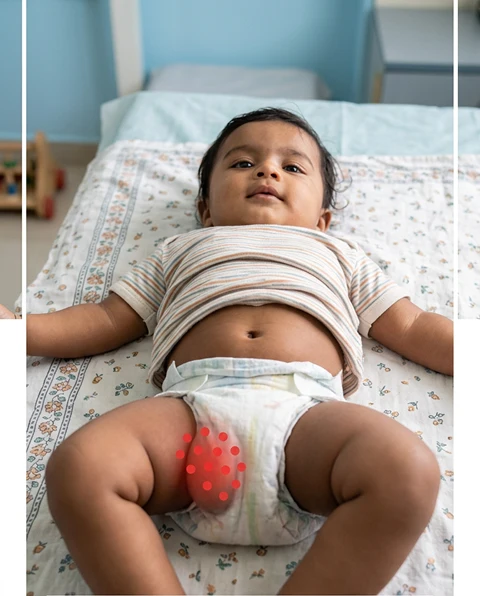
    Persistent Bedwetting After Age 7

    Persistent Bedwetting After Age 7

    Primary nocturnal enuresis (bedwetting) is common under 7 but warrants assessment after age 7 — especially if daytime wetting, urgency or UTI symptoms are also present. Bladder training, alarm therapy and in selected cases medication are highly effective.

    Scrotal Swelling in Infant

    Scrotal Swelling in Infant

    Scrotal swelling in a newborn or infant is commonly a hydrocele (fluid around the testis) — usually resolves by 12 months. Persistent hydrocele after 12–18 months requires surgical drainage. Any acute scrotal pain or testicular swelling in an older child is a torsion emergency — call immediately.

    Treatment Pathways

    Paediatric Urology Treatments — Age-Appropriate, Minimally Invasive

    Every treatment by a child urology specialist in Ahmedabad is tailored to the child's age, weight and anatomy using child-sized instruments and paediatric anaesthesia protocols. Most procedures are day-care or overnight stays.

    Hypospadias Repair (Urethroplasty)

    TIP repair / multi-stage — 6 to 18 months

    Single-stage TIP (tubularised incised plate) urethroplasty for distal hypospadias — the most common variant. Two-stage repair for proximal hypospadias with severe chordee — first stage straightens the penis using foreskin graft, second stage completes the urethra at 6 months later. Day-care or overnight. Urethral catheter in place for 7–10 days post-operatively. Excellent cosmetic and functional outcomes when performed at the right age by an experienced surgeon.

    Day Care Functional + Cosmetic
    All hypospadias variants — operated at 6–18 months

    Orchidopexy — Undescended Testis

    Laparoscopic or open — before 18 months

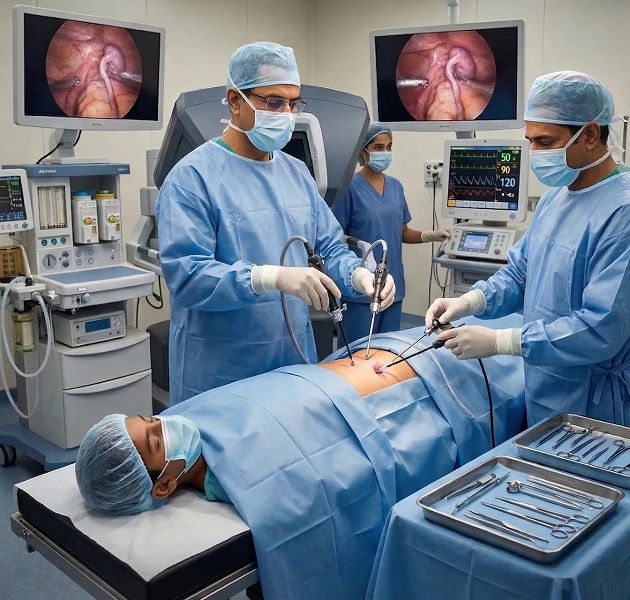
    Open inguinal orchidopexy for palpable undescended testis — testis identified in the inguinal canal, mobilised on its blood supply and fixed in the scrotum through a small scrotal incision. Laparoscopic orchidopexy for non-palpable intra-abdominal testis — 3 small port incisions, excellent visualisation of the testicular vessel anatomy. Two-stage Fowler-Stephens procedure for high intra-abdominal testis with short vessels. Day-care procedure.

    Day Care Fertility Preserving
    Undescended testis — perform before 18 months for best outcomes

    Endoscopic STING — VUR Treatment

    Deflux injection — no open surgery

    Endoscopic subureteric STING (SubUreteric Transurethral Injection of Deflux) injects a bulking agent (dextranomer/hyaluronic acid) around the ureteric orifice to create a one-way valve, preventing urine reflux. Performed cystoscopically under general anaesthesia — no skin incision. 70–80% success rate for grades III–IV VUR in a single injection. Day-care procedure. Repeat injection possible if initial treatment unsuccessful.

    No Incision 70–80% Success
    Grades III–IV VUR with recurrent febrile UTI despite antibiotic prophylaxis

    Pyeloplasty — PUJ Obstruction

    Laparoscopic or open dismembered pyeloplasty

    Pelvi-ureteric junction (PUJ) obstruction — the most common cause of significant hydronephrosis in children — is corrected by dismembered pyeloplasty: the obstructed segment is excised and the renal pelvis reconnected to the ureter over a JJ stent. Laparoscopic pyeloplasty is the preferred approach in children over 1 year — small incisions, rapid recovery. Success rate over 95%. MAG3 renogram repeated at 3–6 months to confirm improved drainage.

    95% Success Laparoscopic
    Significant PUJ obstruction with hydronephrosis SFU grade 3–4 or impaired function on renogram

    Paediatric UTI — Culture-Guided Treatment

    Urine culture before antibiotics — always

    Every child with suspected UTI has a urine specimen sent for culture and sensitivity before antibiotics are started — a midstream sample in older children, a clean-catch specimen or catheter specimen in infants. Correct antibiotic based on culture result. First febrile UTI in a child under 2: renal ultrasound and DMSA scan at 4–6 months. Antibiotic prophylaxis for recurrent UTI or high-grade VUR while awaiting investigation or surgical treatment.

    Culture First Renal Protection
    All children with suspected or confirmed UTI — any age

    Circumcision — Medical Indications

    Pathological phimosis, balanitis, recurrent UTI

    Medical circumcision at Trayam is performed only when clinically indicated — pathological phimosis (BXO/lichen sclerosus causing scarred non-retractile foreskin), recurrent balanoposthitis or recurrent UTI with confirmed phimosis-related obstruction. Physiological phimosis in young boys is normal and does not require circumcision. Performed under general anaesthesia as a day-care procedure. Never performed on a child with hypospadias — foreskin tissue is needed for penile reconstruction.

    Medical Only Day Care
    Pathological phimosis, recurrent balanitis, medically indicated cases only
    Why Trayam Paediatric Urology

    Leading Paediatric Urology Care in Ahmedabad

    Children are not small adults — their urological conditions, anatomy and treatment require specialist paediatric expertise, age-appropriate techniques and child-centred communication with parents at every step.

    Birth
    to Adolescence
    Day
    Care Most Procedures
    Kidney
    Protection Focus
    Parent
    Communication Always

    Paediatric-Specific Surgical Technique

    Children's urological anatomy is miniature and developing. We use child-sized instruments, age-appropriate anaesthesia protocols and surgical techniques developed specifically for infant and paediatric anatomy — not scaled-down adult procedures.

    Age-Timed Surgery — The Right Window Matters

    Orchidopexy before 18 months, hypospadias repair at 6–18 months, pyeloplasty before irreversible renal damage — timing is critical in paediatric urology. We provide clear guidance on the optimal age window for every procedure and ensure families do not miss it.

    Febrile UTI — Culture Before Antibiotics, Always

    Every child with suspected febrile UTI has a urine specimen sent for culture before any antibiotic is given. The correct antibiotic is prescribed based on the culture result. DMSA scan is arranged at 4–6 months post-infection to detect renal scarring before it becomes permanent.

    Kidney Protection — Long-Term Function Preserved

    The aim of paediatric urology is not just to fix the immediate problem — it is to protect kidney function for the next 70–80 years of the child's life. We take a long-term view: treating VUR, hydronephrosis and recurrent UTI to prevent renal scarring, hypertension and chronic kidney disease in adulthood.

    Parent-Centred Communication

    Parents working with a pediatric urologist in Ahmedabad are partners in their child's care. We explain every diagnosis, investigation and treatment option in plain language, involve parents in all decisions and ensure they understand what to expect at every step — before, during and after any procedure.

    Insurance-Covered Paediatric Surgery

    All paediatric urological surgical procedures — orchidopexy, hypospadias repair, pyeloplasty, circumcision and VUR treatment — are covered by Indian health insurance policies. Trayam Hospital is empanelled with all major insurers. Our team handles cashless pre-authorisation and full claim support.

    Expert Care

    Meet Your Paediatric Urology Specialist

    Dr. Renish Patel — Trayam Hospital

    Dr. Renish Patel

    Senior Consultant Urologist & Paediatric Urology Specialist — Trayam Hospital

    Dr. Renish Patel has extensive experience managing the full range of paediatric urological conditions — from antenatal hydronephrosis counselling through to hypospadias repair, orchidopexy, VUR evaluation and paediatric UTI management. The philosophy is straightforward: protect kidney function for the long term, operate at the right age with the right technique, and communicate clearly with parents at every step.

    • Advanced laser and endoscopic stone surgeries
    • Comprehensive prostate and urinary care
    • Male infertility & andrology treatments
    • Pediatric and reconstructive urology expertise
    • Focus on painless procedures and faster discharge
    Common Mistakes in Paediatric Urology

    Child with Undescended Testis at Age 5 — Why Has Nobody Operated Yet?

    Timing is everything in paediatric urology. The most common problem we see is not wrong treatment — it is delayed treatment. An undescended testis at age 5, a hypospadias repaired after toilet training, a febrile UTI treated with antibiotics but never investigated for VUR — these delays have real consequences for the child's long-term health.

    • Undescended testis at age 2, 3, 4 or older — never referred for surgery — orchidopexy should be performed between 6 and 18 months. Every year of delay increases the risk of permanent impairment of testicular function and fertility, and raises the long-term malignancy risk. If your son has an undescended testis and has not been referred to a paediatric urologist — do it today.
    • Hypospadias child advised to have circumcision — circumcision of a child with hypospadias destroys the foreskin tissue that is essential for urethral reconstruction. This is one of the most serious avoidable errors in paediatric urology. If your child has hypospadias — never proceed to circumcision without a paediatric urology opinion first.
    • Febrile UTI treated with antibiotics only — no investigation arranged — a first febrile UTI in a child under 2 requires renal ultrasound and DMSA scan to exclude renal scarring and identify VUR. Repeated febrile UTIs without investigation risk cumulative renal scarring that causes hypertension and chronic kidney disease decades later.
    • Mild hydronephrosis on antenatal scan — told nothing needs to be done, no follow-up arranged — while most mild antenatal hydronephrosis does resolve spontaneously, a postnatal ultrasound at 4–6 weeks is mandatory for every case. Severe or worsening hydronephrosis that is not followed up can cause silent obstructive kidney damage.
    The Trayam Paediatric Urology Promise Age-appropriate surgery in the correct window. No circumcision of a child with hypospadias without review. Every febrile UTI investigated. Antenatal referrals always followed up.

    Right Procedure at the Right Age — Every Time

    We provide clear guidance on the optimal timing for every paediatric urological procedure. Orchidopexy, hypospadias repair, pyeloplasty and VUR treatment all have critical age windows. We ensure families do not miss them.

    Every Febrile UTI Properly Investigated

    Urine culture before antibiotics. DMSA scan at 4–6 months. MCU/VCUG where indicated. VUR and structural causes identified and treated. Renal scarring prevented — not just the acute infection treated.

    Parents Involved at Every Step

    No decision is made without parents fully understanding the diagnosis, the options and the consequences of waiting. We communicate clearly, provide written information and are always available for follow-up questions.

    Concerned about your child’s urological health? Whether you have a newborn with antenatal hydronephrosis, a toddler with undescended testis, or a child with recurrent UTIs — early consultation gives the best outcomes. Bring any scans or urine results you have.

    Confidential  ·  No Obligation  ·  Reply in 2 Hours

    Protecting Your Child's Urinary Health

    How to Protect Your Child's Kidney & Urinary Health

    Most long-term complications of paediatric urological conditions are preventable with early detection, timely treatment and proper follow-up. These are the key steps every parent should know.

    Postnatal Ultrasound After Antenatal Hydronephrosis

    If antenatal hydronephrosis was detected during pregnancy, a postnatal renal ultrasound must be arranged at 4–6 weeks after birth — regardless of how mild the finding appeared. Most mild cases will resolve, but significant obstruction must be identified early before kidney damage occurs.

    Do not skip the 4-week scan

    Orchidopexy Before 18 Months — Do Not Wait

    If your son's testis has not descended by 6 months of age, refer to a paediatric urologist immediately. Surgery at 6–18 months gives the best fertility outcomes and the lowest cancer risk. Waiting until school age is associated with measurably worse outcomes — there is no benefit to delay.

    6–18 months is the window

    Bladder & Bowel Habits — Encourage Good Patterns

    Constipation is a major driver of recurrent UTI and bladder dysfunction in children. Encourage regular bowel habits, high fibre diet and adequate fluid intake (water, not sugary drinks). Teach children to void fully and not rush — incomplete bladder emptying promotes bacterial growth and recurrent infection.

    Fibre + fluids = healthy bladder

    Antibiotic Prophylaxis for High-Risk Children

    Children with confirmed high-grade VUR or recurrent febrile UTI while awaiting surgery should be on low-dose antibiotic prophylaxis to prevent further renal scarring. Trimethoprim or nitrofurantoin at prophylactic dose as prescribed by their urologist. Do not stop prophylaxis without urological guidance.

    Continue until urologist advises stop

    Adequate Fluid Intake Throughout Childhood

    Encourage children to drink water regularly — 1–1.5 litres per day for school-age children, more in summer. Concentrated urine promotes bacterial growth and crystallisation. Many children develop UTI and bladder dysfunction simply from inadequate fluid intake and infrequent voiding during school hours.

    Water — not juice or fizzy drinks

    Keep All Follow-Up Appointments

    Paediatric urological conditions require follow-up to confirm resolution and catch late complications. DMSA scan at 6 months, repeat ultrasound for hydronephrosis, urine cultures after UTI, and semen analysis in adulthood after orchidopexy — these follow-ups protect your child's long-term health. Missing them misses the safety net.

    Follow-up is part of treatment
    Patient Stories

    What Our Patients Say

    Son's Kidneys Protected — VUR Treated Before Scarring
    "Our daughter had three UTIs in one year with high fever each time. The GP treated the infections but never arranged any investigation. At Trayam, a DMSA scan showed early renal scarring on one side and MCU confirmed Grade IV VUR. STING injection was performed and she has been UTI-free for 18 months. We dread to think what the next few years would have looked like without that investigation."
    Sunita & Rajesh K.
    Grade IV VUR · DMSA Scarring Detected · STING Injection · Ahmedabad
    Undescended Testis — Operated at 14 Months
    "We were told our son's testis would 'come down on its own' until he was almost 2. We were referred to Trayam by a friend who is a doctor. Dr. Renish Patel explained that we were already approaching the window and that surgery needed to happen soon. Orchidopexy was done at 14 months, smooth recovery, home the same day. We are very grateful we did not wait any longer."
    Pratiksha M.
    Undescended Testis · Right Orchidopexy 14 Months · Day Care · Surat
    Hypospadias Repair — Excellent Outcome
    "Our son was born with hypospadias. We were advised by a local surgeon to have him circumcised as a first step — thankfully a second opinion at Trayam stopped us in time. Dr. Renish Patel explained that circumcision would have destroyed the tissue needed for repair. TIP urethroplasty at 10 months, 9 days with a catheter, and the result is completely normal in function and appearance. We are so relieved we sought a specialist opinion."
    Meenaben D.
    Distal Hypospadias · TIP Urethroplasty 10 Months · Vadodara
    Common Questions

    Frequently Asked Questions

    Orchidopexy is recommended between 6 and 18 months. An undescended testis not descended by 6 months is unlikely to descend spontaneously. Surgery before 18 months optimises fertility potential and reduces testicular malignancy risk. Do not wait beyond 18 months without specialist review.

    VUR (vesicoureteric reflux) is abnormal backflow of urine from bladder to kidneys. Grades I–II are managed conservatively with antibiotic prophylaxis and often resolve spontaneously. Grades III–V with recurrent febrile UTI or renal scarring may require endoscopic STING injection or ureteric reimplantation. Not all VUR requires surgery.

    After a confirmed febrile UTI in a child under 2, renal ultrasound and DMSA scan at 4–6 months are recommended to assess for renal scarring. MCU/VCUG for VUR assessment in selected cases. The pathway depends on the child’s age, sex and whether the UTI was febrile.

    Hypospadias is where the urethral opening is on the underside of the penis. Repair is recommended at 6–18 months. Never circumcise a child with hypospadias — the foreskin is needed for reconstruction. Single-stage TIP repair for most cases; two-stage for severe variants.

    Mild antenatal hydronephrosis (SFU 1–2) resolves in over 80% without surgery — postnatal ultrasound monitoring only. Severe hydronephrosis (SFU 3–4), worsening function on MAG3 renogram or bilateral disease requires urological evaluation and may need pyeloplasty. Most cases do not require surgery.

    Infants and young children may present with unexplained fever, irritability, poor feeding, vomiting, lethargy or strong-smelling urine — without typical burning or frequency. Any infant under 2 with unexplained fever must have a urine specimen sent for culture before antibiotics are given.

    Medical circumcision is indicated for pathological phimosis (BXO/scarred foreskin), recurrent balanoposthitis or recurrent UTI with phimosis. Physiological phimosis in young boys is normal — the foreskin becomes retractile naturally by puberty in the vast majority. Circumcision is not indicated for normal physiological phimosis.

    Orchidopexy before 18 months significantly reduces but does not entirely eliminate fertility risk. Unilateral cases treated early generally have normal fertility. Bilateral undescended testis treated early has reduced but present fertility potential. A semen analysis in adulthood is recommended for any man with a history of undescended testis.

    A duplex kidney has two collecting systems. Many require no treatment. Associated ureterocele or ectopic ureter may cause obstruction, UTI or incontinence and may need surgical correction. Paediatric urological assessment determines whether intervention is needed.

    Yes — paediatric urological procedures use specialist paediatric anaesthesia, child-sized instruments and age-appropriate techniques. Most procedures are day-care or overnight stays. Parents are present throughout the admission and fully briefed at every step.

    Concerned About Your Child's Urological Health? Early Review Makes All the Difference.

    Bring any scans, urine results or referral letters — or come with just your concerns. We see children from birth through adolescence and provide clear, honest guidance to parents at every step.

    Chat on WhatsApp