Urethral Stricture & Reconstructive Urology Specialists

Reconstructive Urology — Definitive Repair, Not Repeated Dilations`

Urethral stricture, bladder reconstruction and urinary fistula — conditions that are often managed with temporary measures for years when a definitive surgical repair could resolve them permanently. Urethroplasty achieves over 90% success at 5 years, making reconstructive urology the definitive solution for recurrent strictures. The question is not whether to operate — it is when.

100%
Urethroplasty Success at 5 Yrs
Buccal
Mucosa Gold Standard
Definitive
Not Repeated Dilations
Full
Urinary Tract Reconstruction
Urethroplasty Specialists
Insurance Accepted
Definitive Repair Approach
Emergency Retention Cover

Get Expert Advice Now

Tell us your symptoms — we’ll guide you immediately
Cannot pass urine at all? This is an emergency — call immediately

    Reconstructive Urology at Trayam Hospital
    Understanding Reconstructive Urology

    What is Reconstructive Urology?

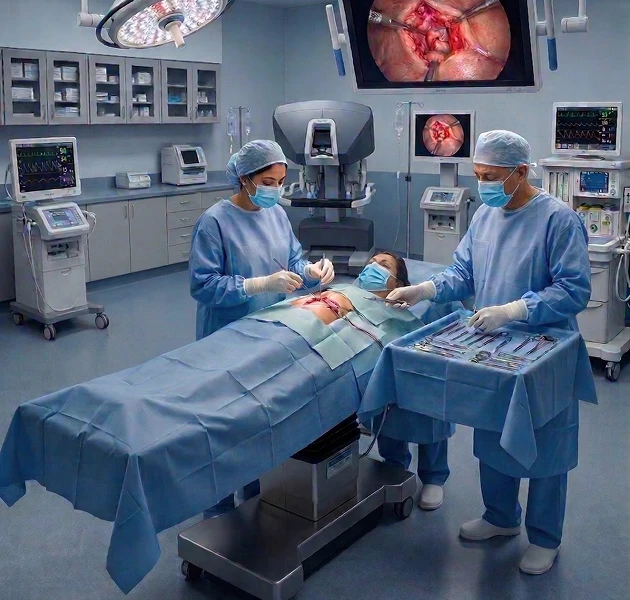
    Reconstructive urology is the subspeciality dedicated to surgically restoring the structure and function of the urinary tract following disease, injury, congenital abnormality or prior surgery, with specialist reconstructive urology care available in Ahmedabad. It encompasses urethroplasty for urethral stricture, bladder reconstruction and augmentation, repair of urinary fistulae (abnormal connections between the urinary tract and other organs), and complex urinary diversion following bladder removal or irreparable damage.

    The most common condition requiring reconstructive urological expertise is urethral stricture — narrowing of the urethra from scar tissue, causing progressively worsening urinary flow. The critical distinction is between temporary measures (urethral dilation, internal urethrotomy) that give short-term relief but invariably lead to recurrence, and urethroplasty — definitive open surgical reconstruction — that achieves over 90% success at 5 years with a single procedure. Many patients endure years of repeated dilations when they should have been offered urethroplasty after the first or second failure — an approach best evaluated by a urology reconstruction surgeon in Ahmedabad.

    • Urethroplasty — open surgical reconstruction of the scarred urethra — 90%+ success at 5 years; gold standard for strictures over 1.5cm or any recurrent stricture
    • Buccal mucosa graft — harvested from inner cheek — gold standard graft material; hairless, moist, durable with minimal donor site morbidity
    • Anastomotic urethroplasty — for short strictures under 1.5cm — excise scar, rejoin healthy ends; highest success rate of any technique
    • Vesicovaginal fistula repair — transabdominal or transvaginal approach — over 90% success for primary repair
    • Bladder augmentation (clam cystoplasty) — for severely contracted bladder — restores capacity and compliance using bowel segment
    Conditions We Treat

    Reconstructive Urological Conditions at Trayam

    Each reconstructive condition has a specific surgical approach and timing. The common thread: definitive repair gives far better long-term outcomes than repeated temporary measures.

    Most Common
    reconstructive condition

    Urethral Stricture

    Scar tissue narrowing the urethra — causes progressively weak stream, straining, incomplete emptying, recurrent UTI and retention. Most common in the bulbar urethra. Causes: prior catheterisation, cystoscopy, TURP, pelvic fracture, gonococcal urethritis, lichen sclerosus (BXO). Diagnosed on retrograde urethrogram (RGU) and uroflowmetry. Treated definitively with urethroplasty — not repeated dilations.

    Urethroplasty: Definitive Fix
    90%+
    repair success

    Vesicovaginal Fistula (VVF)

    Abnormal connection between bladder and vagina causing continuous urinary leakage. Common causes: obstetric trauma, post-hysterectomy, post-radiotherapy. Diagnosis: dye test (methylene blue), cystoscopy, CT urogram. Repair: transvaginal (simple VVF) or transabdominal (complex / recurrent / post-radiation). Timing: 3–6 months after causative event. Over 90% success for primary repair.

    90% Primary Success
    Pelvic
    fracture injury

    Posterior Urethral Injury

    Urethral disruption at the membranous urethra following pelvic fracture — typically from road traffic accidents. Initial management: suprapubic catheter. Definitive repair: perineal anastomotic urethroplasty at 3–6 months. Success rates over 90%. Complex cases with concomitant impotence and incontinence require multidisciplinary management.

    Perineal Urethroplasty
    Bowel
    segment used

    Bladder Reconstruction / Augmentation

    Severely contracted bladder (from tuberculosis, interstitial cystitis, radiation, post-cystectomy) can be augmented using an ileal or colonic segment (clam cystoplasty / ileocystoplasty) — restoring adequate capacity and compliance. Neobladder construction after radical cystectomy for bladder cancer creates a continent reservoir from ileum. Complex surgery requiring experienced reconstructive urological expertise.

    Complex Reconstruction
    Recognise the Signs

    Symptoms of Urethral Stricture & Urinary Tract Damage

    Urethral stricture and other reconstructive conditions progress silently over years. By the time patients present, many have lived with significantly impaired urinary function for a long time — often having normalised a poor stream or straining to void.
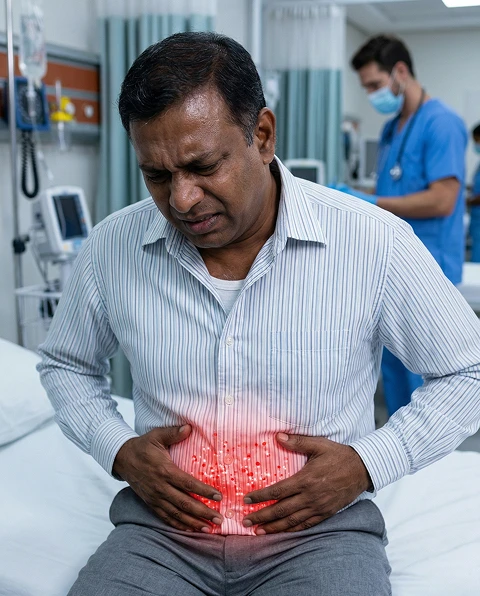
    Acute Urinary Retention

    Acute Urinary Retention

    Sudden inability to pass any urine — a urological emergency. Often the first presentation of a severe or rapidly worsening stricture. Requires immediate catheterisation — suprapubic catheter if urethral catheter cannot be passed. Call immediately.
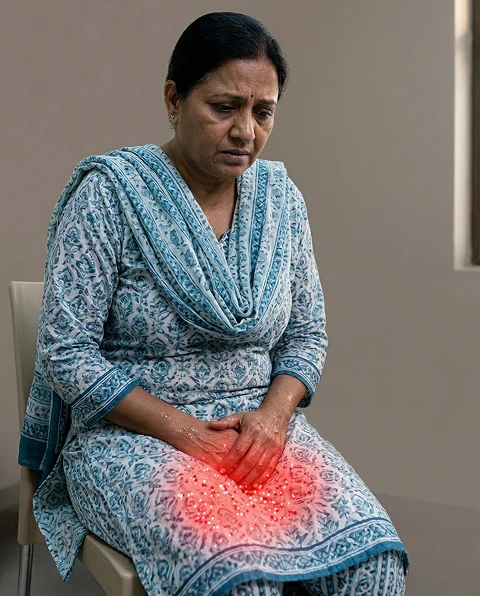
    Continuous Urinary Leakage (Women)

    Continuous Urinary Leakage (Women)

    Constant leakage of urine through the vagina — regardless of voiding — is the classic symptom of vesicovaginal fistula. Not urge incontinence or stress incontinence — continuous, uncontrollable leakage. Requires urgent urological and gynaecological assessment.
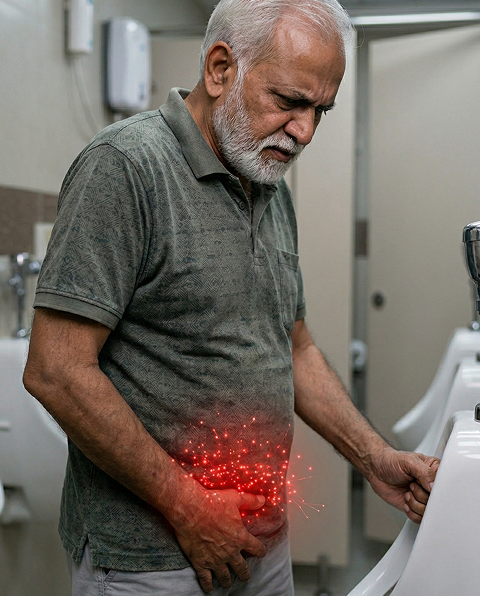
    Weak or Poor Urine Stream

    Weak or Poor Urine Stream

    Progressively weakening stream — the most common presentation of urethral stricture. Often worsens over months or years. Patients frequently strain to initiate or sustain flow, or experience a split or spraying stream. Uroflowmetry and post-void residual measurement confirm the degree of obstruction.
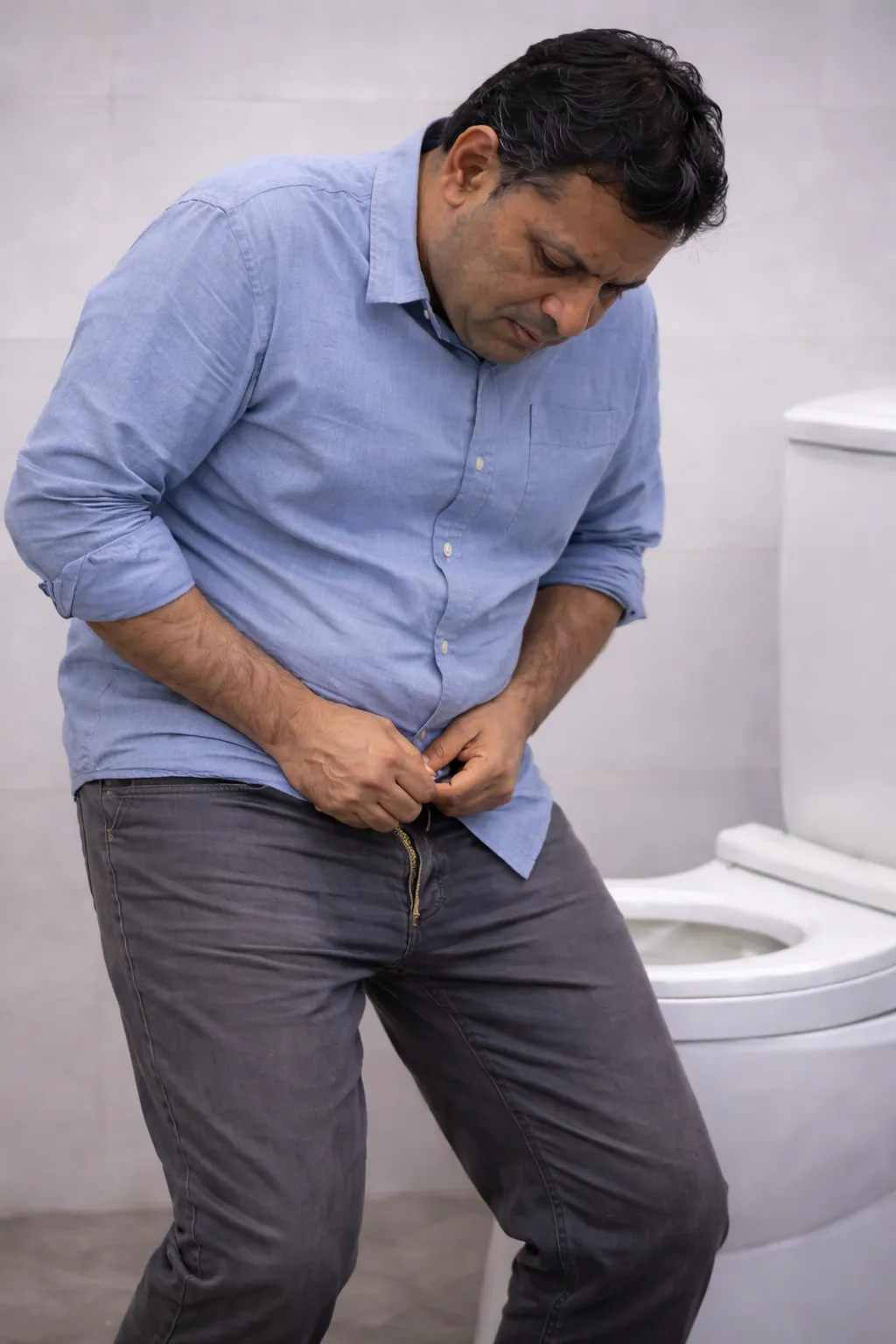
    Incomplete Bladder Emptying

    Incomplete Bladder Emptying

    Sensation of incomplete emptying after voiding — residual urine left in the bladder due to urethral obstruction. Leads to recurrent UTI, bladder stones and long-term bladder damage. Post-void residual measured by ultrasound quantifies the problem.

    Recurrent UTI in Men

    Recurrent UTI in Men

    Recurrent urinary infections in men are not normal — unlike in women, the male urethra is long and recurrent UTI in men almost always indicates a structural cause. Urethral stricture is the most common — obstructed urine stagnates and becomes infected. A urethrogram and cystoscopy are needed.
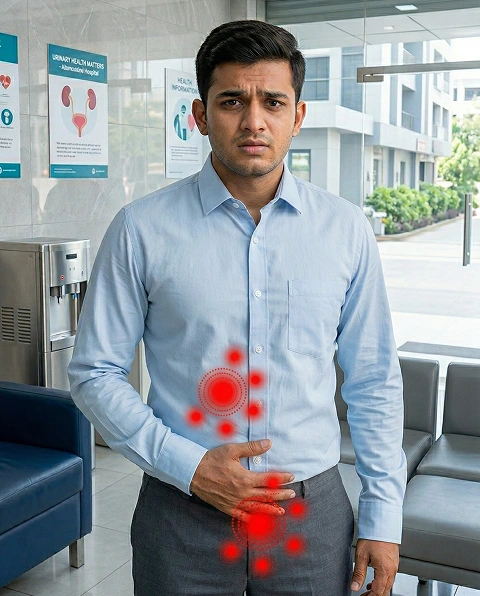
    Previous Urethral Trauma or Instrumentation

    Previous Urethral Trauma or Instrumentation

    History of pelvic fracture, urethral catheterisation, cystoscopy, TURP, hypospadias repair or gonococcal urethritis — all risk factors for subsequent stricture. New onset voiding symptoms in a man with this history requires urethrogram evaluation even if symptoms are mild.
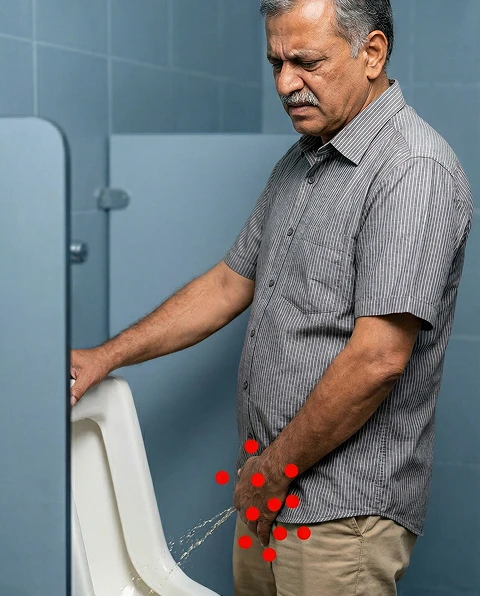
    Straining to Urinate / Spraying Stream

    Straining to Urinate / Spraying Stream

    Need to strain or push to initiate or maintain urine flow, or a spraying/split urinary stream — both indicate urethral narrowing. Often dismissed by patients as normal ageing. It is not normal at any age. Uroflowmetry takes 5 minutes to quantify the problem.
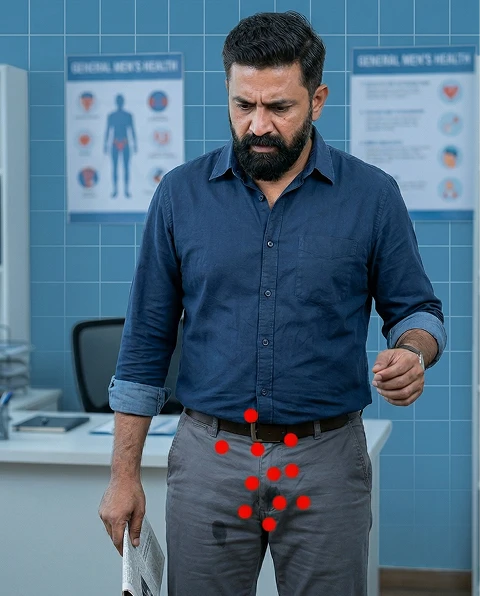
    Post-Void Dribbling

    Post-Void Dribbling

    Small amount of urine leaking after completing voiding — often from residual urine pooling in the bulbar urethra due to urethral narrowing. Common in stricture, particularly bulbar. Distinct from incontinence — occurs after the main stream has finished.

    Treatment Pathways

    Reconstructive Urology Treatment — Definitive Solutions

    Reconstructive urology aims for durable, lasting results — not temporary measures that need to be repeated every 6–12 months. The right procedure performed at the right time gives a patient their normal urinary function back, permanently.

    Anastomotic Urethroplasty

    Short strictures — excise and rejoin; highest success rate

    For short strictures under 1.5–2cm in the bulbar or posterior urethra — the scarred segment is completely excised through a perineal incision and the healthy urethral ends are sewn together under the operating microscope. No graft material needed. Success rates exceed 95% at 5 years — the highest of any urethroplasty technique. Urethral catheter in place for 3 weeks. Suitable for bulbar and posterior urethral strictures of appropriate length.

    95% Success No Graft Needed
    Best for: Short bulbar or posterior urethral strictures under 1.5–2cm

    Buccal Mucosa Graft Urethroplasty

    Gold standard for longer strictures — inner cheek graft

    For strictures over 2cm, penile urethral strictures or recurrent strictures requiring augmentation — the urethra is widened using a graft of buccal mucosa (inner cheek lining). Buccal mucosa is hairless, moist, robust and adapts perfectly to the wet urethral environment. Dorsal onlay or ventral inlay technique depending on stricture characteristics. Success rate of 85–90% at 5 years. Catheter in place for 4–6 weeks post-operatively. Mild cheek tightness resolves in 1–2 weeks.

    85–90% Success Gold Standard Graft
    Best for: Longer strictures, penile urethra, recurrent strictures, pan-urethral disease

    Direct Vision Internal Urethrotomy (DVIU)

    First-time short strictures only — temporary measure

    DVIU cuts the stricture under direct endoscopic vision using a cold knife or laser — no skin incision, day-care procedure. Appropriate only for a first-time short (under 1.5cm) bulbar stricture. Recurrence rate 50–60% at 12 months, 80% at 5 years. Each repeat DVIU worsens the scar burden and makes subsequent urethroplasty technically harder. DVIU is not a treatment for recurrent or long strictures — it is a temporary measure for highly selected first presentations.

    Temporary Day Care
    Best for: First-time single short (under 1.5cm) bulbar stricture only — urethroplasty for any recurrence

    Vesicovaginal Fistula Repair

    Transvaginal or transabdominal — over 90% success

    VVF repair is performed at 3–6 months after the causative event to allow inflammation to resolve. Transvaginal repair for accessible, small, non-irradiated fistulae — shorter recovery. Transabdominal (O'Connor procedure) for large, complex, recurrent or post-irradiation fistulae — better access for tissue interposition. Martius fat pad or omental flap interposed to provide tissue coverage. Bladder catheter for 14–21 days post-operatively. Primary repair success over 90%.

    90% Primary Success Tissue Interposition
    Best for: VVF — primary repair at 3–6 months after causative event; recurrent cases require transabdominal approach

    Bladder Augmentation (Clam Cystoplasty)

    Severely contracted bladder — bowel segment used

    For patients with severely contracted, fibrotic bladder (from tuberculosis, radiation, interstitial cystitis or long-term bladder damage) — an ileal or colonic segment is fashioned into a patch and sewn onto the opened bladder, dramatically increasing capacity and reducing high-pressure contractions. Requires long-term self-catheterisation awareness and annual cystoscopy for mucus management. Complex surgery — reserved for patients who have failed all conservative measures.

    Restores Capacity Complex Surgery
    Best for: Severely contracted bladder with capacity under 150ml unresponsive to all conservative treatment

    Urethrogram (RGU/MCU) — Stricture Mapping

    Full length, location and density — before any treatment

    Retrograde urethrogram (RGU) fills the urethra from the meatus under fluoroscopy — showing stricture location, length and whether it is single or multiple. Micturating cystourethrogram (MCU) images the posterior urethra and bladder neck from above. Together with uroflowmetry, post-void residual and flexible cystoscopy — a complete stricture map is created before any treatment decision. Accurate mapping prevents the wrong procedure being performed.

    Stricture Mapping Before Any Procedure
    Best for: Every patient with urethral stricture — before DVIU, before urethroplasty, and after any treatment to confirm result
    Why Trayam Reconstructive Urology

    Leading Reconstructive Urology in Ahmedabad

    Reconstructive urology done correctly — complete stricture mapping before any procedure, urethroplasty offered at the right time, and a commitment to definitive repair over years of repeated dilations.

    90%+
    Urethroplasty Success
    Buccal
    Mucosa Expertise
    Full
    Stricture Mapping
    24/7
    Emergency

    Urethroplasty — Not Just Repeated Dilations

    We offer definitive urethroplasty — anastomotic and buccal mucosa graft — as the primary treatment option for any recurrent stricture, and for suitable first-time presentations. We do not cycle patients through repeated dilations when a 90% success rate surgical repair is available.

    Complete Stricture Mapping Before Treatment

    Every patient receives a retrograde urethrogram (RGU/MCU), uroflowmetry and post-void residual before any treatment decision. Stricture length, location, density and the state of the proximal urethra are fully mapped — the wrong procedure performed on an incompletely mapped stricture is a preventable failure.

    Buccal Mucosa — Gold Standard in Our Hands

    Buccal mucosa graft urethroplasty requires specific surgical experience to achieve consistent results. Our surgeons have performed this procedure as their primary reconstructive technique — with the outcomes data to match. Not every urologist performs urethroplasty — you need one who does it regularly.

    VVF Repair — Transvaginal & Transabdominal

    Vesicovaginal fistula repair requires surgical experience that combines urology and pelvic surgery expertise. We offer both transvaginal repair for straightforward cases and transabdominal approach with tissue interposition for complex or recurrent fistulae — achieving over 90% primary success.

    24/7 Emergency Urinary Retention Cover

    Acute urinary retention from urethral stricture is a urological emergency. Emergency suprapubic catheterisation is available around the clock at Trayam. Once stable, definitive urethroplasty planning is initiated — not just repeated emergency dilations.

    Insurance-Covered Reconstructive Surgery

    Buccal mucosa graft urethroplasty requires specific surgical experience to achieve consistent results. Our team includes a urology reconstruction surgeon in Ahmedabad with extensive experience in these procedures — with outcomes data to match. Not every urologist performs urethroplasty — you need one who does it regularly.

    Expert Care

    Meet Your Reconstructive Urology Specialist

    Dr. Renish Patel — Trayam Hospital
    MS Urology MCh Urology Endourology Fellowship Years of Exp.

    Dr. Renish Patel

    Senior Consultant Urologist & Reconstructive Urology Specialist — Trayam Hospital

    Dr. Renish Patel specialises in the full range of reconstructive urological procedures — from anastomotic and buccal mucosa graft urethroplasty through to vesicovaginal fistula repair and bladder augmentation. The approach is to map the problem precisely, offer the most durable surgical solution available, and spare patients from the cycle of repeated temporary dilations that brings them here having had 5, 8 or 10 procedures with no lasting benefit.

    • MCh Urology
    • Reconstructive Urology & Urethroplasty Fellowship
    • Buccal Mucosa Graft Urethroplasty Subspecialty Training
    • Published outcomes in buccal mucosa urethroplasty and VVF repair
    • Speaker — Urological Society of India Reconstructive Urology Sessions
    A Common Problem in Urethral Stricture Management

    Had 5 Dilations and the Stricture Keeps Coming Back?

    Urethral stricture is one of the most commonly mismanaged urological conditions. Many patients spend years cycling through repeated urethral dilations or internal urethrotomies — each giving 6–12 months of relief before the stricture recurs, often worse than before. Meanwhile, urethroplasty — which achieves over 90% success at 5 years in a single operation — is never offered or discussed.

    • Repeated dilations or DVIU without ever discussing urethroplasty — current international guidelines recommend considering urethroplasty after the first or second dilation failure. A patient having their fifth, eighth or tenth dilation has not received optimal care. Each dilation adds more scar tissue, making eventual urethroplasty technically harder and slightly less likely to succeed. Earlier is better.
    • Urethroplasty refused because "you are not old enough" or "the stricture is not bad enough — these are not valid reasons to defer urethroplasty. A young man with a recurrent bulbar stricture is an excellent candidate for anastomotic urethroplasty with a 95% success rate. Deferring surgery in favour of repeated dilations trades a single definitive procedure for a lifetime of temporary measures and progressive scarring.
    • Stricture treated without a urethrogram — length and location not mapped — a DVIU performed without a prior urethrogram to map stricture length is guesswork. Cutting a long stricture or a penile stricture with DVIU has very high failure rates and adds scar burden. Full RGU/MCU mapping before any procedure is mandatory.
    • VVF told to "manage with pads" and not referred for surgical repair — vesicovaginal fistula is a surgically correctable condition with over 90% primary repair success. Any woman with continuous urinary leakage through the vagina should be referred for urological assessment immediately — not given incontinence products as a long-term solution.
    The Trayam Reconstructive Promise Urethroplasty offered at the right time — not after years of avoidable dilations. Full stricture mapping before any procedure. Definitive repair wherever possible. VVF referred for repair, not managed with pads.

    Urethroplasty After First or Second Dilation Failure

    We follow evidence-based guidelines — urethroplasty is offered at first or second recurrence after dilation, not after the fifth or tenth. Earlier surgery means less scar burden, better technical conditions and higher success rates.

    Full RGU/MCU Mapping Before Every Procedure

    No urethral procedure is performed without a complete retrograde urethrogram. Stricture length, location, number and proximal urethral status are mapped. The wrong procedure on a poorly mapped stricture is a preventable complication.

    VVF Referred for Repair — Not Managed with Pads

    Every woman presenting with suspected VVF is assessed for surgical repair. Continuous urinary leakage through the vagina is a surgical diagnosis — the goal is cure, not long-term pad dependency.

    Recurrent urethral stricture? Urinary fistula? Had multiple dilations with no lasting result? Consult a urology reconstruction surgeon in Ahmedabad — bring your previous urethrogram images and flow rate results if you have them, or we start with a complete mapping workup. A single urethroplasty may give you a permanent solution.

    Confidential  ·  No Obligation  ·  Reply in 2 Hours

    Protecting Urethral Health

    How to Protect Your Urethra & Prevent Stricture

    Many urethral strictures are preventable. The most common causes — catheterisation trauma, untreated STI and surgical complications — are all modifiable with the right precautions and timely treatment.

    Treat Gonococcal Urethritis Promptly

    Untreated or inadequately treated gonococcal urethritis (gonorrhoea) is one of the most common preventable causes of urethral stricture — scarring the bulbar urethra progressively. Any urethral discharge requires immediate genitourinary medicine assessment, urine NAAT testing and appropriate antibiotic treatment. Dual therapy with ceftriaxone and azithromycin per current guidelines.

    🦠 Treat STI immediately — do not delay

    Gentle Catheterisation Technique

    Traumatic urethral catheterisation — especially repeated catheterisation with too-large catheters or forced insertion — is the most common iatrogenic cause of urethral stricture. If catheterisation is difficult, a urologist should be called immediately rather than forcing the catheter. Suprapubic catheterisation is always preferable to repeated traumatic urethral attempts.

    ⚠️ Difficult catheterisation → call urologist

    Pelvic Fracture — Suprapubic Catheter, Not Urethral

    In any major pelvic fracture — suspect urethral injury. Blood at the urethral meatus, inability to void or high-riding prostate on examination are all signs of posterior urethral disruption. A urethral catheter must not be forced — suprapubic catheter drainage is the safe immediate management. Urological assessment before any urethral instrumentation.

    🚨 Blood at meatus = do not catheterise urethrally

    Maintain Adequate Fluid Intake

    Adequate hydration reduces urinary tract infection risk — recurrent UTI in the presence of an existing stricture accelerates the scarring process. 2–2.5 litres per day keeps urine dilute and reduces infection risk. Concentrated urine irritates the urethral epithelium chronically.

    💧 2.5L/day — dilute urine protects

    Uroflowmetry After Any Urethral Procedure

    Any man who has undergone urethral catheterisation for more than 5–7 days, cystoscopy, TURP, or any pelvic surgery should have a uroflowmetry check at 6–12 months to establish a baseline. Declining flow rate on serial uroflowmetry is the earliest detectable sign of developing stricture — before symptoms are severe.

    📊 Uroflowmetry after any urethral instrumentation

    Do Not Delay Urethroplasty After Recurrent Dilation

    If your stricture has recurred after one or two dilations — ask for a urethroplasty referral. Do not accept repeated dilations indefinitely. Each dilation adds scar tissue and narrows the therapeutic window for the best surgical outcomes. Earlier urethroplasty means better results and shorter recovery.

    🏥 Ask for urethroplasty after 1–2 recurrences
    Patient Stories

    What Our Patients Say

    Stricture-Free After 8 Dilations — Urethroplasty Finally Done
    I had my first urethral dilation at age 32 and my eighth at age 39. Each one lasted 6–8 months before the stricture came back. Nobody ever mentioned urethroplasty. At Trayam, Dr. Renish Patel mapped my stricture with a urethrogram, told me I was a perfect candidate for buccal mucosa repair, and performed the surgery three months later. That was two years ago. My flow rate is completely normal and I have not needed a single procedure since. I wish someone had told me this was an option years ago.
    Hareshbhai P.
    Recurrent Bulbar Stricture · Buccal Mucosa Urethroplasty · Age 39 · Ahmedabad
    VVF Repaired — Normal Life Restored
    After a difficult delivery I developed continuous leakage of urine through my vagina. For nearly a year I used pads every day. I was told surgery was too risky and to manage with pads. At Trayam, the fistula was assessed, found to be suitable for transvaginal repair, and I was operated within three months. The leakage stopped completely. I cannot describe what it means to have my normal life back.
    Kinjalben M.
    Post-Obstetric VVF · Transvaginal Repair · Age 28 · Surat
    Post-Pelvic Fracture — Definitive Urethroplasty
    I had a road accident three years ago with pelvic fractures and urethral injury. I had a suprapubic catheter for six months and was told nothing could be done about my urethra. At Trayam they performed a perineal urethroplasty at the right time. I have been voiding normally for 18 months without any catheter. The difference in quality of life is impossible to overstate.
    Bhavesh R.
    Pelvic Fracture Urethral Injury · Perineal Anastomotic Urethroplasty · Age 34 · Vadodara
    Common Questions

    Frequently Asked Questions

    Urethral stricture is scar tissue narrowing the urethra — reducing urine flow. Causes include prior catheterisation, cystoscopy, TURP, pelvic fracture, gonococcal urethritis and lichen sclerosus. Symptoms: weak stream, straining, incomplete emptying, recurrent UTI, retention.

    Dilation stretches or cuts the stricture but leaves the scar — recurrence in 60% at 1 year, 80% at 5 years. Urethroplasty removes or bypasses the scar with healthy tissue — 90%+ success at 5 years. Each repeat dilation worsens the scar burden. Urethroplasty should be offered after first or second dilation failure.

    A graft of inner cheek tissue (buccal mucosa) used to widen or replace the scarred urethra. Gold standard material — hairless, moist, durable, minimal donor site morbidity. Used for strictures over 2cm or penile urethral location. Catheter in place for 4–6 weeks. 85–90% success at 5 years.

    After the first or second dilation failure — per current international guidelines. Not after the fifth or tenth. Earlier urethroplasty means less scar burden, better surgical conditions and higher success rates. Do not wait.

    An abnormal connection between bladder and vagina causing continuous urinary leakage. Repaired surgically — transvaginal or transabdominal — at 3–6 months after the causative event. Primary repair success over 90% in experienced hands.

    Yes — severe stricture causes back-pressure on the bladder and eventually bilateral hydronephrosis and chronic kidney disease. Upper tract evaluation and post-void residual measurement is recommended for any significant stricture. Definitive urethroplasty prevents long-term kidney damage.

    Urethral disruption from major pelvic fracture — managed with suprapubic catheter acutely. Definitive perineal anastomotic urethroplasty at 3–6 months after injury. Success over 90%. Do not attempt urethral catheterisation in suspected urethral injury — blood at meatus is a contraindication.

    Yes — urethroplasty, fistula repair and bladder reconstruction are covered by all major Indian health insurance policies. Trayam is empanelled with all major insurers. Our team manages cashless pre-authorisation and full claim support.

    Urethral catheter in place for 3–4 weeks (anastomotic) or 4–6 weeks (graft). Most patients void well immediately after catheter removal. Desk work resumes with catheter in 2–4 weeks. Heavy work at 4–6 weeks. Uroflowmetry at 3 months confirms result.

    Progressive worsening — weaker stream, incomplete emptying, recurrent UTI, bladder stones, bladder diverticula, hydronephrosis and chronic kidney disease. In severe cases — complete retention, peri-urethral abscess or fistula. Definitive treatment prevents all of these long-term complications.

    In Pain? Get Expert Help Today.

    Same-day consultations available. We’ll guide you to the right treatment — fast.

    Chat on WhatsApp