Shoulder & Sports Surgery Centre

Shoulder Arthroscopy — Keyhole Surgery for a Stronger, Stable Shoulder

Arthroscopic shoulder surgery by a shoulder arthroscopy surgeon in Ahmedabad treats rotator cuff tears and shoulder instability through two or three tiny incisions, with no large open wound and no prolonged hospital stay. Precise repair under direct camera vision with advanced shoulder scope surgery. Back to daily life in weeks, sport in months.

45–90 min
Procedure Duration
Day Care
Same-Day Discharge
2–3
Tiny Incisions
4–6 Months
Return to Sport
Insurance Accepted
Shoulder Specialists

Book Free Consultation

Our specialist will call you within 2 hours
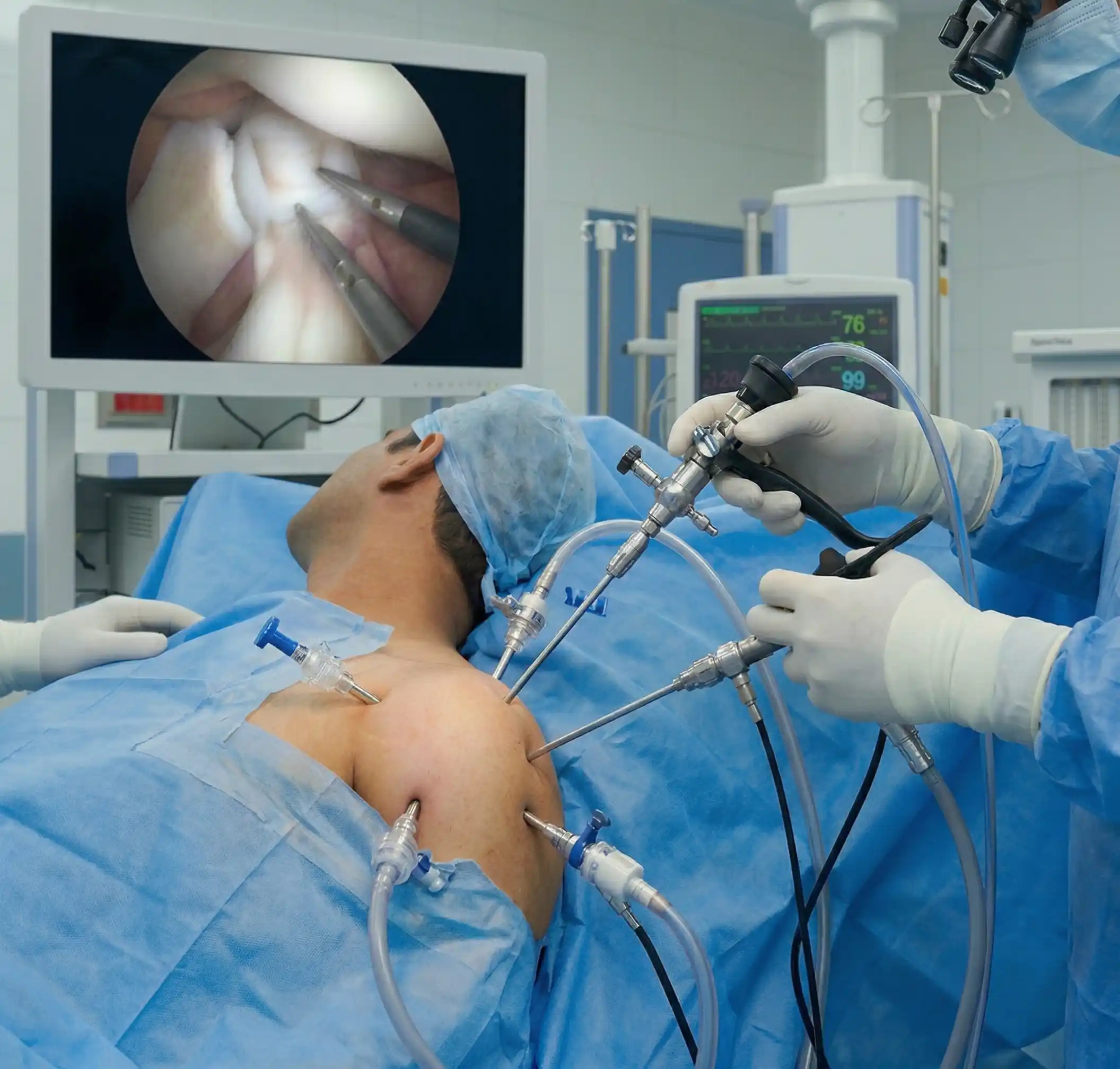
    Shoulder Arthroscopy at Trayam Hospital
    What is Shoulder Arthroscopy?

    Understanding Shoulder Arthroscopy

    Shoulder arthroscopy is a minimally invasive surgical procedure in which a thin camera — the arthroscope — is inserted into the shoulder joint through a small incision approximately 5mm in size. The camera transmits a magnified, high-definition view of the structures inside the shoulder — rotator cuff tendons, labrum, biceps tendon, bursa and joint cartilage — onto a screen, allowing the surgeon to diagnose and treat a wide range of shoulder conditions without the large incisions, extended hospital stay and prolonged recovery of open shoulder surgery.

    At Trayam Hospital, shoulder arthroscopy is performed as a day-care procedure under general anaesthesia — most patients are discharged the same day. Through two or three small portals, the surgeon introduces instruments alongside the camera to repair torn tendons, reattach the labrum, remove inflamed tissue or address instability — all under direct vision with precision that open surgery cannot match. The procedure is both diagnostic and therapeutic: confirming exactly what is damaged and repairing it in the same session.

    • Day-care procedure — most patients discharged same day or next morning
    • Two to three 5mm incisions — no large wound, minimal scarring, lower infection risk
    • Treats rotator cuff tears and shoulder instability (Bankart) in a single arthroscopic session
    • Direct camera vision — superior to open surgery for identifying the full extent of damage
    • Return to desk work in 2–4 weeks; sport and heavy work at 4–6 months depending on procedure
    Do You Need It?

    Signs You May Need Shoulder Arthroscopy

    If you're experiencing any of these symptoms, a consultation with a shoulder arthroscopy surgeon is recommended
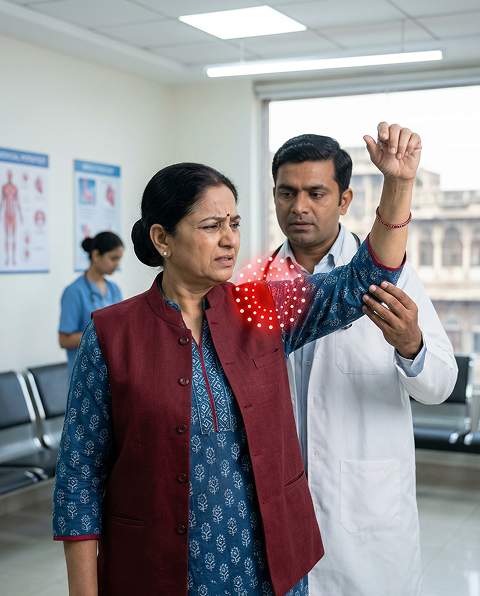
    Painful Arc — Pain Lifting the Arm

    Painful Arc — Pain Lifting the Arm

    Pain when raising the arm between 60 and 120 degrees — the classic painful arc of rotator cuff disease. Caused by the torn or impinged tendon being compressed against the acromion during mid-range elevation. The pain often eases above 120 degrees, then returns when lowering.

    Night Pain — Cannot Sleep on the Shoulder

    Night Pain — Cannot Sleep on the Shoulder

    Inability to sleep on the affected shoulder, or being woken by pain when rolling onto it. Night pain is a hallmark of significant rotator cuff pathology — the torn tendon loses its resting tension and the shoulder is painful in any position without the upright muscle activity that partially splints it during the day.
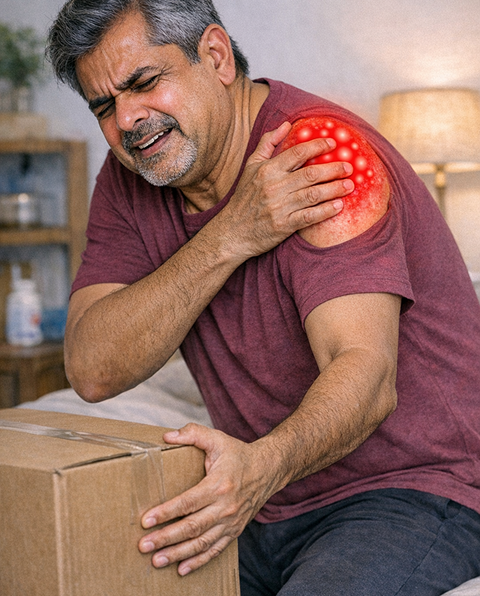
    Shoulder Weakness — Cannot Lift Objects

    Shoulder Weakness — Cannot Lift Objects

    Weakness when lifting, pushing or reaching — difficulty with overhead tasks, carrying shopping or lifting objects away from the body. Rotator cuff tears cause a measurable reduction in shoulder strength that physiotherapy cannot fully restore when the structural tear is significant.
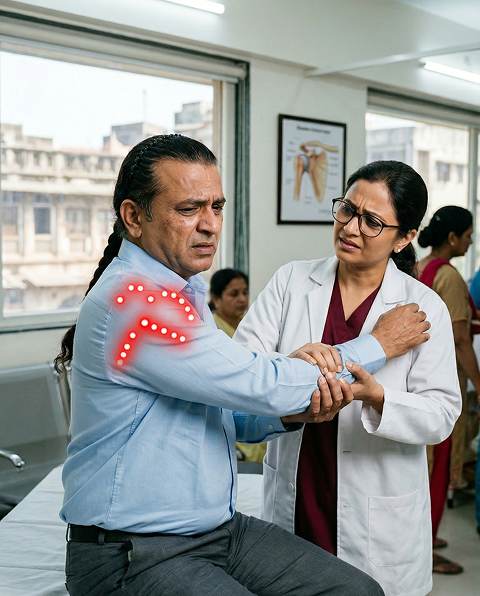
    Shoulder Dislocation — First or Recurrent

    Shoulder Dislocation — First or Recurrent

    The shoulder has dislocated once or multiple times — the ball (humeral head) coming completely out of the socket. A first-time dislocation in a young active patient carries a 70–90% risk of recurrence without surgical stabilisation. Recurrent dislocation is almost always an indication for arthroscopic Bankart repair.
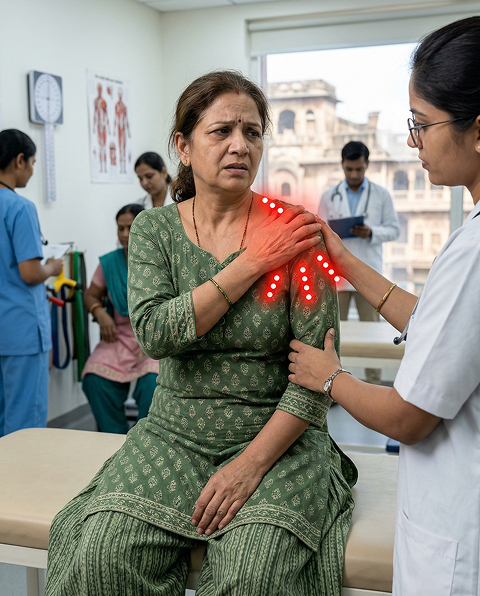
    Shoulder Apprehension / Giving Way

    Shoulder Apprehension / Giving Way

    A feeling that the shoulder is about to dislocate during certain movements — particularly arm elevation and external rotation (the "throwing position"). This apprehension is caused by a labral or ligament deficiency that makes the shoulder structurally unstable even without a full dislocation.
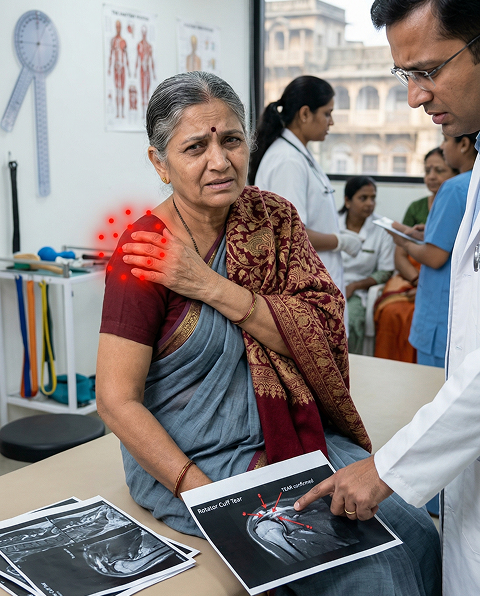
    Rotator Cuff Tear on MRI

    Rotator Cuff Tear on MRI

    MRI confirming a partial or full-thickness rotator cuff tear — supraspinatus, infraspinatus or subscapularis. Tear size, tissue quality and symptom duration determine whether surgical repair, physiotherapy or augmented repair is the right approach. Large tears treated late become irreparable — early assessment matters.
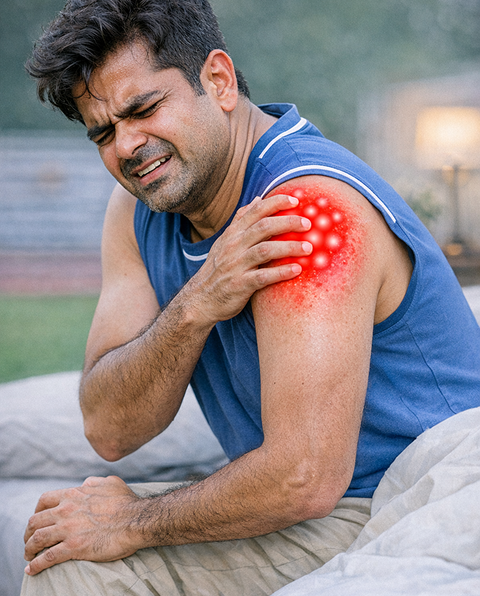
    Shoulder Pain Not Improving with Physiotherapy

    Shoulder Pain Not Improving with Physiotherapy

    Persistent shoulder pain — rotator cuff-type or instability-type — that has not improved adequately after 3–6 months of structured physiotherapy. When conservative management has failed to resolve a structurally based problem, arthroscopic assessment and treatment is the logical next step.
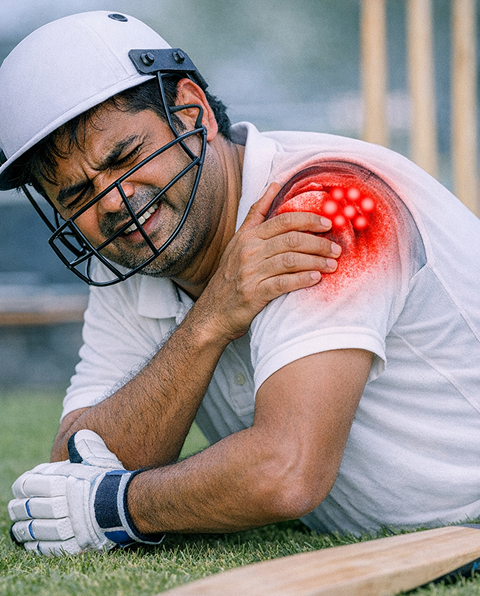
    Sports Injury — Throwing, Contact or Fall

    Sports Injury — Throwing, Contact or Fall

    Shoulder injury during sport — a throwing injury, tackle, collision or fall onto an outstretched arm — causing immediate pain, instability or weakness. Sports shoulder injuries frequently involve the rotator cuff, labrum or both. Continuing to play through significant structural damage accelerates tear progression.

    Why Trayam

    Leading Centre for Arthroscopic Shoulder Surgery in Ahmedabad

    Athletes, working professionals and patients of all ages choose Trayam Hospital for shoulder arthroscopy
    2000+
    Shoulder Arthroscopies
    100%
    Patient Satisfaction
    10+
    Years Experience
    Same Day
    Discharge Most Cases

    HD Arthroscopy — Precise Visualisation

    High-definition arthroscopic camera systems provide a magnified, crystal-clear view of every structure inside the shoulder — rotator cuff footprint, labrum, biceps anchor and articular cartilage. Pathology that is not visible on MRI is frequently identified arthroscopically. What is seen clearly can be repaired precisely.

    Minimally Invasive — Day Care

    Shoulder arthroscopy at Trayam is performed through two or three 5mm portals under day-care admission. Most patients go home the same day — with minimal disruption to work, family and daily life compared to the extended stay and recovery of open shoulder surgery.

    Shoulder & Sports Medicine Expertise

    Our surgeons include a shoulder arthroscopy surgeon in Ahmedabad with fellowship training in arthroscopic rotator cuff repair and shoulder stabilisation, procedures that require both technical precision and a sport-specific rehabilitation philosophy to achieve full return to activity.

    Anchor-Based Repair — Strong, Durable Fixation

    Rotator cuff repairs and Bankart stabilisations at Trayam use modern suture anchor systems — titanium or bioabsorbable anchors that provide strong, anatomic fixation of repaired tendons and labrum directly to bone. Anchor technology has significantly improved the durability of arthroscopic repairs compared to older techniques.

    Zero-Infection Protocol

    All arthroscopy procedures are performed in a sterile laminar-flow OT with strict aseptic technique and NABL-accredited pre-operative screening. Shoulder joint infection — though rare — is serious. Our protocols are designed to eliminate this risk.

    Sport-Specific Rehabilitation — Return to Play

    Our physiotherapy team includes rehabilitation specialists experienced in post-arthroscopy shoulder recovery — from rotator cuff repair (return to overhead sport at 6 months) to Bankart stabilisation (return to contact sport at 6 months). A structured, staged protocol for every patient and every procedure.

    Expert Care

    Meet Your Shoulder Arthroscopy Specialist

    Dr. Parth Patel — Trayam Hospital
    MS Orthopaedics Fellowship – Joint Replacement 10+ Yrs Exp

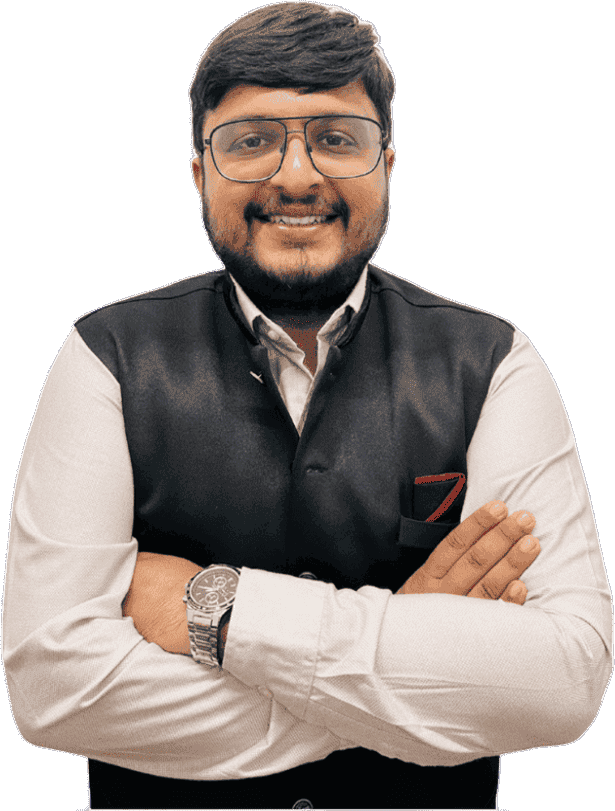
    Dr. Parth Patel

    Senior Consultant — Shoulder, Elbow & Sports Surgery, Trayam Hospital

    Dr. Parth Patel is an experienced shoulder arthroscopy specialist with fellowship training in shoulder and upper limb surgery. With over 2,000 arthroscopic shoulder procedures performed — including complex rotator cuff repairs, Bankart stabilisations and revision shoulder surgery — Dr. Parth Patel combines surgical precision with a deep understanding of what patients need most: not just pain relief, but full, confident return to the activities and sports they love.

    • MS Orthopaedics
    • Fellowship in Joint Replacement
    • International Training
    • Published in 10+ peer-reviewed journals
    • Speaker at National & International Orthopaedic Conferences
    Procedures We Offer

    Conditions Treated with Shoulder Arthroscopy

    Shoulder arthroscopy at Trayam addresses the two most common surgical shoulder conditions — rotator cuff tears and shoulder instability — with the full range of arthroscopic techniques

    Rotator Cuff Repair

    The rotator cuff is a group of four tendons (supraspinatus, infraspinatus, subscapularis, teres minor) that stabilise the shoulder and power arm movement. Tears — from acute injury or chronic degeneration — cause pain, weakness and night pain. Arthroscopic repair in shoulder scope surgery reattaches the torn tendon to the bone using suture anchors under direct camera vision. Partial tears: debridement or repair depending on size. Full-thickness tears: anatomic repair with suture anchors. Large or massive tears: augmented repair techniques. Return to overhead sport: 5–6 months.

    Most Common

    Bankart Repair — Shoulder Stabilisation

    A Bankart lesion is a tear of the anterior labrum — the cartilage bumper at the front of the shoulder socket — caused by a dislocation. It is the most common structural cause of recurrent shoulder instability. Arthroscopic Bankart repair reattaches the torn labrum to the glenoid rim with suture anchors, restoring the shoulder's natural bumper and preventing re-dislocation. Success rate over 90% in correctly selected patients. Return to contact sport: 6 months. First-time dislocation in a young athlete — early repair gives the best long-term outcome.

    Instability

    Remplissage — For Instability with Bone Loss

    When repeated dislocations have caused a Hill-Sachs dislocation (a dent in the humeral head) alongside the Bankart labral tear, Bankart repair alone has higher failure rates. Remplissage — filling the Hill-Sachs defect with the posterior capsule and infraspinatus tendon — is performed arthroscopically alongside Bankart repair to reduce the risk of recurrent dislocation in patients with engaging Hill-Sachs lesions.

    Augmented

    Diagnostic Arthroscopy & Subacromial Decompression

    When MRI findings are inconclusive but shoulder symptoms persist — particularly impingement pain with a painful arc — diagnostic arthroscopy provides definitive assessment of the rotator cuff, bursa, biceps tendon and joint surfaces. Subacromial decompression (acromioplasty) removes the bony spur causing impingement in patients with confirmed structural impingement — though careful patient selection is required as the evidence for decompression alone has evolved.

    Diagnostic
    What to Expect

    Your Recovery Journey After Shoulder Arthroscopy

    Day of Surgery

    Day-care procedure complete. Arm in a sling. Discharged same day or next morning. Ice, pain medication and sling instructions provided. Gentle finger, wrist and elbow movement encouraged from day 1.

    Week 1–3

    Sling worn continuously (rotator cuff repair: 4–6 weeks; Bankart repair: 3–4 weeks). Passive range-of-motion exercises begin at physiotherapy. Portal wounds healing — reviewed at 10–14 days. Desk work possible from week 2–3 with sling.

    Week 4–6

    Sling weaned. Active-assisted range-of-motion exercises progressing. Swelling and stiffness reducing. Physiotherapy attending regularly — range of motion and early strengthening.

    Month 2–3

    Active range of motion restored for most patients. Rotator cuff strengthening programme underway. Bankart patients: shoulder confidence returning, contact avoided.

    Month 4–5

    Strengthening near completion. Return to light recreational sport. Rotator cuff repair patients: overhead activity progressing. Full strength testing at physiotherapy assessment.

    Month 6

    Return to full sport and unrestricted activity for most patients — rotator cuff repair and Bankart repair. Final outpatient review with assessment of strength, stability and range of motion. Annual review not required unless symptoms recur.

    Patient Stories

    What Our Patients Say

    "I had a full-thickness supraspinatus tear that had been managed with injections for 18 months. The pain was affecting my sleep every night and I could not lift my arm above shoulder height. The arthroscopic repair at Trayam was a day procedure. Six months later I have full strength, no night pain and I am back to swimming. The structured physiotherapy programme was as important as the surgery itself."

    Maheshbhai D.
    Arthroscopic Rotator Cuff Repair — Full Thickness Supraspinatus Tear • Age 54 • Ahmedabad

    "My shoulder dislocated four times in two years playing football. Each time it was put back in and I was sent home. Nobody discussed surgery until I came to Trayam. Dr. Parth Patel explained the Bankart repair clearly — one arthroscopic procedure to fix the labrum. That was 14 months ago. I have played a full season without a single dislocation. I should have had this done after the first dislocation."

    Karansinh R.
    Arthroscopic Bankart Repair — Recurrent Dislocation • Age 23 • Surat

    "I am a 47-year-old cricket player and was told my rotator cuff tear was too large to repair arthroscopically. At Trayam, Dr. Parth Patel reviewed the MRI and said the tissue quality was still good — augmented repair was possible. The surgery went well and I followed the full 6-month rehab programme. I am now back to club cricket and pain-free. Do not accept that a tear cannot be repaired without a second opinion."

    Vijaybhai P.
    Augmented Arthroscopic Rotator Cuff Repair — Large Tear • Age 47 • Vadodara
    A Common Problem in India

    Rotator Cuff Tear Managed with Injections for a Year — While the Tendon Retracted?

    A few of the most common mismanagement patterns in shoulder surgery in India are: managing a significant rotator cuff tear with repeated steroid injections until the tear becomes irreparable, and treating recurrent shoulder dislocation with physiotherapy alone when surgical stabilisation is the only reliable solution. In both cases, delay worsens the outcome — and in rotator cuff disease, extended delay can convert a repairable tear into an irreparable one.

    • Rotator cuff tear managed with steroid injections beyond 3–6 months without surgical assessment — steroid injections reduce pain temporarily but do not heal a torn tendon. While small partial tears in older patients may be appropriately managed conservatively, a full-thickness tear in a patient under 65 with ongoing weakness and pain warrants surgical assessment. With each passing month, the torn tendon retracts and the muscle atrophies — a tear that is repairable today may not be repairable in 12 months.
    • Recurrent shoulder dislocation managed with physiotherapy and activity restriction — physiotherapy cannot reattach a torn Bankart labrum. In a young active patient who has dislocated more than once, the recurrence risk without surgery exceeds 80%. Physiotherapy is not wrong as a first step after a first dislocation — but if a second dislocation occurs, surgical stabilisation should be the default recommendation, not more physiotherapy.
    • Told rotator cuff tear is "too large to repair" without a specialist second opinion — tear size on MRI does not always predict repairability at arthroscopy. Tissue quality, tear pattern and retraction are equally important — and MRI frequently overestimates the degree of retraction. Augmented repair techniques, interval slides and superior capsule reconstruction extend the range of tears that can be addressed arthroscopically. A specialist second opinion is warranted before accepting that a tear is irreparable.
    • Open rotator cuff repair recommended when arthroscopic is appropriate — open rotator cuff repair is rarely necessary for primary tears in experienced arthroscopic hands. Arthroscopic repair gives equivalent or superior outcomes with less post-operative pain, faster recovery and lower infection risk. If you have been recommended open surgery for a primary rotator cuff tear, ask specifically why arthroscopic repair is not appropriate for your case.
    The Trayam Promise What we quote is what you pay. No surprises. No fine print. No pressure.

    Complete Cost Breakdown — Before You Decide

    Fully itemised estimate covering procedure, anaesthesia, day-care stay, implants (suture anchors specified), physiotherapy and follow-up — in writing before you book. No surprises after surgery.

    Surgery Only When Indicated

    We do not recommend arthroscopy for shoulder conditions that will respond to structured physiotherapy. We do recommend it when structural pathology — a repairable tear or correctable instability — will not resolve without surgery. Honest assessment, every time.

    Honest Insurance Guidance

    Shoulder arthroscopy, rotator cuff repair and Bankart stabilisation are covered under most major Indian health insurance policies. Our insurance desk manages pre-authorisation and cashless hospitalisation for all shoulder procedures.

    Shoulder pain, weakness or instability? Get an honest assessment — not another injection.

    Confidential  ·  No Obligation  ·  Reply in 2 Hours

    Common Questions

    Frequently Asked Questions

    Shoulder arthroscopy inserts a thin camera into the shoulder through a 5mm incision. The surgeon views the joint on a screen and repairs damaged structures through two or three additional small portals. Performed under general anaesthesia — usually day care.

    Rotator cuff repair: 60–90 minutes. Bankart repair: 45–75 minutes. Remplissage with Bankart: 75–90 minutes. Diagnostic arthroscopy: 30–45 minutes.

    Rotator cuff repair: sling for 4–6 weeks to protect the repair while the tendon heals to bone. Bankart repair: sling for 3–4 weeks. The sling duration reflects the healing time required — not the severity of the procedure.

    Desk work: 2–4 weeks with sling. Light manual work: 3–4 months. Heavy manual work and overhead labour: 5–6 months. Return-to-work timing is individualised based on procedure and job demands.

    Non-contact recreational sport: 4–5 months. Overhead sport (cricket, tennis, swimming): 5–6 months. Contact sport and collision sports: 6 months after Bankart repair. Return to play requires sign-off from both the surgeon and physiotherapist.

    In correctly selected patients without significant bone loss, arthroscopic Bankart repair achieves over 90% stability at medium-term follow-up. Patients with significant glenoid bone loss (over 20–25%) may require additional bone grafting procedures (Latarjet) for equivalent stability.

    Shoulder arthroscopy is a safe procedure. Risks include: infection (under 1%), stiffness, failure of repair requiring revision, and — rarely — nerve or vessel injury. Stiffness is more common after rotator cuff repair (5–10%) and is managed with physiotherapy.

    Yes — rotator cuff repair and Bankart stabilisation are covered by most major Indian health insurance policies and PMJAY. Our insurance desk manages pre-authorisation and cashless hospitalisation.

    Shoulder Pain, Weakness or Instability? Keyhole Surgery — Home the Same Day

    Talk to our shoulder specialist today — bring your MRI if you have one, or we arrange it. Book a consultation, no obligation.
    Chat on WhatsApp