Concerned about male fertility or zero sperm count? Early evaluation gives the best treatment options — same-day consultations available.
Male factor contributes to half of all infertility cases — yet is often the last thing investigated. From low sperm count and varicocele to azoospermia and hormonal imbalance, we identify the exact cause and provide the most appropriate male infertility treatment, surgical or medical.
Tell us your symptoms — we’ll guide you immediately
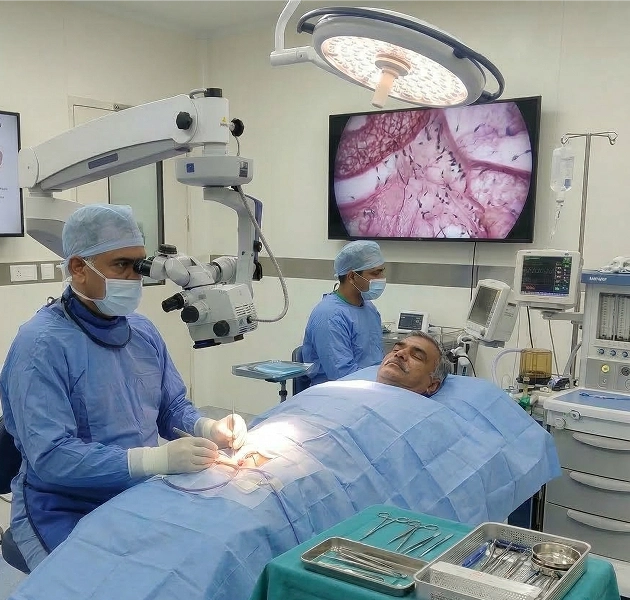
Male infertility is defined as the inability to achieve conception after 12 months of regular unprotected intercourse — when this is due to a male factor abnormality in sperm production, function or delivery. Male factor contributes to 40–50% of all infertility cases, yet is frequently the last thing investigated. A simple semen analysis is all that is needed to identify whether a male factor is present.
The most common treatable cause is varicocele — dilated veins in the scrotum that raise testicular temperature and impair sperm production, found in 35–40% of infertile men. Other causes include hormonal imbalance, obstructive azoospermia (blockage preventing sperm from reaching the ejaculate), genetic factors and lifestyle factors. A structured evaluation — semen analysis, hormonal blood tests, scrotal ultrasound and targeted genetic testing — identifies the specific cause and guides the most effective male infertility treatment in Ahmedabad.
The treatment for male infertility depends entirely on identifying the specific cause. Each type has a distinct investigation pathway and treatment — which is why a structured evaluation always comes before any treatment recommendation.
Male infertility is often silent — no obvious symptoms until a couple tries to conceive. But some signs and associated conditions should prompt earlier evaluation. Know what to look for.

Primary indication for male fertility evaluation. After 12 months of regular unprotected intercourse without conception — both partners should be evaluated simultaneously. After 6 months if the female partner is over 35.

Varicocele may cause a dull dragging ache or heaviness in the scrotum — worse after standing or exercise. Often noticed as a "bag of worms" on self-examination. Present in 15% of all men. Most significant correctable cause of male infertility.
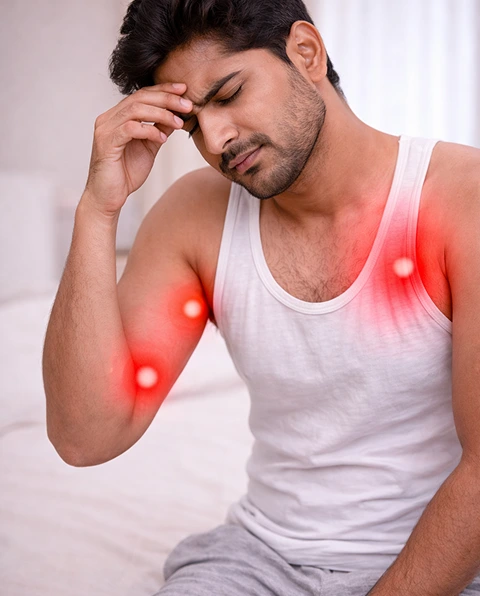
Reduced libido, fatigue, reduced body hair, gynaecomastia (breast development) or reduced beard growth — signs of low testosterone or hypopituitarism. Hormonal causes of infertility are among the most treatable with targeted gonadotropin or hormone therapy.

Very low ejaculate volume (under 1.5ml) suggests retrograde ejaculation, ejaculatory duct obstruction or congenital bilateral absence of the vas deferens — all detectable on targeted investigation. Post-ejaculatory urine microscopy confirms retrograde ejaculation.
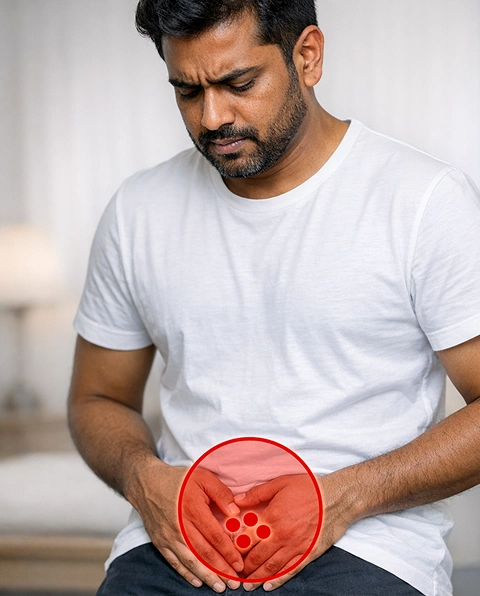
Small testicular volume (under 15ml) on ultrasound suggests impaired sperm production. History of undescended testis (cryptorchidism) increases infertility risk. Previous orchitis (mumps, epididymo-orchitis) can impair testicular function. Testicular volume is measured at every consultation.
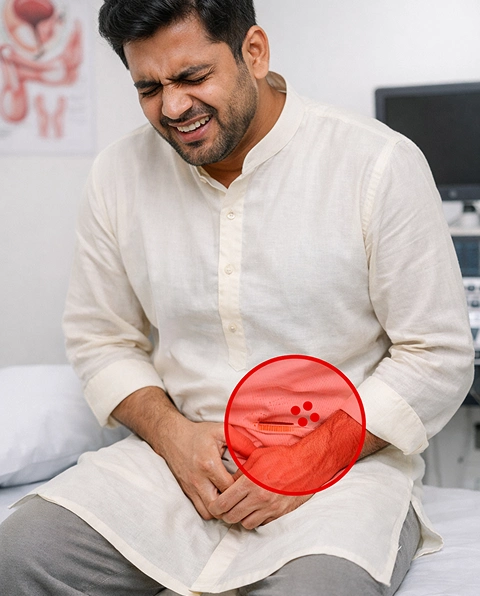
Previous hernia repair, orchidopexy, vasectomy or hydrocele surgery may have caused vas deferens injury or obstruction. Always disclose surgical history — it directly affects investigation and treatment pathway. Vasectomy reversal or surgical sperm retrieval may be appropriate.

Exogenous testosterone and anabolic steroids suppress the HPG axis, halting the body's own LH/FSH production and causing azoospermia — sometimes within weeks of starting. This is reversible but recovery of sperm production takes 6–24 months after stopping. All supplements and medications must be disclosed.
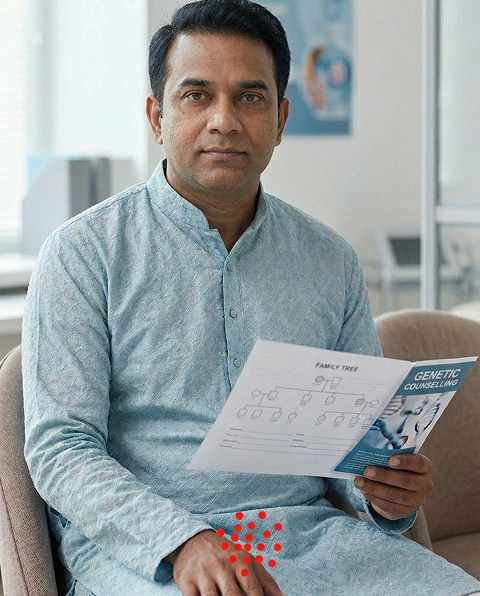
Klinefelter syndrome (47,XXY), Y-chromosome microdeletions and cystic fibrosis gene mutations (CFTR) causing congenital absence of vas deferens all cause azoospermia. Genetic counselling is essential before sperm retrieval and ICSI so couples understand inheritance risk for offspring.
Effective male infertility treatment is never one-size-fits-all. The specific cause identified on evaluation determines which treatment gives the best outcome — from lifestyle changes and medication through to microsurgery and sperm retrieval.
Male infertility evaluation done properly — not just a semen analysis and a multivitamin. We find the specific cause and treat it specifically.
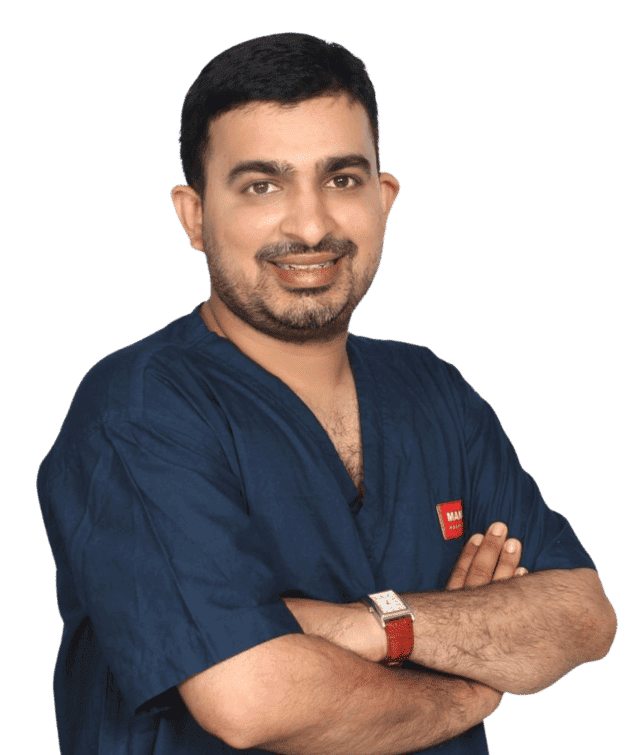
Senior Consultant Urologist & Male Fertility Specialist — Trayam Hospital
Dr. Renish Patel specialises in the surgical and medical management of male infertility — from varicocele microsurgery to complex azoospermia and surgical sperm retrieval. The evaluation approach is thorough and structured: find the specific cause first, treat it with the most appropriate option, and coordinate with the reproductive medicine team to give every couple the best possible outcome for their situation.
Male infertility is one of the most undertreated conditions in couples struggling to conceive. Many men are given empirical antioxidant supplements and told to try for another year — without a structured evaluation, without a hormonal profile and without a scrotal ultrasound. Meanwhile a treatable cause such as varicocele or hormonal imbalance goes undiagnosed.
Semen analysis, hormonal profile, scrotal ultrasound and targeted genetic testing — completed before any treatment recommendation. We find the cause before we prescribe anything.
Varicocelectomy is recommended only when semen parameters are abnormal, the varicocele is palpable and clinically significant, and the female partner evaluation is complete. Surgery for its own sake — without these criteria — is not offered.
We evaluate and treat both partners simultaneously. A male fertility consultation at Trayam always includes a discussion of the female partner's status and a referral for reproductive medicine evaluation where needed.
Low sperm count? Azoospermia? No answers yet?
Bring your previous semen analysis if you have one — or we start fresh. A structured evaluation will tell you exactly what is causing the problem and what can realistically be done about it.
Confidential · No Obligation · Reply in 2 Hours
Sperm production takes 72–74 days — one full spermatogenic cycle. Lifestyle improvements take 3 months to show effect in semen parameters. Start now.
The most common identifiable cause is varicocele — dilated veins in the scrotum that raise testicular temperature and impair sperm production — found in 35–40% of infertile men. Other common causes include hormonal imbalance, obstructive azoospermia, genetic factors and lifestyle factors such as heat exposure, smoking and anabolic steroid use. In 30–40% of cases no specific cause is found (idiopathic).
Oligospermia means a low but not absent sperm count — below 15 million per millilitre (WHO 2021). Azoospermia means no sperm are present in the ejaculate at all. Azoospermia is either obstructive (sperm produced but blocked) or non-obstructive (reduced/absent production). The distinction determines treatment — obstructive azoospermia has excellent surgical sperm retrieval outcomes; non-obstructive requires testicular biopsy (TESE/micro-TESE).
Yes — microsurgical varicocelectomy improves semen parameters in 60–70% of men, with natural conception rates of 30–40% within 12 months. For couples requiring IVF/ICSI, varicocele repair before ART improves outcomes and reduces the number of cycles needed.
TESE — Testicular Sperm Extraction — retrieves sperm directly from testicular tissue for men with azoospermia. Used with ICSI for conception. Micro-TESE uses an operating microscope to find sperm-producing tubules in non-obstructive azoospermia, improving retrieval rates to 40–60%.
Sperm production takes 72–74 days per cycle. Improvement is assessed by repeat semen analysis at 3 months post-surgery — not immediately. Most improvements are seen between 3–6 months.
No — many causes are treatable. Varicocele repair improves parameters in 60–70%. Hormonal imbalances respond to treatment. Obstructive azoospermia can be surgically bypassed. Even non-obstructive azoospermia has 40–60% sperm retrieval success with micro-TESE.
Stop smoking, avoid anabolic steroids and testosterone supplements, reduce scrotal heat exposure, achieve healthy BMI, limit alcohol, reduce chronic stress. These changes take 3 months to show effect — one full spermatogenic cycle.
Yes — always. Male factor contributes to 40–50% of all infertility cases, female factor to 40–50%, combined factors in 20–30%. Both evaluations should start simultaneously — treating only one partner while the other has an undiagnosed factor wastes time.
Surgical procedures (varicocelectomy, TESE, sperm cryopreservation) are covered by most Indian health insurance policies. Diagnostic investigations may be claimed under OPD benefit. IVF/ICSI cycles are generally not covered by standard policies. Trayam is empanelled with all major insurers.
A semen analysis after 2–5 days of abstinence, assessed by WHO 2021 criteria. An abnormal result should be confirmed by a repeat test 4–6 weeks later before any treatment decision. Inexpensive, non-invasive and the most informative single test in male infertility evaluation.
Bring your previous semen analysis if you have one — or we start fresh. Structured evaluation, honest prognosis, surgical or medical treatment matched to your specific cause.