Polytrauma, open fractures, pelvic injuries and fractures with vascular compromise are the most demanding injuries in orthopaedics — requiring simultaneous decisions across multiple specialties by a trauma surgeon in Ahmedabad. Our 24/7 trauma team is equipped and experienced to manage what other centres transfer.
Our specialist will call you within 2 hours
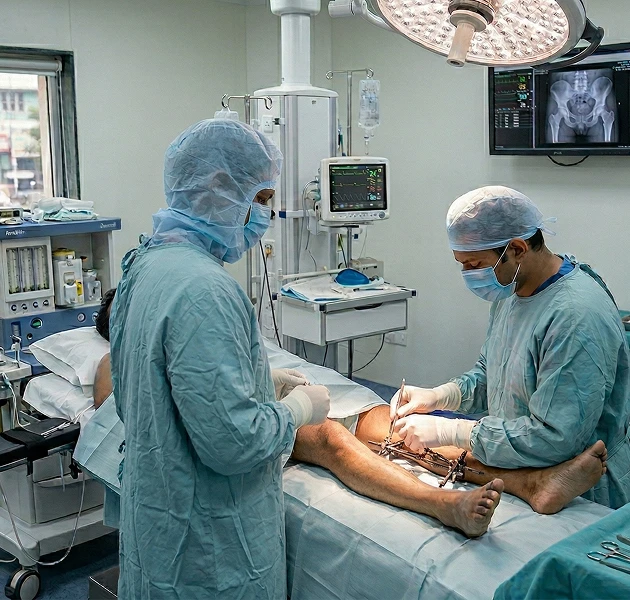
Complex trauma refers to injuries that involve multiple body systems simultaneously, or fractures with additional complications — open wounds contaminating the fracture, vascular or nerve injury alongside the fracture, major pelvic disruption threatening life from haemorrhage, managed at a trauma surgery hospital in Ahmedabad, or a patient with injuries to multiple limbs and organ systems requiring prioritised, coordinated management. These injuries account for a disproportionate share of trauma mortality and long-term disability in India — primarily from road traffic accidents, industrial injuries and falls from height.
The management of complex trauma requires a fundamentally different approach from isolated fracture fixation. Damage Control Orthopaedics (DCO) — stabilising life-threatening injuries first, deferring definitive fixation until the patient is physiologically stable — is the governing principle for polytrauma. Vascular injuries with fractures require simultaneous orthopaedic and vascular surgical input within hours. Open fractures need emergency wound management before fixation. Pelvic fractures with haemorrhage require immediate haemostatic intervention — pelvic binder, angioembolisation or surgical packing — before definitive reconstruction. At Trayam Hospital, our complex trauma protocol activates a coordinated multi-specialty response from the moment a major trauma patient arrives.
These injury patterns require immediate specialist trauma assessment — not a routine orthopaedic appointment
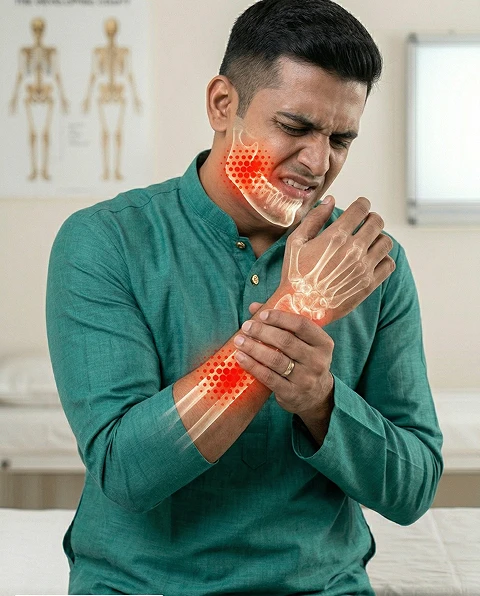
Injuries to two or more body regions simultaneously — head, chest, abdomen, pelvis and limbs — following a high-energy road traffic accident, fall from height or industrial trauma. Polytrauma management requires simultaneous prioritisation: life-threatening injuries addressed first, limb-threatening injuries second, definitive fracture fixation when the patient is physiologically stable. Cannot be managed by a single specialty alone.
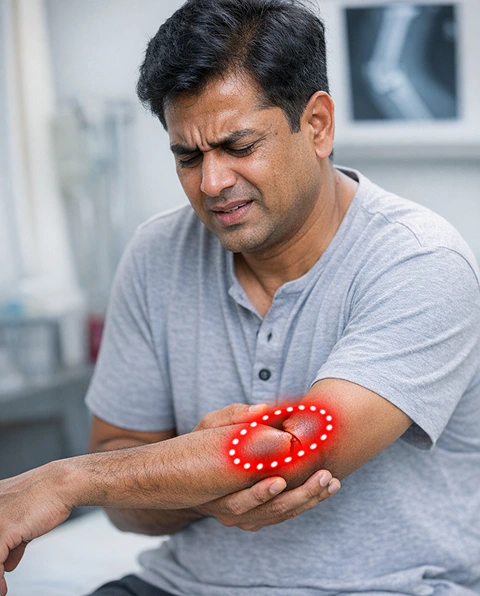
Bone protruding through skin or a wound communicating with a fracture — Gustilo grade I (small puncture) to grade III (extensive soft tissue loss). All open fractures are surgical emergencies: washout within 6 hours, debridement of devitalised tissue, fracture stabilisation (external fixator or nail) and wound management. Grade IIIb and IIIc fractures with significant soft tissue loss require plastic surgery collaboration for flap coverage.
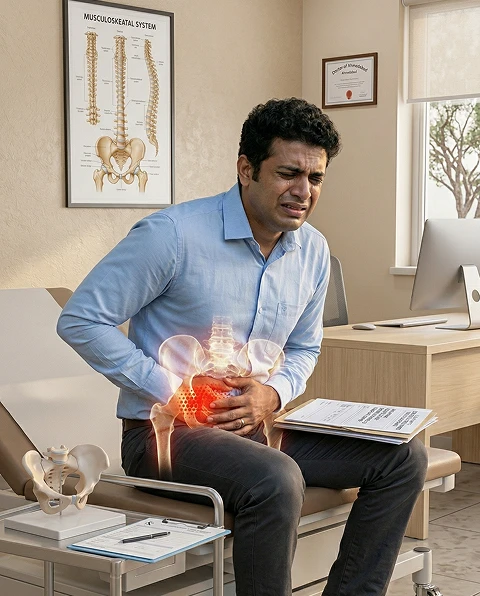
Unstable pelvic ring fractures from high-energy trauma can cause life-threatening retroperitoneal haemorrhage — the pelvis can accommodate up to 4 litres of blood loss. Immediate management: pelvic binder to close the ring and tamponade bleeding, followed by angioembolisation for arterial bleeding or surgical pelvic packing. Definitive open reduction and internal fixation (ORIF) performed 4–7 days later when the patient is haemodynamically stable.
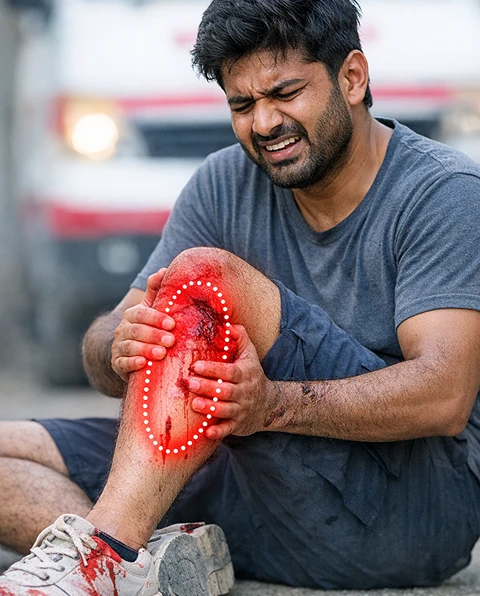
Fracture or dislocation with injury to an adjacent major artery — knee dislocation injuring the popliteal artery, supracondylar humerus fracture with brachial artery injury, femoral shaft fracture with femoral artery disruption. Cold, pulseless limb after fracture is a vascular emergency — warm ischaemia time beyond 6 hours results in irreversible muscle death. Requires simultaneous vascular repair and fracture stabilisation.
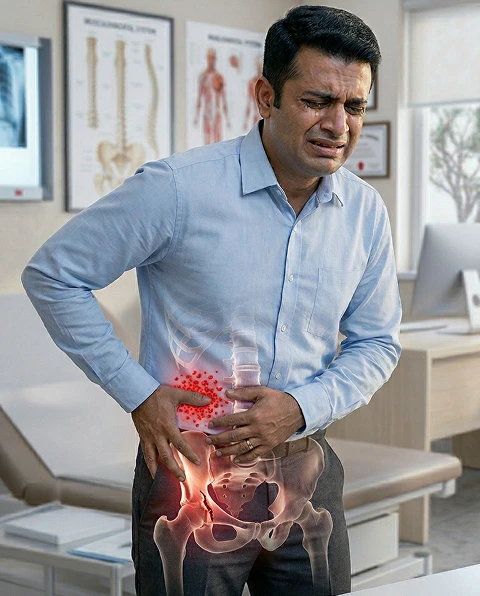
Fractures of the acetabulum (the hip socket in the pelvis) — from dashboard injuries or falls — are among the most technically demanding fractures in orthopaedics. Displaced acetabular fractures require open reduction and internal fixation to restore the joint surface and prevent post-traumatic hip arthritis. Requires specialist pelvic and acetabular surgery expertise and a full implant inventory.
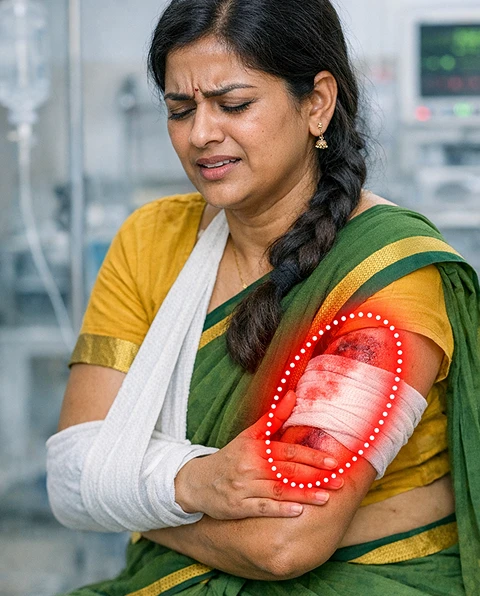
Nerve injury alongside a fracture — radial nerve palsy with humeral shaft fracture, common peroneal nerve injury with proximal fibula fracture, sciatic nerve injury with posterior hip dislocation. Most nerve injuries associated with fractures are neurapraxias (bruising without division) that recover spontaneously — but nerve function must be documented before and after surgery and monitored carefully post-operatively.
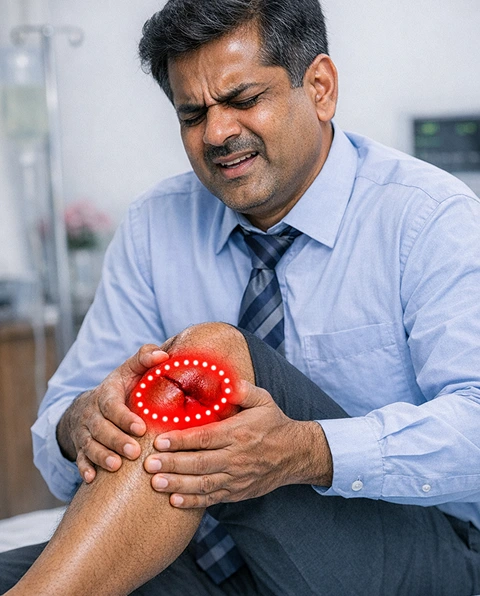
High-energy crush injuries cause significant soft tissue damage and swelling — placing the muscles at risk of compartment syndrome: elevated pressure within the muscle compartments that cuts off blood supply, causing irreversible muscle death within hours. Signs: severe pain out of proportion to the injury, pain with passive stretch of the muscles. Emergency fasciotomy within hours is limb-saving.
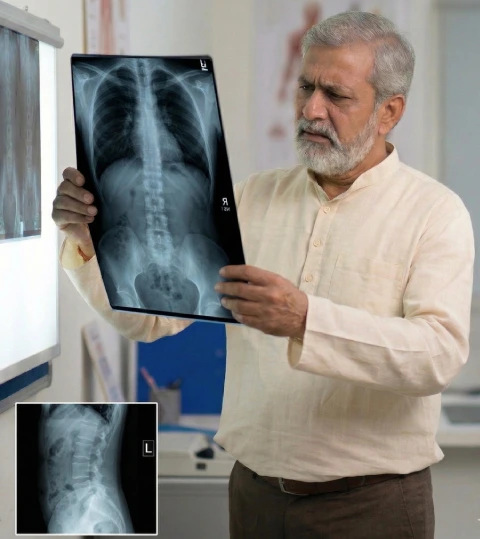
Patients transferred from other hospitals with inadequately managed complex injuries — delayed open fracture washout, unrecognised vascular injury, under-stabilised pelvic fracture or missed compartment syndrome. Secondary management of these situations is more demanding than primary treatment — but definitive specialist care at Trayam can still significantly improve outcomes even after initial mismanagement.
Complex trauma outcomes are determined in the first hours — the trauma surgery hospital in Ahmedabad you reach first matters.

Senior Consultant — Complex Trauma & Orthopaedic Surgery, Trayam Hospital
Dr. Parth Patel is a fellowship-trained complex trauma surgeon with specific AO Advanced training in pelvic and acetabular surgery — one of the most technically demanding subspecialties in orthopaedic trauma. With over 10 years of experience managing polytrauma, open fractures, pelvic ring injuries and fractures with vascular compromise, Dr. Parth Patel leads the complex trauma protocol at Trayam Hospital. The approach is disciplined: correct priority order, no shortcuts on open fracture management, and definitive surgery only when the patient is physiologically ready.
Each complex trauma pattern requires a distinct management strategy — here is how we approach the four most critical presentations
A step-by-step guide to your recovery after Total Knee Replacement at Trayam Hospital.
Resuscitation, haemorrhage control and damage control surgery completed. Patient monitored in ICU or HDU — haemodynamics, oxygenation, coagulation, organ function. Temporary external fixators in place. Pain managed. Family communication by trauma coordinator.
Once physiologically stable — definitive fracture fixation, wound closure or flap coverage, vascular graft check. Multiple operative sessions may be required for complex polytrauma. ICU monitoring continues post-definitive surgery.
Transfer from ICU to ward. Physiotherapy begins — bed exercises, sitting, standing where fracture fixation allows. Wound care continuing. Nutritional support — critical for healing in major trauma. Psychological support offered.
Discharge when medically stable, independently mobile to a safe level and with a clear outpatient rehabilitation plan. Weight-bearing status per fracture — some patients non-weight-bearing for 6–8 weeks. Physiotherapy at home or as outpatient.
Fracture X-ray follow-up — callus formation confirmed. Progressive weight-bearing. Open fracture wounds healed. Vascular graft patent on Doppler. Return to light activity beginning.
Full recovery for most patients — timeline depends on injury severity. Pelvic fractures: 6–9 months for full activity. Open fractures with significant soft tissue loss: 6–12 months. Polytrauma patients: highly variable — some return to full function, some have permanent deficits from associated injuries. Realistic goals discussed from admission.
The most preventable source of permanent disability in complex trauma in India is delayed or inadequate management of open fractures, unrecognised vascular injury and under-stabilised pelvic haemorrhage at the first treating hospital. Complex trauma patients are frequently transferred after initial mismanagement — by which point osteomyelitis has established in an inadequately washed open fracture, a limb has been lost from a missed vascular injury, or a pelvic haemorrhage has been incompletely controlled. The first 6 hours are the most important — and the quality of management in that window determines the rest of the outcome.
No open fracture at Trayam waits for an elective list. Emergency washout within 6 hours is a non-negotiable protocol — not a guideline that is applied when convenient.
Limb perfusion is assessed and documented for every significant fracture on arrival. Vascular surgery is activated simultaneously for any cold or pulseless limb — not after orthopaedic management is complete.
Emergency complex trauma surgery is covered by PMJAY and all major health insurance policies. Emergency pre-authorisation is processed immediately — financial processes never delay life or limb-saving surgery at Trayam.
Complex trauma — road accident, open fracture, pelvic injury? Call now. Every hour matters.
Confidential · No Obligation · Reply in 2 Hours
DCO is the management strategy for polytrauma — stabilise life-threatening injuries and provide temporary fracture stabilisation first, then perform definitive fracture fixation 24–72 hours later when the patient is physiologically stable. It prevents the lethal triad (hypothermia, acidosis, coagulopathy) that occurs when long definitive surgery is performed on an unstable patient.
Open fractures must be surgically washed out and debrided within 6 hours of injury to prevent osteomyelitis (deep bone infection). This is the most evidence-based standard in trauma orthopaedics. Any delay beyond 6 hours significantly increases infection risk — particularly for contaminated wounds.
Immediately: pelvic binder to close the ring and tamponade bleeding. Then: angioembolisation for arterial bleeding, or surgical pelvic packing if not available. Definitive ORIF (open reduction and internal fixation) is performed 4–7 days later when the patient is haemodynamically stable — not in the acute phase.
Limb-threatening vascular injury with fracture is managed simultaneously by orthopaedic and vascular surgeons — fracture temporarily stabilised to reduce vessel tethering, then vascular repair, then definitive fracture fixation once perfusion is confirmed. Time to vascular repair is the critical factor — warm ischaemia beyond 6 hours causes irreversible muscle death.
Compartment syndrome is elevated pressure within a muscle compartment — caused by swelling after crush injury, fracture or vascular injury — that cuts off blood supply to the muscles, causing irreversible death within hours. Treatment is emergency fasciotomy: surgical release of the compartment fascia to decompress the muscles. This must be performed within hours of diagnosis.
Highly variable — depends on injury severity, patient age and associated complications. Isolated pelvic fracture: 6–9 months for full activity. Open fracture with soft tissue loss: 6–12 months. Polytrauma: 9–18 months, with some patients having permanent deficits from associated injuries. Realistic goals are discussed with every patient and family from admission.
Yes — we regularly receive referred patients with inadequately managed complex trauma. Even after initial mismanagement, specialist care can significantly improve outcomes. Bring all available imaging and operative notes. Call ahead so our trauma team can prepare for arrival.
Yes — all emergency trauma surgery is covered by PMJAY and major Indian health insurance policies. Emergency pre-authorisation is processed immediately — financial processes never delay surgical management at Trayam.
Road accident, open fracture, pelvic injury, vascular compromise — call directly. Every hour in complex trauma changes the outcome. Our team is ready.