The elbow is involved in almost every arm movement — eating, dressing, working, and lifting. When severe arthritis or a complex fracture destroys the elbow joint, elbow joint replacement restores pain-free movement and the independence to use your arm again.
Our specialist will call you within 2 hours
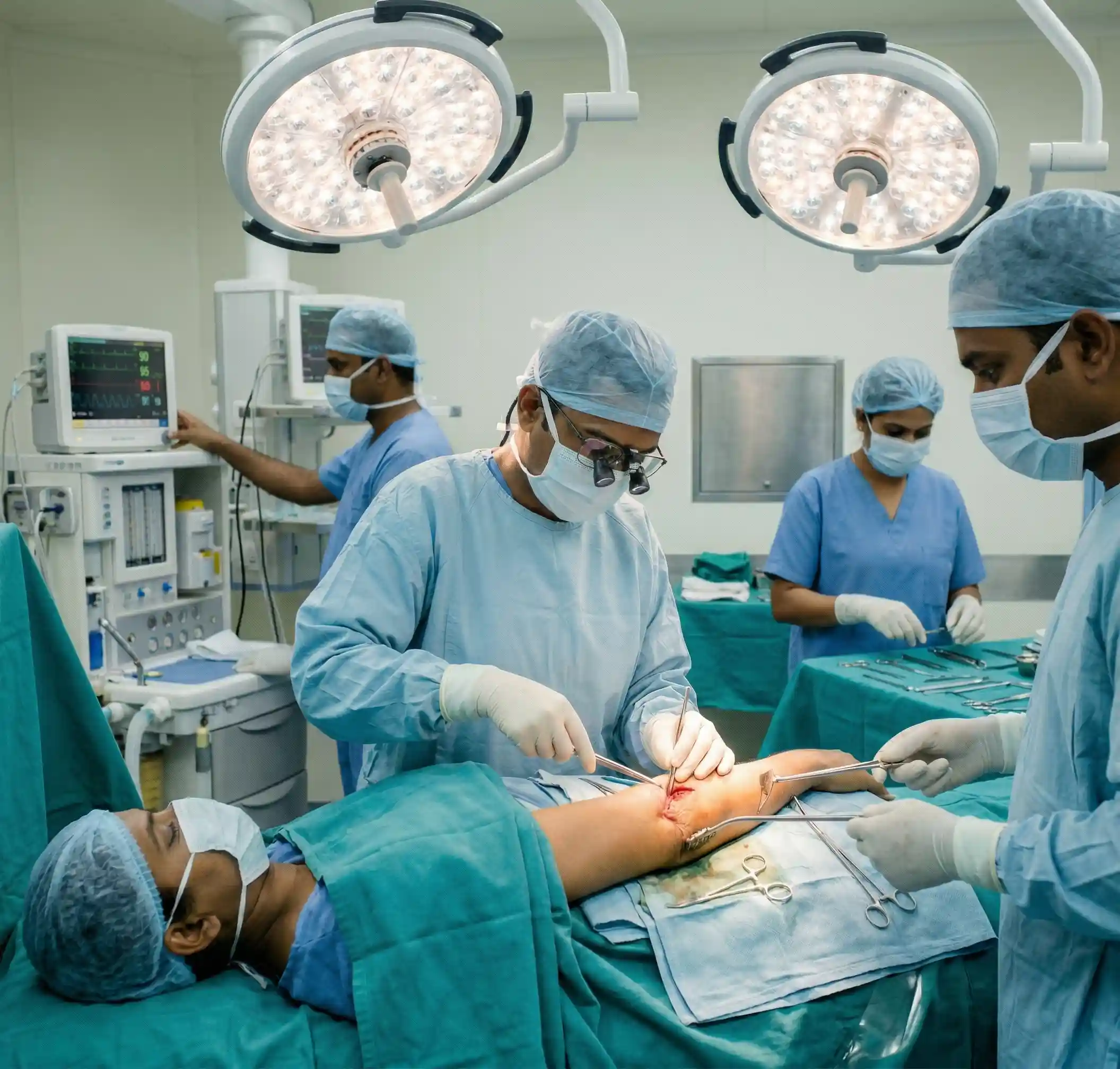
Total elbow arthroplasty (TEA), also known as elbow joint replacement, is a surgical procedure in which the damaged surfaces of the elbow joint are replaced with an artificial implant. The elbow is a complex hinge-and-rotation joint — the humeral component (upper arm side) and ulnar component (forearm side) interlock to form a linked or unlinked prosthesis. This design allows controlled flexion, extension and forearm rotation while distributing forces across the implant rather than the destroyed joint surfaces. The result is a pain-free, functional elbow that restores independence for daily activities.
Elbow joint replacement is a less common procedure than hip or knee replacement — and rightly so. It is reserved for specific indications where the joint is severely damaged and less invasive options have been exhausted or are not appropriate. The two primary indications are rheumatoid arthritis affecting the elbow (where severe joint destruction causes pain and loss of function despite medical management) and complex distal humerus fractures in older patients, where fracture fixation is not feasible. Post-traumatic arthritis following previous elbow injury or surgery is a third important indication. At Trayam Hospital, every case is assessed individually by an experienced elbow replacement surgeon in Ahmedabad with full imaging and upper limb specialist review before any surgical decision.
Elbow replacement has specific indications — if you're experiencing these symptoms with confirmed joint disease, specialist assessment is warranted
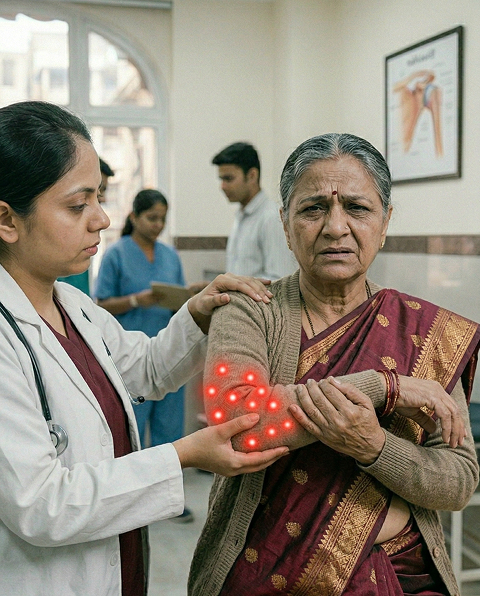
Constant elbow pain that is present at rest, at night and with any arm movement — no longer adequately controlled by medication or injections. End-stage elbow arthritis causes pain with every functional movement of the arm — eating, dressing, writing — because the elbow is involved in virtually all of them.
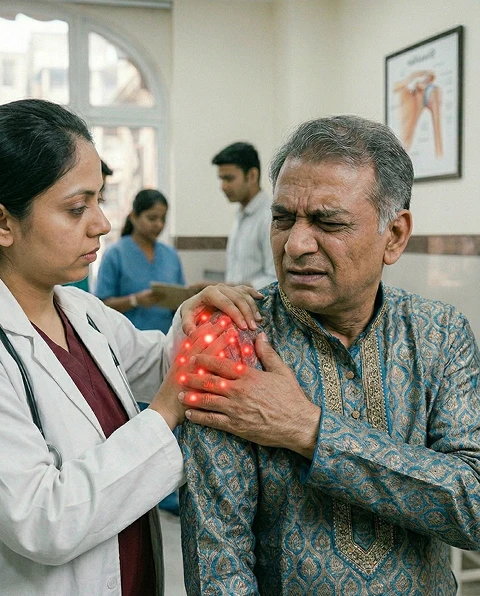
Inability to fully flex the elbow (bring the hand to the mouth), fully extend it or rotate the forearm (turn a door handle, pour a drink). Functional elbow range is 30–130 degrees of flexion — outside this arc, daily independence is significantly impaired.

Rheumatoid arthritis (RA) is the most common indication for elbow replacement. Uncontrolled synovitis destroys elbow cartilage and bone, causing progressive pain, deformity and loss of function despite optimal medical management with DMARDs and biologics. When the joint is destroyed, surgery becomes necessary to restore function.
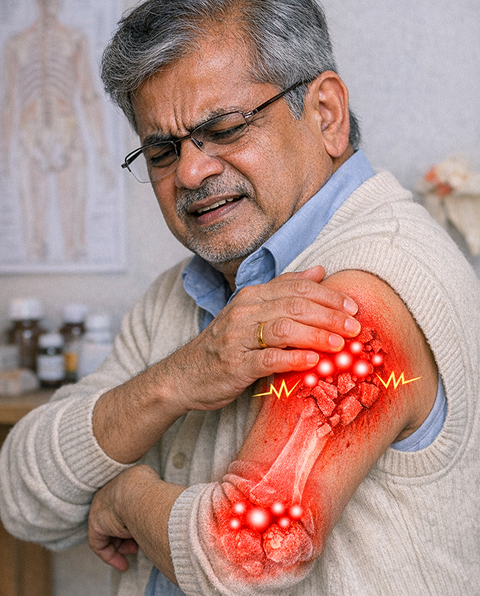
Persistent pain, stiffness and limited movement following a previous elbow fracture, dislocation or surgery. Intra-articular fractures frequently result in post-traumatic arthritis — particularly when initial fixation was complex or complications occurred. This is a recognised and treatable cause of elbow disability.
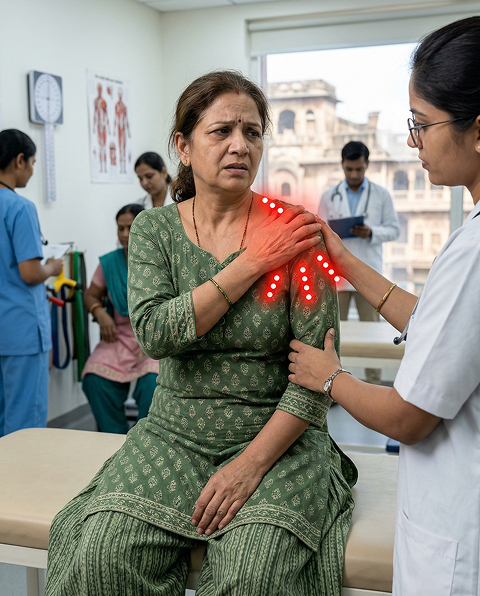
A severely comminuted fracture of the distal humerus (lower end of upper arm bone) in an older patient with osteoporotic bone — where internal fixation has a high failure rate. Primary elbow replacement is a recognised alternative that allows earlier rehabilitation and avoids the complications of failed fixation in fragile bone.
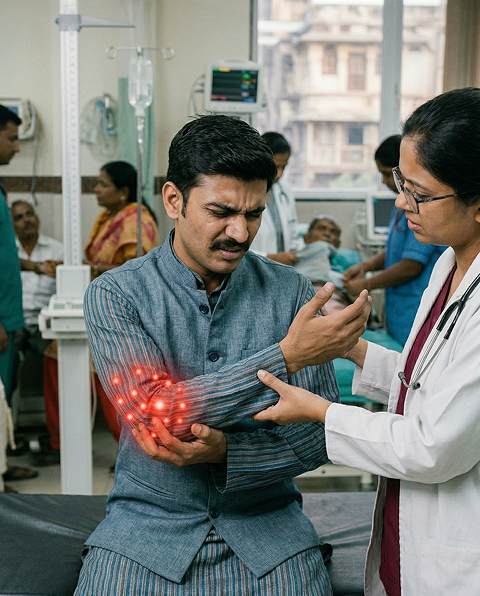
Persistent pain and disability following prior elbow surgery — previous ORIF, radial head replacement or arthroscopic debridement — that has not achieved an adequate outcome. When the elbow joint is damaged beyond further reconstruction, total elbow replacement may be the most reliable solution.
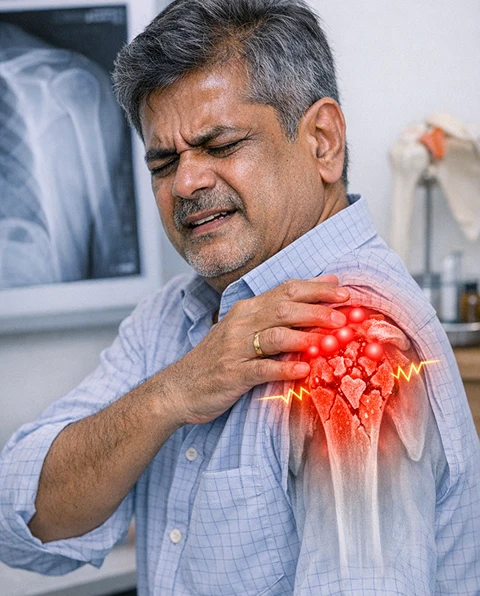
Chronic swelling, warmth and synovial thickening around the elbow in a patient with inflammatory arthritis — indicating active synovitis that has not responded to medical management. Persistent synovitis accelerates joint destruction and may require synovectomy or replacement depending on the degree of structural damage.
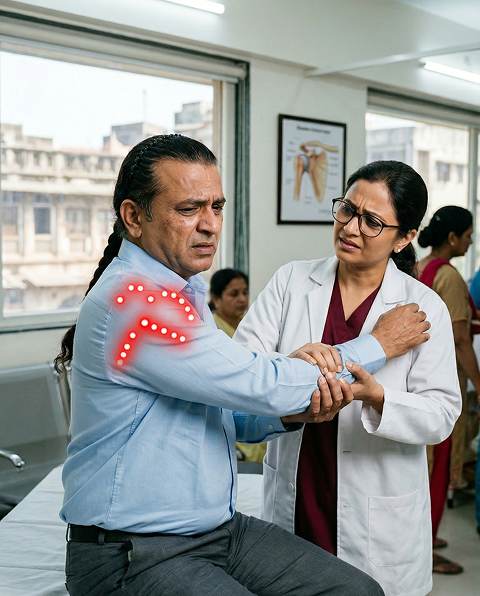
Numbness and tingling in the little and ring fingers, or weakness of the hand muscles — caused by ulnar nerve compression at the elbow from arthritic swelling or deformity. Elbow arthritis can compress the ulnar nerve as it passes around the medial epicondyle. Nerve symptoms alongside elbow arthritis warrant specialist assessment.
Total elbow arthroplasty, or elbow joint replacement, is an uncommon, technically demanding procedure — choosing the right elbow replacement surgeon in Ahmedabad and the centre matters significantly

Senior Consultant — Shoulder, Elbow & Upper Limb Surgery, Trayam Hospital
Dr. Parth Patel is a fellowship-trained upper limb surgeon with specific experience in total elbow arthroplasty — for rheumatoid arthritis, post-traumatic arthritis and complex distal humerus fractures. Elbow replacement is a technically demanding procedure performed by a small number of specialist upper limb surgeons in India. Every elbow replacement patient at Trayam receives a thorough pre-operative assessment, a clear explanation of the procedure's specific activity restrictions and a structured rehabilitation programme designed to maximise functional outcomes.
The surgical approach for elbow joint disease depends on the diagnosis, degree of destruction and the status of the surrounding ligaments and bone
Surgery completed. Arm elevated in a well-padded splint. Physiotherapy begins — gentle finger, wrist and early elbow movement. Pain managed with multimodal analgesia. Neurovascular checks for ulnar nerve function.
Hospital discharge. Splint replaced with a lighter removable splint or sling. Wound care instructions. Physiotherapy continuing with guided range-of-motion exercises at home. Elbow elevated when resting.
Wound reviewed — sutures removed. Elbow range of motion assessed. Physiotherapy progressing — active and active-assisted exercises. Most patients achieving meaningful flexion and extension at this stage.
Functional elbow range of motion (30–130 degrees) approached or achieved for most patients. Activities of daily living progressing — eating, grooming, light desk tasks. Activity restriction counselling reinforced: 1–2kg lifting limit explained and permanent.
Elbow movement near full functional range. Return to most daily activities — writing, typing, driving (non-dominant arm first). Strengthening exercises progressing carefully within lifting limits. Significant pain reduction from pre-operative levels.
Full functional recovery for daily activities. Return to light recreational activity. Annual follow-up X-ray from year 1 — monitoring implant position, bone-implant interface and bushing wear in linked implants.
Total elbow arthroplasty is one of the least performed joint replacements in India — not because the need is rare, but because awareness of the procedure among both patients and non-specialist orthopaedic surgeons is limited. Patients with severe rheumatoid elbow destruction or post-traumatic arthritis are frequently managed with repeated injections, physiotherapy and pain medication for years without being referred to an upper limb specialist who can assess whether elbow replacement is appropriate. The same applies to elderly patients with distal humerus fractures — who may be offered complex fracture fixation when primary replacement would give a more reliable and faster-recovering result.
Fully itemised estimate — surgery, implant type (linked or unlinked, named), stay, physiotherapy and follow-up — in writing before you book. The lifting restriction and its implications are explained at consultation before you decide.
We offer elbow arthroscopy, synovectomy and joint preservation procedures before replacement is considered. Elbow replacement is recommended only when the joint is damaged beyond effective preservation — and when the benefit of pain relief and restored function outweighs the permanent activity restriction.
Total elbow arthroplasty is covered under most major Indian health insurance policies. Our insurance desk manages pre-authorisation with correct documentation of indication, implant type and surgical plan — ensuring your claim is processed accurately and in full.
Severe elbow arthritis or a complex elbow fracture? Get an honest specialist assessment of your options.
Confidential · No Obligation · Reply in 2 Hours
Total elbow arthroplasty replaces the damaged surfaces of the elbow joint with a linked or unlinked prosthesis. Indicated for severe rheumatoid arthritis destroying the elbow, post-traumatic arthritis, and selected complex distal humerus fractures in elderly patients where fixation is not feasible.
Linked: the humeral and ulnar components are mechanically coupled — provides stability without relying on ligaments; preferred for rheumatoid arthritis and ligament deficiency. Unlinked: components are not mechanically connected — relies on preserved collateral ligaments; lower wear rate in suitable patients.
Approximately 1.5–2 hours under general anaesthesia. Total theatre time including preparation is approximately 2.5 hours.
A permanent lifting limit of 1–2kg (approximately the weight of a full mug of tea) applies for life after elbow replacement. This is not a temporary restriction — it is essential to protect the implant from the accelerated wear and bushing fracture caused by heavy lifting. This restriction is explained fully before surgery.
Functional daily activities (eating, grooming, light desk work): 4–6 weeks. Driving: 6–8 weeks for non-dominant arm. Writing and typing: month 2–3. All activities within the permanent lifting restriction by month 4–6.
Elbow replacements last 10–10 years in most patients — shorter than hip or knee replacements due to the higher forces transmitted through the elbow during daily activities and the thin cortical bone of the distal humerus. Adherence to the lifting restriction is the single most important factor in implant longevity.
Infection (serious risk — limited soft tissue coverage), implant loosening (particularly bushing wear in linked implants), ulnar nerve injury, triceps weakness, instability (unlinked implants). These risks are managed by strict infection protocols, careful implant selection and thorough patient education about the lifting restriction.
Yes — total elbow arthroplasty is covered by most major Indian health insurance policies. Our insurance desk manages pre-authorisation and cashless hospitalisation with correct documentation of the indication and procedure.
Bring your X-rays or CT scan if you have them — or we arrange them. Book a consultation with our upper limb specialist. No obligation.